
The Pull of Lust
Sexual temptation doesn't announce itself. It builds slowly, through small compromises and shifted boundaries, until something that once felt unthinkable feels inevitable. This 7-day Bible study on temptation confronts the pull toward sexual sin with honesty and grace, pointing toward a path of real freedom. The shame that surrounds this topic keeps too many people from ever finding help. This study meets you where you are with truth and without condemnation.
The plan is free to read here. In the app it arrives one day at a time, with the full passage and audio.
What the plan covers
- Day 17 min
What Lust Actually Is
Passages: Matthew 5:28 · 1 Thessalonians 4:3-5
Most people think of lust as what happens in a moment of weakness - a glance that goes too far, an image that lingers. But Jesus reframes it entirely. He says that looking at someone with the intent to desire them is itself the act. Lust is not just a physical reflex; it is a posture of the heart. It is looking at a person not as someone made in the image of God but as something to be consumed. That is what makes it so serious - and so easy to miss. The word Jesus uses for "lustfully" implies a deliberate, covetous gaze. It is not about accidentally noticing someone attractive. It is about choosing to entertain, to dwell, to want in a way that treats another person as an object for your own satisfaction. That is the line Jesus draws. And he draws it at the heart, not just the hands. Paul says God's will is our sanctification - that we learn to control our own bodies in a way that is holy and honorable. That phrase "learn to control" is important. It implies that this is a practiced skill, not an instant achievement. The starting point is not shame; it is honesty. What is actually happening in the heart when lust pulls? What is being sought? Once we can name it clearly - the desire to take rather than honor, to use rather than love - we can begin to address it at the root rather than just the surface. Understanding what lust actually is sets the stage for real change, because vague struggle produces vague progress. Jesus was not vague about it. And neither should we be. Body Awareness Sit still for a moment and notice where you carry tension - jaw, shoulders, chest. Sometimes physical tightness is where unaddressed desire or shame lives. Reflection When you have experienced lust, what was your heart actually reaching for - and what does that tell you about what you believe you need? Practice Today Take five minutes today to write out your honest definition of lust as you have experienced it - not a textbook answer, but what it actually looks like in your daily life. Prayer Lord, I want to be honest with you about this struggle rather than manage it from a distance. Show me what my heart is actually reaching for when lust pulls. Teach me to see people the way you see them - as image-bearers, not objects. In Jesus' Name. Amen - Day 27 min
The Body Is Not the Enemy
Passages: 1 Corinthians 6:19-20 · Genesis 1:31
One of the most common misunderstandings about purity is that it requires hating the body. If the body is the source of temptation, the thinking goes, then the goal must be to suppress it, punish it, or treat it with deep suspicion. But that is not what Scripture says. God made the body and called it very good. Not acceptable, not tolerable - very good. The body was not an afterthought or a liability. It was the crown of creation, made in the image of a God who would one day take on flesh himself. Jesus did not come to escape the body - he came in a body, and he rose in one. The physical is not the enemy of the spiritual. The body is a temple - which means it is a sacred space, not a dangerous one. The problem is not that we have bodies. The problem is how lust orients us toward other people's bodies - using them rather than honoring them, consuming them rather than seeing them as sacred. Paul says we are not our own; we were bought at a price. That price was the life of Jesus. It applies to every body - yours and every person you will ever look at. Purity, then, is not achieved by treating the body as a problem to be managed. It is achieved by elevating the body to its actual status - a temple of the Holy Spirit, a gift from God, a carrier of his image. When you see your own body that way, you begin to see others' bodies that way too. And when you see others that way, lust loses its grip because lust cannot operate when someone is being honored. Body Awareness Place a hand on your chest and breathe slowly. Your body right now is a temple of the Holy Spirit - that is true even when it does not feel like it. Reflection How has the way you think about your own body affected how you treat others - and how have you been treating your body lately? Practice Today Write down one specific way you have been treating your body with disrespect or shame, and one concrete way you could begin honoring it as a temple this week. Prayer God, I confess that I have sometimes treated my body - and others' bodies - with less dignity than you intended. Teach me to see myself and others through your eyes. Help me to honor what you made and called good. In Jesus' Name. Amen - Day 37 min
It Starts with the Eyes
Passages: Job 31:1 · Matthew 6:22-23
Job is one of the most righteous figures in all of Scripture - and notice what he says about how he maintained that integrity. He made a covenant with his eyes. He did not leave it to chance or willpower in the moment. He established a deliberate, intentional agreement with himself, before the temptation arrived. That is striking. It suggests that purity is not primarily a reactive discipline but a proactive one. The eye is a gate. What enters through it does not stay at the surface - it travels inward. Jesus says the eye is the lamp of the body: what the eye takes in fills the whole person with either light or darkness. This is not metaphor. Research consistently confirms what Scripture has always said: what we repeatedly expose our eyes to shapes what we desire. The brain forms pathways around what it sees regularly. What we look at becomes what we want. This means that managing lust is not only about dealing with desire after the fact. It begins with what we choose to expose our eyes to - what media we consume, what images we linger on, what we seek out when no one is watching. The gate is the first line of defense, and it is a gate we actually have authority over more than we often acknowledge. Job's covenant was not made in crisis - it was made in clarity. That is the invitation here. Before the next moment of temptation, before the next screen, before the next pull: what covenant have you made with your eyes? Purity begins not in the moment of struggle but in the decision made before it. Body Awareness Notice where your eyes tend to go when you are idle - phone, screen, other people. The eyes reveal habit without us usually noticing. Reflection What does the pattern of what you look at - in quiet moments, online, in public - tell you about what your heart is currently craving? Practice Today Write out a short personal covenant with your eyes - two or three specific, honest commitments about what you will and will not look at this week. Prayer Lord, I want to make a covenant with my eyes the way Job did - not out of fear but out of love for you and for others. Show me the patterns I have been blind to. Give me the strength and clarity to guard the gate. In Jesus' Name. Amen - Day 47 min
Flee Youthful Passions
Passages: 2 Timothy 2:22 · 1 Corinthians 6:18
The command in both of these passages is not analyze, not reason with, not pray over in the moment. It is flee. That is a running word. Paul chose it deliberately, and he uses it twice in these letters when it comes to sexual temptation specifically. The strategy is not intellectual engagement with the temptation - it is physical and immediate departure from it. This is countercultural advice in a world that prizes emotional intelligence and nuanced engagement. We are told to process our feelings, sit with discomfort, and understand our triggers. Those are valuable practices in their place. But Paul is saying something different here: when it comes to sexual temptation, the spiritually mature response is speed. Running is not cowardice - it is wisdom about how desire actually works in the human body and soul. Joseph understood this before Paul wrote it. When Potiphar's wife grabbed his cloak, he did not pause to counsel her, to explain himself, or to reason through the situation. He left his cloak in her hand and ran. He lost something that day - his cloak, and then his freedom. But he kept something more important: his integrity before God. The fleeing cost him in the short term. But it preserved what mattered most. Fleeing is also paired with pursuing. It is not merely about running from something - it is about running toward righteousness, faith, love, and peace, and doing so in community with others who are pursuing the same things. The movement away from temptation must always be a movement toward something better. You cannot sustain the running away for long without something worth running toward. Body Awareness Notice what happens in your body when you are near a known temptation - does your heart rate change, does your thinking narrow? Your body often knows before your mind decides. Reflection What situation, environment, or habit keeps putting you back in the path of temptation - and what would it look like to actually flee it rather than manage it? Practice Today Identify one specific trigger environment or situation you have been managing instead of avoiding, and take one concrete step today to put distance between yourself and it. Prayer God, give me the humility to flee what I cannot handle in my own strength. I want to stop negotiating with temptation and start running from it - and running toward you. Show me what I need to actually leave behind. In Jesus' Name. Amen - Day 57 min
Renewing How You See People
Passages: 2 Corinthians 5:16 · Philippians 4:8
Paul says something remarkable: we no longer regard anyone from a worldly point of view. This is not just a command - it is a description of what happens when someone has been transformed by the gospel. The way they see people changes. Before, in a worldly frame, people are evaluated by what they offer - their appearance, their usefulness, their status. After, they are seen as people for whom Christ died. That is a revolution in perception. Lust is fundamentally a way of seeing. It reduces a person to what they can give you - visual stimulation, fantasy, validation, pleasure. It extracts something from them without regard for who they actually are. Healing from lust, then, is not only about managing behavior. It involves a genuine renovation of the way you see other people when they enter your field of vision. This is where Paul's instruction to think about things that are true, noble, right, pure, lovely, and admirable becomes practically useful. It is not about forcing false thoughts to cover impure ones. It is about training the mind over time to engage with reality at a higher level - to see the person behind the appearance, the soul behind the face, the image of God behind every human being you encounter. This is slow work. It does not happen through willpower alone. It happens through prayer, through Scripture, through community, through practice. But it is the actual transformation Scripture promises - not just a person who resists lust, but a person who no longer looks at others through the lens of what they can take, because they have learned to see the way God sees. Body Awareness The next time you are around other people today, try to notice your first instinct in how you perceive them - what does your default way of seeing reveal? Reflection What would change in your daily interactions if you genuinely saw every person you encountered as irreplaceable and worthy of honor? Practice Today Choose one person in your life today and take two minutes to pray for them by name - their wellbeing, their faith, their struggles. Let that act begin to shift how you see them. Prayer Lord, renew the way I see people. Where I have looked at others as objects or opportunities, forgive me and replace that with your vision - irreplaceable people you love and died for. Teach me to see the image of God in every face. In Jesus' Name. Amen - Day 67 min
The Role of Accountability
Passages: James 5:16 · Proverbs 28:13
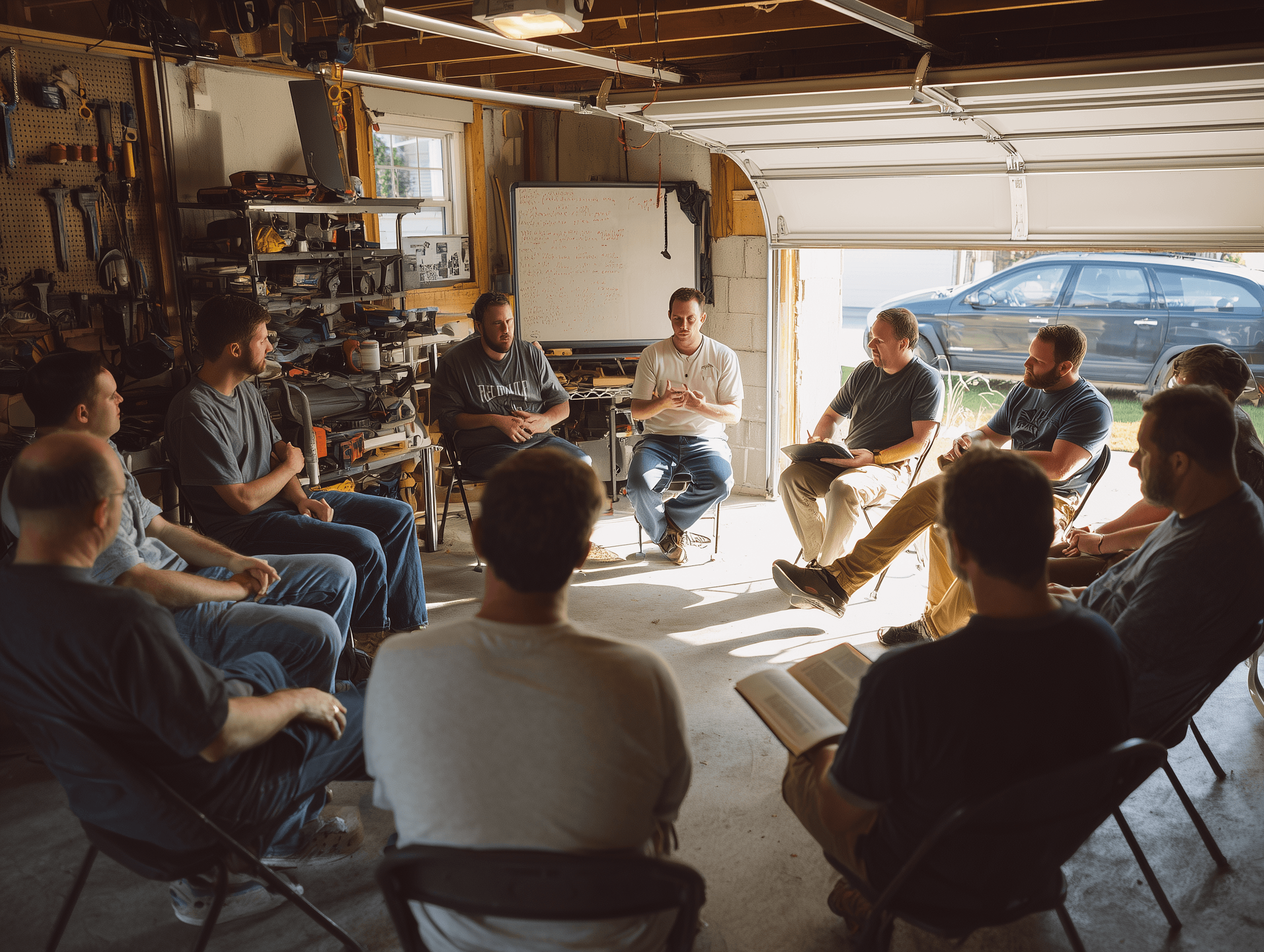
Shame is lust's most powerful ally. It is the thing that keeps the struggle underground, private, and therefore unchanged. Shame whispers that what you are dealing with is uniquely terrible, that no one else fights what you fight, that if anyone actually knew, they would turn away. And so the struggle stays hidden. And what stays hidden stays powerful. James gives a different prescription. Confess to one another. Pray for one another so that you may be healed. The word healed is significant - James is not just talking about forgiveness as a transaction. He is talking about actual healing, the kind that restores something to wholeness. And he locates that healing not in private devotion alone but in honest community. Proverbs confirms the pattern from the other direction: concealing sins blocks prosperity - not just spiritual advancement, but the ability to flourish, to move forward, to become who you were made to be. Concealment traps you in the same place. But confession and renunciation open the door to mercy. The mercy was always there. It is concealment that blocks the door. The practical question is whether you have one person in your life with whom you are actually honest about this struggle. Not someone you perform accountability for - someone you tell the truth to. That kind of relationship does not happen automatically. It requires you to go first, to speak before you feel ready, to trust that the light is safer than the dark. What is confessed loses power, not because the confession is magic but because honesty with another person aligns with how God designed healing to happen - in community, not in isolation. Body Awareness Notice whether there is any tension in your chest or stomach as you think about the idea of confessing this struggle to someone - that tension is worth paying attention to. Reflection Is there one person in your life to whom you are completely honest about your struggle with lust - and if not, what is the real reason why not? Practice Today Take one concrete step toward honest accountability today: text someone and ask to meet, draft a message you have been afraid to send, or identify the person you know you need to talk to. Prayer God, the thought of being honest with another person about this is uncomfortable. But I know that what I keep hidden stays stuck. Give me courage to step into the light - and lead me to the right person to trust. In Jesus' Name. Amen - Day 77 min
Blessed Are the Pure in Heart
Passages: Matthew 5:8 · Psalm 51:10
Psalm 51 was written by David after he had committed adultery with Bathsheba and arranged her husband's death. It is one of the most honest, raw prayers in all of Scripture - written by someone who had failed in exactly the area we have been studying, and who refused to pretend otherwise. And what does he ask for? Create in me a pure heart. Not restore what was there before. Create. Something new. Something only God can make. That word - create - is the same word used in Genesis for what God did at the beginning of the world. David was not asking for repair. He was asking for re-creation. And this is the hope at the end of this study: purity is not a perfect record. It is a posture. It is the ongoing orientation of the heart toward God, the consistent turning back when we fail, the refusal to give up or to pretend. Jesus says the pure in heart will see God. Not the never-failed in heart. Not the never-tempted in heart. The pure in heart - meaning those whose hearts, whatever they have been through, are oriented toward him. Purity in this sense is not about achieving a status; it is about maintaining a direction. And when we lose the direction, the path back is the same prayer: create in me a pure heart, O God. This study has been honest about a hard struggle. But the end of it is not condemnation - it is invitation. God is not repulsed by the person who has fought and failed and fought again. He is the one who creates pure hearts when asked. You are not beyond his reach. You never were. Body Awareness Sit quietly for a moment, breathe, and notice if there is any sense of relief, hope, or heaviness as you reach the end of this study - whatever you feel is worth bringing to God. Reflection What would it mean for you personally to define purity as an ongoing orientation toward God rather than a perfect record - and how does that change how you see yourself right now? Practice Today Pray Psalm 51:10 out loud, slowly, three times today - as a genuine request, not a formula. Let it be your prayer this week. Prayer God, I am asking what David asked: create in me a pure heart. Not repair what is broken - create something new. I cannot do this without you and I am done trying. I turn back toward you today, and I trust that your mercy meets me here. In Jesus' Name. Amen