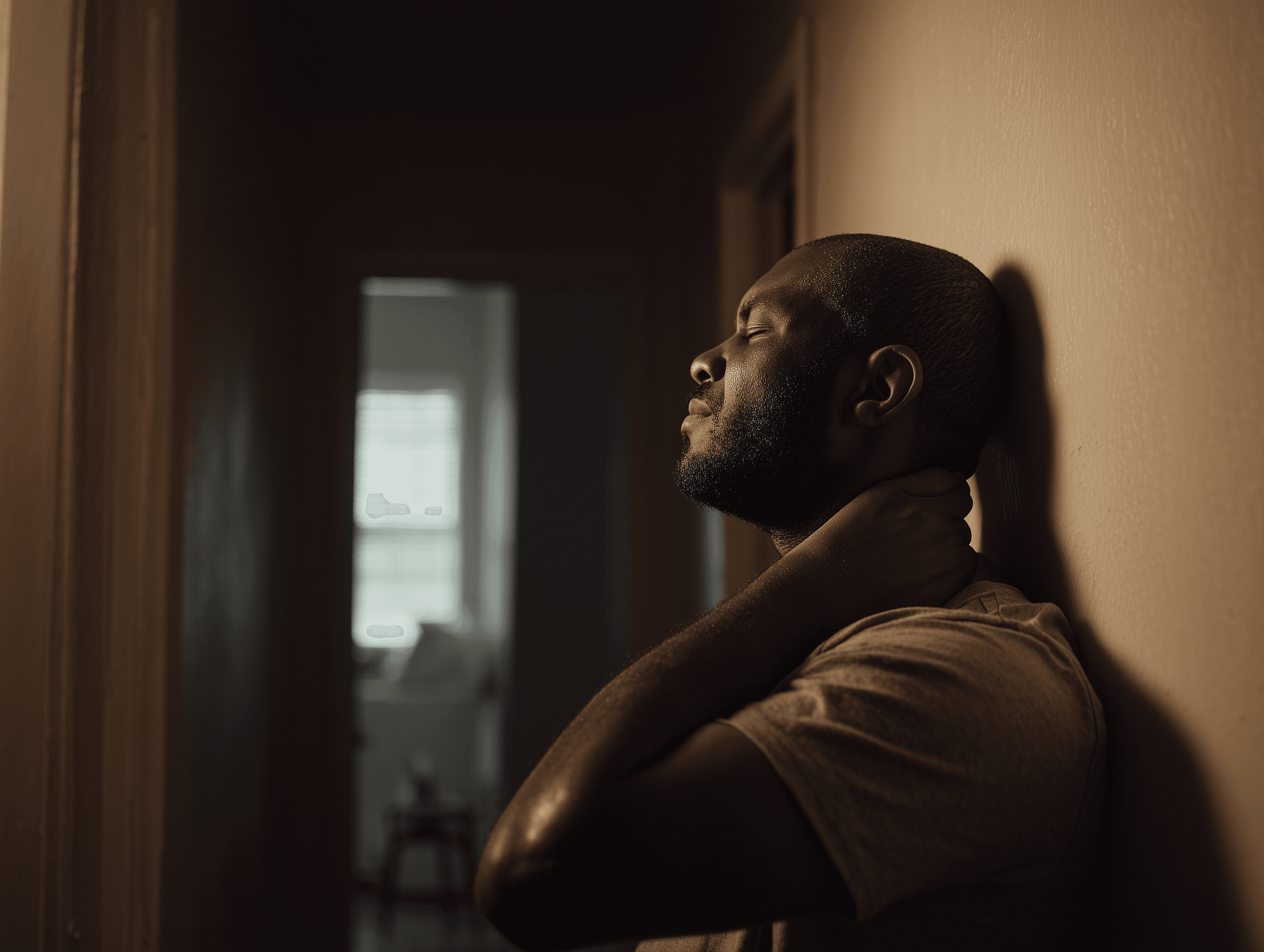
Breaking the Cycle

7 daystemptationtransformationfreedomaccountability

The same sin, the same sequence, the same moment of defeat - over and over. Breaking a cycle requires more than willpower. It requires understanding what is driving it. This 7-day Bible study on temptation gets beneath the surface of repeated patterns to find the roots, and shows how real, lasting change actually begins. Cycles do not break by accident or by sheer determination. They break when the thing fueling them is finally addressed. That is what this study goes after.

Start this plan in Bible Chat

The plan is free to read here. In the app it arrives one day at a time, with the full passage and audio.

What the plan covers

  1. Day 17 min

    The Cycle You Keep Returning To

    Passages: Romans 7:15 · Proverbs 26:11

    Paul's confession in Romans 7 is one of the most honest passages in the New Testament - and one of the most relieving. The man who wrote a significant portion of Christian theology looked at his own interior life and said: I do not understand what I do. I want to do good and I do not do it. I hate what I keep doing and I keep doing it anyway. If Paul described his experience in those terms, you are in good company. The cycle is a recognizable feature of fallen human experience. It has a predictable shape: a period of resolve and relative calm, followed by a trigger, followed by the pull toward the familiar sin, followed by the act, followed by remorse, followed by a new resolve - which restarts the cycle. The variations differ by person and by sin, but the structure is nearly universal. Proverbs 26:11 is uncomfortable precisely because it is accurate. The image of the dog returning to its vomit is deliberately repulsive, because the behavior it describes is genuinely self-destructive. We return to things that have already harmed us. We know what they are and we go back anyway. Understanding this pattern - honestly naming it rather than being surprised by it each time - is the beginning of gaining some traction against it. Nothing changes in a cycle that is not first named clearly. The shame that keeps you from naming it is actually part of the mechanism that keeps the cycle running. Shame drives things underground. Underground, they grow. The first act of courage in breaking a cycle is looking at it directly and calling it by its name. Body Awareness Notice whether there is any tightening in your body as you think about naming a specific cycle honestly. That resistance is worth noting - it often signals exactly where the work needs to happen. Reflection What is the cycle in your life that you most need to name honestly - the pattern you return to that you already know has not served you? Practice Today Write down the specific cycle you most want to break. Give it a name - not a vague description but a specific, honest one. This is not to shame yourself. It is to stop being surprised by something that has a pattern. Prayer God, I want to stop being surprised by my own patterns. Help me see clearly what I keep returning to and give me the courage to name it honestly before you. That is where I want to begin. In Jesus' Name. Amen

  2. Day 26 min

    Understanding Your Triggers

    Passages: 1 Kings 19:4-5 · Proverbs 4:14-15

    Elijah had just experienced one of the most dramatic spiritual victories in the Old Testament - fire falling from heaven, the prophets of Baal defeated, the nation shaken. And immediately afterward, he collapsed under a tree in the wilderness and asked God to let him die. He was exhausted, isolated, afraid, and had just come off a massive adrenaline peak. He was depleted in every dimension. This is what a trigger looks like. Not always a dramatic temptation arriving in a moment of strength, but often a vulnerability that opens up in a moment of weakness. Elijah's particular vulnerability in that moment was depletion: physical exhaustion, emotional crash, isolation. God met him there - with food, water, and rest - because God understood that the condition had to be addressed before anything else could be. Sinful cycles have predictable entry points. They differ by person, but common triggers include emotional depletion, loneliness, unresolved conflict, unhealed wounds, idle time, specific environments, certain relationships, or the aftermath of high stress. Learning your own specific trigger map is strategic intelligence - it tells you when you are most vulnerable so you can be most intentional. Proverbs 4:14-15 gives practical advice that sounds almost simple: do not set foot on the path in the first place. Avoid it. Turn from it. This is upstream thinking - addressing the pattern before you are in the middle of it, not after. By the time the pull is strong, it is already harder to say no. The wise response is to know where the path begins and make the decision not to walk it before the moment arrives. Body Awareness Think about the last time you entered your particular cycle. What was your physical and emotional state before it began? Try to identify what condition your body was in. Reflection What are your two or three most consistent triggers - the conditions that reliably precede the cycle you want to break? Practice Today Write out your personal trigger map: the emotional states, environments, relationships, or times of day that most consistently precede your cycle. Keep it as a practical reference. Prayer God, you met Elijah at his point of depletion before you did anything else. Meet me there too. Help me know my own vulnerabilities so I can walk wisely instead of being ambushed by them. In Jesus' Name. Amen
  3. Day 37 min

    The Stronghold of the Mind

    Passages: 2 Corinthians 10:4 · Romans 12:2

    A stronghold, in the biblical sense, is a thought pattern so deeply entrenched that it functions as the automatic lens through which you see reality. You do not choose it consciously - it is just the default interpretation that runs beneath your awareness. Strongholds are the mental architecture that makes certain behaviors feel inevitable. Every sinful cycle is maintained by at least one stronghold. The lies sound different depending on the cycle, but they share a structure: this is who you are, this is how it always goes, you are not capable of anything different, this is just what happens, you deserve this, there is no other option. These thoughts do not feel like lies - they feel like accurate descriptions of reality. That is what makes them effective. Paul says the weapons that fight these strongholds are not the weapons of the world - willpower, motivation, positive thinking, behavior modification. These have their place but they cannot demolish a stronghold. They can temporarily suppress behavior while the thought pattern underneath remains untouched. The cycle restarts because the lie driving it was never addressed. Romans 12:2 locates the transformation at the level of the mind: be transformed by the renewing of your mind. Not by trying harder. By renewal - a process that involves identifying the specific lie sustaining the pattern, bringing it to Scripture, and replacing it with truth over time. This is not quick work, but it is the right kind. The Spirit provides the power to do what the will alone cannot accomplish. This is not passive - it requires active engagement with truth, consistent exposure to Scripture, and sometimes help from others who can name the lies you cannot see because you are inside them. Body Awareness Notice where habitual tension lives in your body - the place that is almost always tight. That is often where strongholds are stored physically. Let yourself breathe into that place. Reflection What is the specific lie or thought pattern that most consistently sustains your cycle? What does the stronghold actually say to you? Practice Today Write down the core lie of your strongest stronghold. Then find one verse that directly contradicts it. Read that verse out loud five times today. Prayer God, your weapons have divine power to demolish what I cannot demolish on my own. Show me the lie that is sustaining this cycle and help me replace it with truth. Renew my mind. In Jesus' Name. Amen
  4. Day 46 min

    Replacing, Not Just Removing

    Passages: Matthew 12:43-45 · Colossians 3:9-10

    The teaching in Matthew 12:43-45 is one of the most practically important things Jesus ever said about the mechanics of breaking habits. A person is freed from an unclean spirit - the house is swept clean, put in order. And then the spirit returns, finds the house unoccupied, and brings seven more. The final condition is worse than the first. The key word is unoccupied. The house was cleaned but nothing moved in. This is the reason so many attempts to break sinful cycles ultimately fail. The sinful behavior is removed through a combination of resolve, accountability, and spiritual work - but nothing is placed in its space. The habit is gone but the time, the emotional function it was serving, the relational needs it was meeting, the comfort it was providing - all of that remains unaddressed. Eventually, the pull toward the old pattern is stronger than the resolve to avoid it, and the empty house is reoccupied. Colossians 3 uses the language of putting off and putting on. You take off the old self - and you put on the new. It is not just removal; it is replacement. The new self requires new rhythms, new relationships, new practices, new ways of meeting the emotional needs that the sinful cycle was (dysfunctionally) meeting. Practically: what will you do with the time that used to be occupied by the cycle? What community will you belong to that the isolation used to substitute for? What healthy comfort will replace the unhealthy one? These questions are not optional follow-ups to repentance. They are part of repentance. Body Awareness Imagine a physical container that has been emptied. What does it feel like for it to remain empty? Now imagine it filled with something nourishing. Notice the difference. Reflection When you have tried to break this cycle before, what did you replace it with? Was the house left unoccupied? Practice Today Identify one specific thing you will put in the space where the cycle used to be - a practice, a relationship, a rhythm. Make it concrete and schedulable, not vague. Prayer God, I do not want to clean the house and leave it empty. Help me put on the new self actively - show me what belongs in the space where the old pattern used to live. Fill what I empty with yourself. In Jesus' Name. Amen
  5. Day 57 min

    Accountability in the Cycle

    Passages: Galatians 6:1 · James 5:16

    One of the most consistent features of sinful cycles that persist for years is that they are kept private. The cycle lives in the dark, and the dark is part of what sustains it. There is shame around it that makes disclosure feel more dangerous than continuing, and so the pattern runs undisturbed beneath the surface of a life that may look normal from the outside. Scripture consistently refuses to let this be the operating principle for the Christian life. James 5:16 is direct: confess your sins to one another and pray for each other so that you may be healed. Not healed by sufficient personal resolve. Healed - and the healing is connected to the confession and the prayer of others on your behalf. Galatians 6:1 describes the community that can make this kind of disclosure safe: those who live by the Spirit, restoring gently, watching themselves so they do not fall into superiority or judgment. The accountability relationship that breaks cycles is not an interrogation or a shame session - it is a gentle restoration, person to person, both aware of their own vulnerability. This is not for everyone you know. Accountability relationships require significant trust and mutual honesty. But the absence of any such relationship is a serious disadvantage in the fight against sinful cycles. The enemy thrives on isolation. Cycles thrive in private. The moment you bring someone else into the room - a trusted friend, a counselor, a spiritual mentor - the dynamic shifts. You were designed for interdependence. The image of the body in Scripture is not a single organ functioning alone. It is a community of parts, each supporting the others. Breaking a cycle alone is possible in theory but far harder in practice than breaking it with people who know your name, your pattern, and your need. Body Awareness Notice the physical sensation of imagining telling someone the truth about your cycle. Is there fear? Relief? Both? Let yourself sit with what disclosure feels like before it happens. Reflection Is there anyone in your life who actually knows about the cycle you most want to break? If not, what has kept you from telling anyone? Practice Today Identify one person in your life who could be a safe accountability partner for you. You do not have to have the full conversation today - just identify the person and consider whether you are willing to take the step. Prayer God, I have been trying to break this alone. Lead me to one person I can trust - someone who will restore gently and pray powerfully. Give me the courage to let someone else into this fight with me. In Jesus' Name. Amen
  6. Day 67 min

    A Renewed Identity

    Passages: Romans 6:6 · 2 Corinthians 5:17

    There is a sentence that sustains sinful cycles more than almost any other, and it sounds like this: I always do this. Or: this is just who I am. Or: I have tried to stop but this is how I am wired. These are identity statements, and they are deeply powerful. When you understand yourself as someone who always does something, you are far more likely to keep doing it - because you are simply acting in accordance with who you are. This is why the gospel's declaration about identity is so important to the actual mechanics of breaking cycles. Romans 6:6 says the old self was crucified with Christ - past tense, accomplished fact. The body ruled by sin is done away with. You are no longer a slave to sin. This is not aspirational language. It is declarative. 2 Corinthians 5:17 is equally decisive: if anyone is in Christ, the new creation has come. The old has gone. The new is here. This is not a description of how you feel. It is a statement of what is true about who you are in Christ. The cycle you have been in belongs to the old self. You are not the old self anymore. This matters because behavior follows identity. The person who says I always do this is right, not because the cycle is inevitable, but because they have accepted an identity that produces it. The person who begins to say I am a new creation - and means it - has shifted the ground beneath the cycle. The cycle is still possible; the pull is still real. But it no longer has the force of inevitability. It is something the old self did. The new self does not have to. Body Awareness Sit up slightly taller for a moment. Let your posture reflect the identity of someone who is new - someone who is not defined by their worst pattern. Reflection Are there identity statements you have been making about yourself - I always do this, this is just who I am - that are actually describing the old self rather than the new creation? Practice Today Choose a new identity statement to replace the old one. Write it down. Something like: "I am a new creation. The old has gone. I am not enslaved to this." Say it out loud today. Prayer God, help me stop describing myself with the identity of the old self. I am a new creation. The old has gone. Help me live from that truth today rather than from the patterns that belonged to who I used to be. In Jesus' Name. Amen
  7. Day 77 min

    Freedom Is Possible

    Passages: John 8:36 · Romans 6:14

    After six days of honest, sometimes uncomfortable work - naming cycles, mapping triggers, identifying strongholds, learning to replace rather than just remove, finding community, renewing identity - it is important to end here: freedom is genuinely possible. Not theoretical freedom. Not freedom from the temptation - the pull may remain. But freedom from its mastery. The difference between temptation and slavery is crucial. Every person in a body will experience the pull toward sin until they die. But not every person has to obey it. The cycle that has felt inevitable is not. John 8:36 is a declaration from the one who holds authority over everything that has been holding you: if the Son sets you free, you will be free indeed. The word indeed is emphatic - really, truly, genuinely. Not technically free on paper while still functionally enslaved. Actually free. The kind of freedom that is real in your daily experience. Romans 6:14 frames it as a statement of present reality, not future hope: sin shall no longer be your master. You are not under law but under grace. This is the operating principle of the new creation: sin is no longer master. It is not gone from the world or from your experience of temptation. But it is not master. It has been dethroned by grace. Breaking the cycle is work. It requires honesty, community, Spirit-empowered renewal of the mind, replacement of the old patterns with new ones, and the steady daily surrender that keeps you walking in the right direction. But the work is not in vain. The freedom at the end of it is real. The Son has paid for it. It is yours. Body Awareness Imagine what your body would feel like if the cycle you most want to break was actually broken - the specific lightness and freedom that would come. Let yourself feel it as a real possibility, not just a wish. Reflection Do you actually believe freedom is possible for you, specifically, in the area where you have been most stuck? What would it take to believe it? Practice Today Write down in one sentence what freedom from your specific cycle would look like in practical daily life. Keep it as a picture of what you are walking toward. Prayer Jesus, you set people free - genuinely, really free. I am asking for that. I believe it is possible. Help me walk in it one day at a time, and let sin no longer be my master. In Jesus' Name. Amen