The Power of Accountability
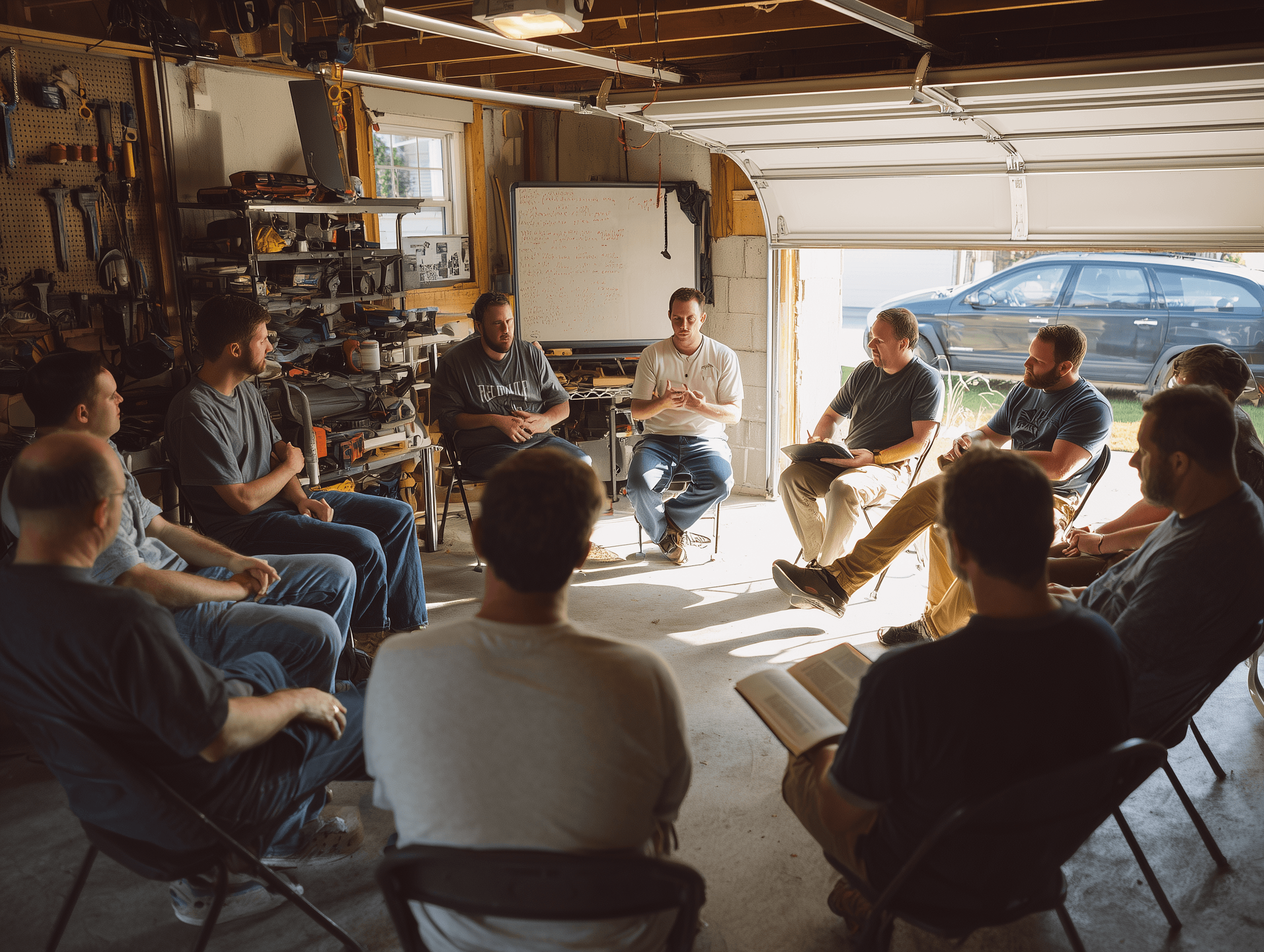
You were never meant to fight alone. The person who keeps their struggle in the dark almost always loses to it. This 7-day Bible study on temptation explores what Scripture says about the power of accountability - honest confession, trusted community, and the kind of relationships that make lasting freedom not just possible but real. Accountability is not about performance or being watched - it is about the healing that happens when we stop hiding. This study shows you what that actually looks like.
The plan is free to read here. In the app it arrives one day at a time, with the full passage and audio.
What the plan covers
- Day 17 min
We Are Not Designed to Fight Alone
Passages: Ecclesiastes 4:9-10 · Hebrews 10:24-25
The writer of Ecclesiastes does not make the case for community in spiritual or theological terms. He makes it in practical terms: if either falls down, one can help the other up. But pity anyone who falls and has no one to help them up. This is not a vision of Christian community at its most inspiring - it is a description of the basic human vulnerability that makes isolation dangerous. We fall. Everyone falls. The question is not whether you will need someone to help you up. The question is whether someone will be there when that moment comes. The New Testament version of this insight is Hebrews 10:24-25, which moves from survival to formation: spur one another on toward love and good deeds. Community is not just a safety net for when we fall. It is an active, ongoing mechanism for growth. We were designed to be shaped by the people around us - to be encouraged, challenged, and directed by others who are running in the same direction. The command not to give up meeting together comes with urgency: and all the more as you see the Day approaching. The pressure of living faithfully in a world that pulls against faith is not diminishing. It is intensifying. Which means the need for community is not a weakness to outgrow but a provision to embrace. The person who consistently chooses isolation from Christian community - for reasons of self-sufficiency, privacy, or busyness - is rejecting a provision God designed specifically for the conditions we are living in. Body Awareness Think about a time when someone was physically present with you in a hard moment - just there, alongside you. Notice what that presence feels like in memory - the weight of it, the safety of it. That is the physical experience of not being alone. Reflection Do you have even one person in your life right now who knows the real state of your spiritual life and who would notice if you fell? If not, what has prevented that kind of relationship from forming? Practice Today Send a message today to one person and ask if they would be willing to check in with you regularly about how you are doing spiritually. Keep the ask simple and honest. Prayer Father, you designed me to need others. Forgive me for the ways I have chosen isolation as a form of self-protection. Give me the courage to let someone close enough to actually help when I fall. In Jesus' Name. Amen - Day 27 min
Confess to One Another
Passages: James 5:16 · 1 John 1:9
James 5:16 makes a connection that our culture finds counterintuitive: confess your sins to one another and pray for each other so that you may be healed. The connection between confession and healing is presented as causal. Confession produces healing. Not because there is anything magical about speaking words out loud to another person, but because what is hidden festers and what is brought into the light begins to heal. We were not designed for the weight of carrying unconfessed sin alone. The shame, the secrecy, the effort of maintaining a public version of ourselves that does not match our interior experience - all of that is a burden that takes a toll over time. Confession to a trusted person removes that burden. It breaks the power of secrecy. It makes the thing real in a way that private acknowledgment often does not. 1 John 1:9 gives the foundation: if we confess to God, he is faithful to forgive. This is the primary confession - the direct, honest acknowledgment before God of exactly what we have done and what we need. Human confession does not replace that. But James suggests that for some kinds of brokenness, healing requires the additional step of bringing it into the light of a trusted human relationship. This is difficult because vulnerability is costly. Letting someone see what you have been hiding requires trust that the person will not use what you share against you, will not treat you as defined by it, and will hold it with care. That is why accountability relationships require investment. But the healing they make possible is worth it. Body Awareness Think about something you have been carrying privately for a while - something you have not told anyone. Notice what that secrecy feels like in your body. Now imagine speaking it out loud to someone safe. Notice if even the imagining of that changes anything in your body. Reflection Is there something in your life right now that you have only ever taken to God but have not confessed to another trusted person - something that might begin to heal more fully if it were brought into the light of a safe relationship? Practice Today If there is a confession you have been avoiding, take the first step toward it today - not necessarily the full confession, but one step closer to it: identify the person you would trust, or pray specifically about whether the time is right. Prayer Lord, I want to walk in the light rather than in hiding. Give me the courage to confess what needs to be confessed - to you and to the people you have placed in my life for exactly this. Let your promise of healing be real in me. In Jesus' Name. Amen - Day 37 min
Bear One Another's Burdens
Passages: Galatians 6:2 · Romans 15:1
Accountability is often misunderstood as a form of monitoring - someone checking up on you to see whether you have failed or succeeded. When it feels like that, it is not accountability in the biblical sense. It is closer to surveillance. The actual picture in Scripture is radically different. Galatians 6:2 uses the image of carrying - lifting a weight that someone else cannot carry alone and sharing it between you. This is the law of Christ, the defining pattern of how Christ related to us: taking on what we could not bear, bearing it with us and for us. Real accountability is an act of shared weight-bearing. It is someone standing with you in the fight, not watching from a distance to record whether you won or lost. The burden of temptation is lighter when it is carried together. The person who knows that someone else is aware of their struggle, is praying for them, is willing to ask hard questions and sit in uncomfortable answers - that person is not alone in the moment of pressure. Romans 15:1 adds the dimension of strength: those who are stronger carry the failings of the weaker. This is not condescension - it is the recognition that at different points in our journey, different people have more capacity to give. Sometimes you are the one being carried. Sometimes you are the one carrying. The relationship is designed to move in both directions over time. Good accountability is not a one-way support structure. It is a mutual burden-sharing that makes both people stronger over time. Body Awareness Think about the physical experience of carrying something heavy alone versus with someone else. The weight does not change, but your body's relationship to it does. That physical relief is the closest analog to what genuine accountability feels like. Reflection Think about your accountability relationships. Do they feel more like surveillance or burden-sharing? What would need to change for them to feel more like the latter? Practice Today If you have an accountability relationship already, send that person a message today that goes beyond checking boxes - share something you are actually carrying, and ask them to carry it with you in prayer. Prayer Father, thank you for the picture of Jesus bearing what we cannot carry alone. Let me experience that grace through the people you have placed in my life. Teach me to share burdens and to receive help carrying mine. In Jesus' Name. Amen - Day 47 min
The Danger of Isolation
Passages: Proverbs 18:1 · 1 Kings 19:4
The story of Elijah under the tree in 1 Kings 19 is one of the most honest portraits of spiritual collapse in all of Scripture. What makes it particularly striking is the timing. In 1 Kings 18, Elijah had just experienced what may have been the most dramatic spiritual victory of his life - fire from heaven, the prophets of Baal defeated, rain ending a three-year drought. And then, in the very next chapter, he is alone in the wilderness, sitting under a tree, asking God to take his life. The sequence is not random. Elijah made a series of choices that led him to that tree: he ran from a threat, he left his servant behind, he went a day's journey alone into the desert. Each step was a step into deeper isolation. And isolation - especially after a period of intense spiritual exertion - creates a specific kind of vulnerability. The enemy does not always come when we are at our weakest. Sometimes he comes when we are most depleted after our greatest efforts, when the adrenaline has faded, when we are tired and alone and our perspective has narrowed. Proverbs 18:1 identifies the disposition of isolation: it is an unfriendly person - someone who has separated themselves - who acts against all sound judgment. The isolated person's judgment is compromised. This is the specific danger. Elijah's assessment that he was the only faithful one left was simply wrong - God would tell him there were seven thousand. Isolation distorts perspective. Community corrects it. Body Awareness Think about how your body feels when you have been socially isolated for an extended period - the fatigue, the narrowing of perspective, the way small things grow disproportionately large. That physical and emotional experience is part of what Elijah was experiencing under the tree. Reflection Is there a pattern in your life where you tend toward isolation specifically after difficult experiences or significant spiritual effort - a tendency to withdraw when what you actually need is community? Practice Today If you have been withdrawing - from church, from community, from the people who know you well - take one step back toward connection today. Even a brief text or call counts. Interrupt the drift toward the desert. Prayer Lord, meet me when I sit under my tree. Send the angel with bread and water. And then call me back toward community rather than deeper into the desert. Protect me from the isolation that distorts my perception of where I am. In Jesus' Name. Amen - Day 57 min
What Good Accountability Looks Like
Passages: Proverbs 27:17 · Proverbs 27:6
The image of iron sharpening iron is visceral. Iron does not sharpen iron gently. It involves friction, pressure, contact. Two pieces of metal are changed by the encounter. This is the picture of genuine accountability: two people who are both being formed by the honest, sometimes uncomfortable exchange between them. The key word is both. Good accountability is not one person holding another accountable while remaining personally unexamined. It is mutual. Both are being sharpened by the relationship. Proverbs 27:6 makes a distinction that is easy to miss but crucial: wounds from a friend can be trusted. The friend who tells you a hard truth - who says the thing you do not want to hear, who names what they are seeing, who does not cushion the reality of your situation - does you more good than the person who only affirms. The enemy multiplies kisses. Flattery and false comfort are the enemy's version of friendship. They feel better and cost more. Good accountability is not about creating a relationship where you report failure and receive judgment. It is about creating a relationship where truth can be spoken in love - where the friction is real but the motive is clearly care. This requires trust, and trust requires time and consistency. You cannot build real accountability in a single conversation. It grows through a pattern of showing up, keeping confidences, following through, speaking truth when it would be easier to stay quiet, and remaining present when someone has failed rather than withdrawing. Body Awareness Think about the physical sensation of friction - the slight heat and pressure when two surfaces move against each other. That sensation is what real sharpening feels like. Notice if there is a relationship in your life where you feel that kind of honest friction. Reflection Do you have a relationship where someone can speak a hard truth to you and you will receive it as a wound from a friend rather than react as if it were an attack? If not, what would need to be true for that kind of trust to exist? Practice Today Think of someone in your life who has told you a hard truth that turned out to be right. Reach out to them today and thank them for it specifically - name what they said and what it meant. Prayer Lord, give me the courage to be the kind of friend who tells the truth - and the humility to receive hard truth from others as a gift. Build in me the character that makes real sharpening possible. In Jesus' Name. Amen - Day 67 min
When We Have Fallen
Passages: Galatians 6:1 · James 5:19-20
Galatians 6:1 contains one of the most important words in all of Paul's teaching on community: gently. The person caught in sin is to be restored - not condemned, not exposed publicly, not made an example of, not lectured at length - but restored. Gently. By people who are living by the Spirit and who are watching themselves, aware that they are equally capable of falling. The goal is restoration, and the method is gentleness. This matters because the religious instinct, when someone has failed, often runs in the opposite direction. Condemnation feels appropriate. Distance feels protective. Judgment feels like it communicates the seriousness of sin. But none of those responses are what Paul describes as the Spirit-led response. The Spirit-led response is to come toward the person who has fallen, not away from them. To work toward their restoration, not their shaming. James 5:19-20 gives the weight of this: whoever turns a sinner from the error of their way saves them from death. This is not small work. The person who goes after the one who has wandered and brings them back is doing something with stakes as high as spiritual survival. Community that runs from fallen members is community that abandons people at the moment of their greatest need. Community that runs toward them - gently, without condemnation, with the aim of restoration - is community that actually looks like Christ, who left the ninety-nine to go after the one who was lost. Body Awareness Think about what it physically feels like to be approached with gentleness after a failure, compared to being approached with judgment. One closes the body down - the other creates space to breathe and receive help. That physical difference is what determines whether restoration is actually possible. Reflection When someone you know has fallen or failed spiritually, what is your instinctive response? Do you move toward them or away? What would it look like to move toward them with the goal of restoration rather than judgment? Practice Today If there is someone in your community who has fallen and from whom you have been keeping distance, pray specifically for them today. Ask God whether he is calling you to move toward them rather than wait for them to come back. Prayer Father, give me the Spirit-led instinct to move toward people who have fallen rather than away from them. Let restoration be my goal - not my reputation, not my comfort, not my distance from their failure. Teach me to be the kind of community member that makes coming back possible. In Jesus' Name. Amen - Day 77 min
The Body Working Together
Passages: 1 Corinthians 12:26 · Ephesians 4:15-16
Paul's image of the church as a body is not merely organizational. It is biological. When one part of a body suffers, the whole body is affected - even the parts that are not injured. When one part is honored, the whole body shares in it. This is how genuine Christian community works: it is interconnected in ways that make genuine independence impossible. What happens to you happens to the community. What happens to the community happens to you. The implication for accountability is significant. The person who is struggling in secret, who is being slowly destroyed by an unconfessed pattern of sin, is not only affecting themselves. They are affecting the whole body, whether or not anyone can see it yet. The church is weakened by members who are suffering silently and strengthened when those same members come into honest community and receive the support they need. Ephesians 4:15-16 describes the mechanism of the body's growth: speaking the truth in love. This is the fuel. Each part doing its work - which includes the work of honest, caring, truth-telling accountability - is what builds the whole body up in love. The maturity Paul describes is not individual spiritual achievement. It is corporate: we will grow to become the mature body of Christ. Growth in this sense is something that happens together. The church that is willing to be honest with itself - where people speak truth in love, where accountability is practiced rather than avoided, where confession is welcomed - is the church that actually becomes what it was designed to be. Body Awareness Become aware for a moment of your whole body as a system - the way each part depends on the others, the way a small injury in one place affects your posture and movement everywhere else. That is the experience of being part of a body. Let it connect you to what it means to be part of the body of Christ. Reflection Do you experience your church community as a body you are genuinely connected to - where your struggles affect others and their struggles affect you - or more as a group of individuals who gather periodically? Practice Today Pray today specifically for one other person in your community by name - not a general prayer but a specific one, based on what you actually know about what they are carrying. Let your prayer be the practice of one part of the body caring for another. Prayer Lord, make us a body - genuinely connected, honestly speaking truth in love, building each other up rather than managing our private spiritual lives in isolation. Let the church I am part of be a place where being honest is possible and being helped is real. In Jesus' Name. Amen