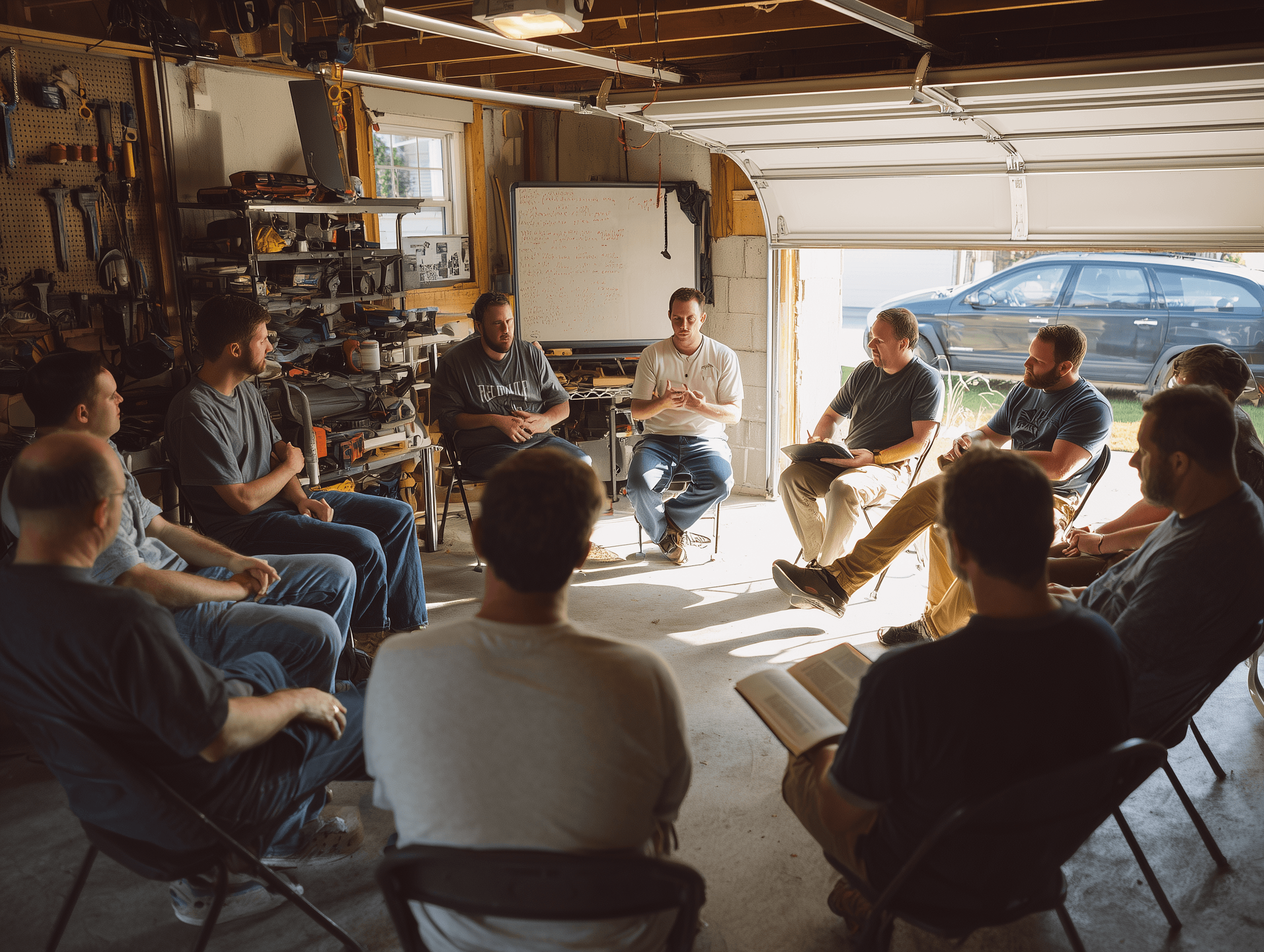
The Word as Your Weapon

7 daysScripturetemptationBiblespiritual warfare

Jesus answered every temptation with a single phrase: it is written. He did not argue, negotiate, or debate - he quoted Scripture. This 7-day Bible study on temptation explores how God's Word functions as a weapon in the fight against temptation, and what it means to have it stored in your heart before the battle begins. You cannot reach for something you do not have. This study will show you not just why the Word matters in the fight, but how to make it yours.

Start this plan in Bible Chat

The plan is free to read here. In the app it arrives one day at a time, with the full passage and audio.

What the plan covers

  1. Day 17 min

    It Is Written

    Passages: Matthew 4:4 · Deuteronomy 8:3

    Jesus had been fasting for forty days when the enemy arrived with his first temptation. He was physically depleted, at the point of genuine hunger, in a condition where most of us would be making decisions we would later regret. And he answered with Scripture. Not with a reasoned argument he constructed in the moment. Not with a prayer asking God to help him think clearly. With a specific text: it is written. The passage he quoted was Deuteronomy 8:3 - a word God spoke to Israel in the wilderness about the purpose of hunger. He had it. It was already in him. And it was enough. This is the pattern Jesus sets for us, and it tells us several things about how the Word functions as a weapon. First, it has to be in you before the moment of temptation arrives. You cannot reach for what you do not have. The verse Jesus quoted did not originate in the wilderness encounter - it was formed in him over a lifetime of immersion in God's word. Second, the Word speaks to the actual dynamics of temptation. Deuteronomy 8:3 is not generically encouraging. It speaks directly to the meaning of hunger and the nature of what actually sustains human life. The right word for the right moment is devastatingly effective. Third, Jesus' use of the Word models what it means to live from a different source. Man does not live on bread alone. There is a deeper hunger than physical hunger, and a deeper food than what the enemy was offering. The Word speaks to that deeper reality when it is wielded rightly. Body Awareness Notice if you are aware of any hunger right now - physical or otherwise. What do you reach for first when that hunger appears? That reflex tells you a great deal about where you are living from. Reflection When temptation comes, do you have Scripture ready - verses that speak to the specific patterns of temptation you face - or do you mostly respond with willpower and general resolve? Practice Today Choose one verse that speaks to a specific temptation you face regularly. Write it on a card, set it as your phone wallpaper, or say it out loud five times today. Start building the habit of having it ready. Prayer Lord, I want your Word to be so alive in me that it is my first reach when temptation comes. Grow in me the hunger for your Word that you grew in Jesus. Let it feed what nothing else can touch. In Jesus' Name. Amen

  2. Day 27 min

    Hidden in the Heart

    Passages: Psalm 119:11 · Psalm 119:9

    The psalmist uses a specific image: hidden in the heart. Not written in a notebook. Not saved in a phone. Hidden in the heart - internalized, absorbed, carried in the place where it is immediately available. The logic is clear: he says the purpose is that I might not sin against you. There is a direct, causal relationship between having the Word hidden in the heart and being protected against sin. Memorization is not a devotional hobby or a sign of exceptional spiritual dedication. It is practical preparation. When you are in a moment of temptation - when the pressure is real, when the pull is strong, when your emotions are engaged - you do not have time to open an app and search for a relevant verse. But you do have what is already in you. That is the point of hiding it in the heart. The second verse makes the same connection from a different angle: how can a young person stay on the path of purity? By living according to your word. The Word is not just something to be read and appreciated. It is something to be lived according to. That requires knowing it specifically enough to apply it to specific situations. Psalm 119:9 is addressed to the young - those early in the journey, those most exposed to the particular temptations of inexperience and desire. The answer given is not general spiritual encouragement. It is the Word, specifically, consistently, as a path to walk on. The Word becomes a path when it is in you deeply enough to direct your actual steps. Body Awareness Place your hand on your chest for a moment. The heart is not just a metaphor here - it is the center of your inner life. What does it feel like to think about storing something permanent and protective in that place? Reflection How much Scripture do you actually have memorized right now? Not generally familiar with - genuinely memorized, able to quote under pressure. Is that enough to help you in the moments when you need it most? Practice Today Begin memorizing one verse today. Not this week - today. Write it out by hand, say it ten times, then try to say it without looking. Even one verse is more than none. Prayer Father, I want your Word hidden in my heart - not just accessible on my phone but internalized in me. Give me the discipline to memorize it and the love for it that makes memorizing feel less like work and more like treasure. In Jesus' Name. Amen
  3. Day 37 min

    Living and Active

    Passages: Hebrews 4:12 · Isaiah 55:11

    Hebrews 4:12 makes a claim about the Bible that cannot be made about any other document in existence: it is alive and active. Not historically important. Not profoundly wise. Not spiritually helpful. Alive. The word translated alive is the same root used for the living God. The Bible carries the life of its author in a way that makes it unlike any other text. When you open it and read it, you are not engaging a record of what God once said. You are engaging what God is saying - through a text that remains active, sharp, and precise across every century and context it touches. The image Hebrews uses is the double-edged sword, and the precision it describes is striking: it penetrates to the division of soul and spirit, joints and marrow. It judges the thoughts and attitudes of the heart. The Word does not just speak to your circumstances. It speaks to the interior - to what is happening at the deepest levels of motivation, desire, and self-deception. This is why the Bible is not just encouraging to read but actually convicting and transforming. It sees things in us that we cannot see in ourselves. Isaiah 55:11 adds the dimension of effectiveness: the Word will not return empty. It will accomplish what God sends it to do. When you bring Scripture to a moment of temptation, you are not making a symbolic gesture. You are unleashing something with inherent power to do what needs to be done. The Word is alive. Trust it to act. Body Awareness Think about the last time you read the Bible and felt something shift in you - a moment of conviction, clarity, or unexpected encouragement. Notice where you felt that in your body. That is the aliveness of the Word working in you. Reflection Do you approach reading the Bible expecting it to speak, to convict, to act - or has it become routine enough that you are no longer expecting it to do anything in particular? Practice Today Read one passage of Scripture today slowly - not for information but for encounter. Read it aloud. Read it twice. Ask God before you begin: speak to me specifically right now. Then pay attention. Prayer God, I believe your Word is alive. Help me to approach it as a living voice and not just a text. Let it do what you send it to do in me - cut where I need cutting, heal where I need healing, speak where I need to hear. In Jesus' Name. Amen
  4. Day 47 min

    The Word Renews the Mind

    Passages: Romans 12:2 · Colossians 3:16

    The mind is the primary battleground of temptation. Most temptations are not won or lost in the moment of decision - they are won or lost in the patterns of thought that precede it. The person who has consistently been feeding their mind one kind of content will find certain decisions easy and others nearly impossible. Transformation follows the content of the mind over time. Romans 12:2 puts the mechanism plainly: do not conform to the pattern of this world - do not be shaped by the default content that the world continuously presses into you - but be transformed by the renewing of your mind. Transformation is not an event you experience once. It is the ongoing result of a sustained choice about what your mind is fed. Colossians 3:16 adds a specific dimension: let the message of Christ dwell among you richly. The word richly is important. Not briefly. Not occasionally. Richly - in abundance, soaking through, present in depth and not just surface. The message of Christ dwelling richly in the mind is the mechanism of transformation. When you consistently immerse yourself in Scripture - reading it, meditating on it, speaking it, singing it - the mind is gradually but genuinely reshaped. What you find attractive changes. What you find repulsive changes. What you desire changes. The temptations that once felt irresistible begin to feel less compelling as the Word recalibrates what you actually want. This is not magic. It is a process. But it is a process that works. Body Awareness Notice the quality of your attention right now. Is your mind scattered, or are you present and focused? That quality of attention is exactly what consistent immersion in Scripture trains over time. Reflection If your mind is being transformed by what you consistently put into it, what is it being transformed by right now - what content dominates your regular mental diet? Practice Today For the next 24 hours, keep a rough mental inventory of what your mind is consuming: what you read, watch, listen to, and think about in idle moments. At the end, honestly assess: is this the diet of a mind being renewed? Prayer Father, transform my mind. I want to want what you want. Reshape my desires, my instincts, my default thoughts through the richness of your Word dwelling in me. Let me become someone who thinks differently because I have been consistently fed differently. In Jesus' Name. Amen
  5. Day 57 min

    A Lamp and a Light

    Passages: Psalm 119:105 · Proverbs 6:23

    The image Psalm 119:105 uses is intimate rather than spectacular. It is not a spotlight illuminating the whole landscape. It is a lamp for my feet - light enough to see the next step, positioned at ground level, immediate and practical. There is wisdom in this image that matches the actual experience of following God through temptation. We rarely need to understand everything at once. We need to see the next step clearly. The Word is designed to give us exactly that kind of guidance - not comprehensive visibility into the future, but enough light to take the step directly in front of us without falling. Proverbs 6:23 makes the same point in slightly different language: the command is a lamp, the teaching is a light, and correction and instruction are the way to life. Notice that correction is included in what the lamp provides. The light of God's Word does not just show us the path forward - it shows us when we have wandered off it. This corrective function is not comfortable, but it is deeply merciful. Darkness is what makes wandering dangerous. Light - even when it reveals that you have stepped off the path - is always a gift. When a moment of temptation comes and visibility is low, when emotions are high and reasoning is compromised, the Word illuminates the specific step you need to take. Not a theoretical principle but a practical next action. Flee this. Choose that. This is the way. The person who knows the Word has a lamp in the dark moments most people are navigating blind. Body Awareness Think about walking in complete darkness versus walking with a lamp. Notice the physical difference between those two experiences - the tension in the body when you cannot see, and the release when there is enough light to take the next step safely. Reflection In the darkest or most pressured moments of your spiritual life, has the Word functioned as a lamp for you - providing specific guidance for the specific step you needed to take? Practice Today Identify a situation in your life right now where you feel like you are navigating in low visibility. Spend ten minutes searching Scripture - or asking God to bring to mind verses you know - that speak to that specific situation. Prayer Lord, your Word is a lamp for my feet. When I cannot see clearly, when the moment is dark and the pressure is real, give me the specific light I need for the specific step in front of me. Let your Word be that near. In Jesus' Name. Amen
  6. Day 67 min

    Stand on What God Said

    Passages: Matthew 24:35 · Romans 4:20-21

    Jesus's claim in Matthew 24:35 is the most radical statement about Scripture's permanence in the entire Bible. Everything in the created order - the physical universe in all its scale and apparent permanence - is described as passing away. But his words will not. They outlast everything. This is the foundation on which we stand when we use the Word as a weapon: it is the most durable thing in existence. When a temptation comes with the argument that what God said is no longer relevant, or that the circumstances have changed enough to make the promise inapplicable, or that the situation is too specific for a general word to address - the response is the permanence of what God has spoken. His words have not expired. They are not losing their power. Romans 4 shows us what it looks like to stand on this in practice. Abraham faced a situation where every observable fact contradicted God's promise. His body was as good as dead. The circumstances were not encouraging. But he did not waver through unbelief regarding the promise of God. He was fully persuaded that God had power to do what he had promised. That persuasion was not based on circumstances - it was based on what God had said. Standing on the Word in temptation works the same way. The circumstances may press in the other direction. The feelings may not confirm what the Word says. But the Word carries more weight than any of it - because heaven and earth will pass away, and his words will not. Body Awareness Think about what it physically feels like to stand on something solid versus something uncertain. God's Word is the most solid ground available. Notice if your body can feel the difference between bracing on shaky ground and resting on something that will not move. Reflection Is there a promise of God that you are currently not fully persuaded of - something he has said that circumstances or feelings are making hard to trust right now? Practice Today Take that specific promise - the one you are struggling to trust - and write it down in your own words. Then write one sentence describing why you choose to stand on it today despite what you see or feel. Prayer God, your words will not pass away. Help me to build on them rather than on what I can see or feel in the moment. Make me like Abraham - fully persuaded that you have power to do what you have promised. In Jesus' Name. Amen
  7. Day 77 min

    Build Your House on the Rock

    Passages: Matthew 7:24-25 · Joshua 1:8

    Jesus ends the Sermon on the Mount with a story about two houses. Both builders heard the same words. Both built something. The storm came against both equally - the same rain, the same rising streams, the same winds, the same intensity of assault. The difference was not what they faced. It was what they built on. The wise man built on hearing and acting - both elements together. The foolish man apparently heard but did not act. He knew the words but did not build his life on them. The Word as a weapon is not a passive resource. It is activated by doing - by taking what God says and making it the actual foundation of actual decisions. Joshua 1:8 describes the same pattern. Keep this Book of the Law always on your lips. Meditate on it day and night. So that you may be careful to do everything written in it. The progression moves from knowing to meditating to doing - and the doing is the point. Success and prosperity in Joshua's context meant something specific: being faithful to the calling God had given, navigating the challenges ahead with integrity and courage. The Word was the resource that made that possible. The person who consistently takes the Word seriously enough to act on it - who changes their behavior, their decisions, their patterns because of what God has said - is building on rock. When the storm comes, that house stands. Not because the storm was less severe. Because the foundation was not made of what the storm can move. Body Awareness Think about the word foundation. Where do you feel most grounded in your body right now - your feet, your core, your breath? Let that physical sense of grounding connect to the image of building on rock. Reflection Where in your life is there a gap between what you know from the Word and what you are actually doing? That gap is where the storm finds structural weakness. Practice Today Identify one specific instruction from Scripture that you know but are not currently acting on. Take one concrete step today to close that gap - not eventually, but today. Prayer Lord, I want to be a builder on rock - not just a hearer of your words but a doer of them. Show me where my foundation has gaps. And give me the courage to build my actual life on what you have actually said. In Jesus' Name. Amen