
When You Give In

7 daystemptationfailurerestorationshame

It happened again. And the weight of that - the disappointment, the confusion, the sense of going backward - can feel heavier than the sin itself. This 7-day Bible study on temptation meets you honestly in the aftermath of a fall, without minimizing what happened and without leaving you there. Falling does not have to be the end of the story, and it does not have to define the next chapter. There is a way forward from here.

Start this plan in Bible Chat

The plan is free to read here. In the app it arrives one day at a time, with the full passage and audio.

What the plan covers

  1. Day 17 min

    It Happened. Now What?

    Passages: 1 John 1:9 · Psalm 51:1-2

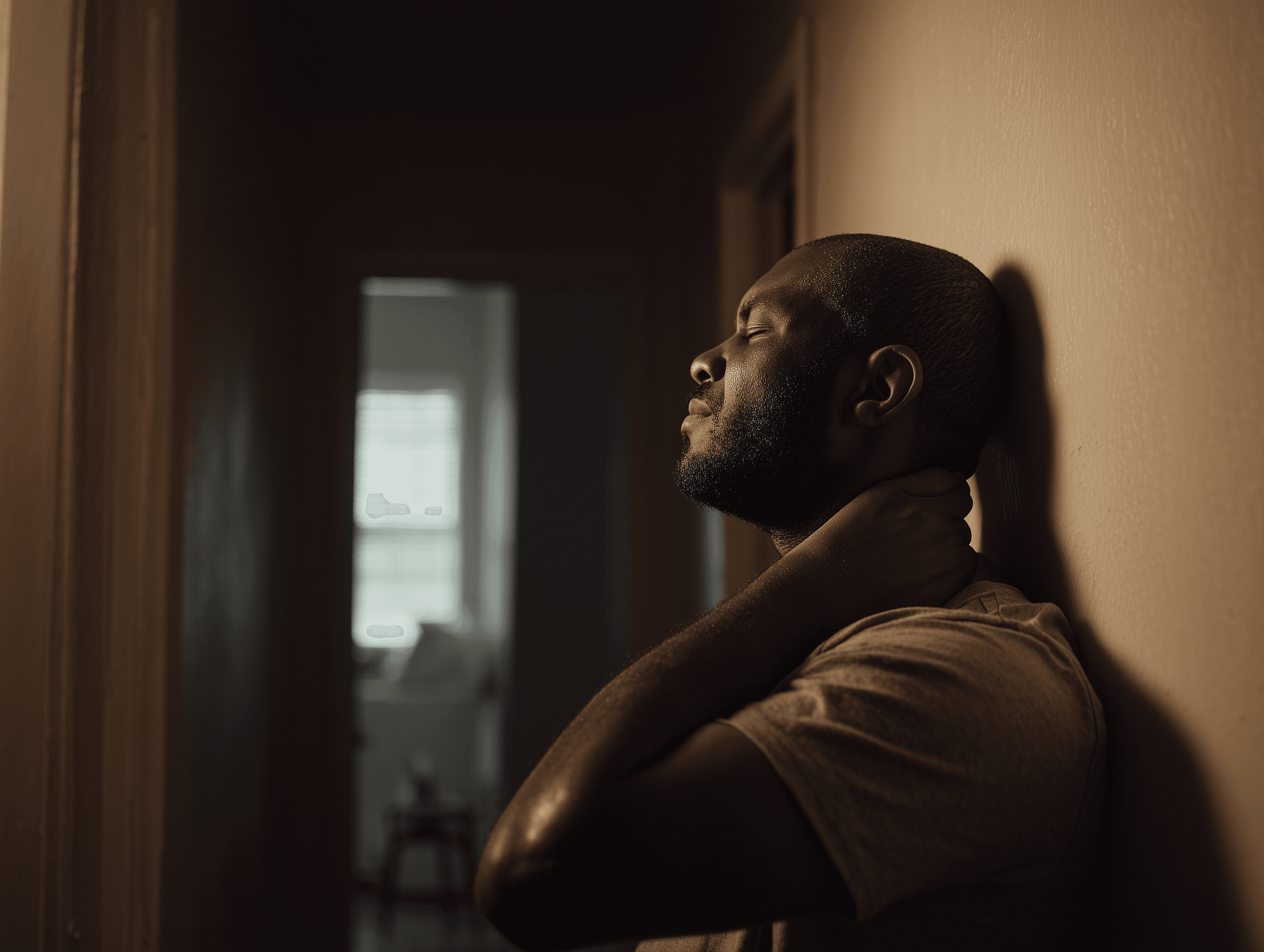
    When you fall into sin, the first voice you hear is rarely a gentle one. It tells you to hide, to spiral, to pull back from God until you have somehow cleaned yourself up enough to return. That voice sounds like conscience, but it is not. Conscience points you toward God. That voice points you away from him. Scripture offers a strikingly different first step after failure: go to God immediately. 1 John 1:9 is one of the most direct promises in the New Testament. If we confess - not if we feel bad enough, not if we punish ourselves adequately - if we confess, he is faithful and just to forgive and to cleanse. The promise rests entirely on his character, not our emotional state. David understood this. Psalm 51 was written after one of the most serious failures recorded in Scripture - adultery and its cover-up leading to murder. And yet the psalm does not begin with self-hatred. It begins with a cry toward God: have mercy on me. David ran toward the one he had sinned against, not away from him. Confession is not the shameful end of something. It is the beginning of restoration. The word confess means to say the same thing - to call what you did what God calls it, without minimizing or excusing it. When you do that, you are not informing God of something he did not know. You are agreeing with him, and in that agreement, the process of healing begins. The instinct to spiral into self-condemnation or to wait until you feel worthy of approaching God will keep you stuck far longer than the sin itself. Do not wait. Go now. Body Awareness Notice whether you are holding tension somewhere in your body right now - your chest, your jaw, your shoulders. Consider that this might be the physical weight of something unconfessed, and let yourself breathe. Reflection Is there anything you have been avoiding bringing to God because you feel you need to earn your way back first? Practice Today Write a single honest sentence to God today - not a polished prayer, just one true sentence about what happened and what you need from him. Prayer God, I do not want to hide from you. I come to you not because I have fixed anything but because you are the only one who can. Receive my confession and do what only you can do - forgive me and make me clean. In Jesus' Name. Amen
  2. Day 27 min

    Guilt Versus Shame

    Passages: Romans 8:1 · John 8:11

    There is a critical difference between guilt and shame, and confusing them causes enormous spiritual damage. Guilt is a healthy signal. It accurately names what happened: you did something wrong. It points at an action and invites repentance. When guilt does its proper work, it leads you toward God and toward change. Guilt is a gift. Shame is something else entirely. Shame does not point at what you did - it points at who you are. Shame says you are broken, disqualified, too far gone, fundamentally defective. Where guilt says I did something wrong, shame says I am something wrong. And once you accept that framing, it becomes nearly impossible to receive grace, because grace is for people - and shame has convinced you that you are a problem, not a person. Romans 8:1 is one of the most important verses in the New Testament for anyone walking in shame: there is now no condemnation for those who are in Christ Jesus. Not less condemnation. Not condemnation pending your improvement. No condemnation. The verdict has been rendered, and it is not guilty. The story in John 8 is a picture of this. A woman was brought before Jesus in the most public, humiliating way possible - caught in adultery, exposed, shamed before a crowd. Jesus did not participate. He redirected the accusation, dismissed the crowd, and then addressed her directly: neither do I condemn you. He did not ignore the sin - he told her to leave it. But he refused to do it through shame. He set her free and then called her to a different life. That is how Jesus works. He does not use shame as a tool. He names sin clearly and then speaks freedom over you. Body Awareness Place a hand on your chest for a moment. Notice whether the phrase "there is no condemnation" lands in your body or stays only in your head. Reflection In your life right now, are you experiencing guilt that is moving you toward God, or shame that is keeping you stuck and hidden? Practice Today Say Romans 8:1 out loud three times today, slowly, inserting your name: "There is now no condemnation for [your name] who is in Christ Jesus." Prayer Jesus, I have been living under a verdict you never gave me. Help me hear your voice over the voice of shame - the one that says neither do I condemn you. I receive that today. In Jesus' Name. Amen
  3. Day 37 min

    Peter After the Denial

    Passages: Luke 22:61-62 · John 21:15-17

    Peter's story is one of the most honest accounts of failure and restoration in all of Scripture, and it is worth sitting with slowly. Peter did not fail quietly or privately. He denied knowing Jesus three times, publicly, to people who were watching him. And Luke tells us that in the middle of the third denial, Jesus turned and looked at Peter. Not a look of judgment - but Peter knew what had just happened. He went outside and wept bitterly. After the resurrection, Jesus had a particular agenda when he met Peter on the beach. He did not bring up the denial as a permanent disqualifier. He did not lecture Peter on his failure. He asked him a question - three times, once for each denial: do you love me? And with each answer, Jesus commissioned him: feed my lambs, tend my sheep, feed my sheep. Notice what Jesus did. He met Peter at the exact point of failure - three denials, three questions - and turned each one into a recommitment and a calling. He did not skip past the failure or pretend it did not happen. He walked directly into it and transformed it. This is the pattern of Jesus with every person who falls and returns to him. He does not treat you as though the failure never happened - he meets you there, in that specific place, and transforms it into something new. The story of your failure does not disqualify you from what God has for you. In Jesus' hands, it becomes part of the calling. The question Jesus asked Peter, he asks you today: do you love me? Answer honestly, and let him commission you from there. Body Awareness Notice the space behind your eyes or at the back of your throat - the place where tears sometimes sit unexpressed. Is there grief here you have not let yourself feel? Reflection Is there a specific point of failure in your life that you have believed permanently disqualifies you from what God had for you? Practice Today Write down the specific failure you have been carrying and beneath it write the words: Jesus met Peter here. He meets me here too. Prayer Lord, you know I love you - even when my actions have told a different story. Come to me at the exact point of my failure the way you came to Peter. Restore me and recommission me from there. In Jesus' Name. Amen
  4. Day 46 min

    Do Not Run from God

    Passages: Genesis 3:8-9 · Hosea 6:1

    The pattern is as old as the garden. Adam and Eve sinned, and their first instinct was to hide - not from each other, but from God. They heard him coming and disappeared into the trees. And God, knowing exactly where they were, called out: where are you? That question is not a search for information. God did not lose them. It is an invitation - a call back out of hiding and into the relationship that had just been broken. Even at the very beginning, when sin first entered the story, God moved toward the people who had moved away from him. This pattern repeats throughout Scripture. People fall, they hide, and God comes looking. The prodigal son's father spots him while he is still a long way off. Jesus seeks out the lost sheep, the lost coin. Hosea pleads with Israel to return. Come, let us return to the Lord. Not come let us prepare ourselves adequately first. Just return. The logic of hiding is seductive: I will go back to God when I have dealt with this on my own, when I feel less dirty, when I have proven I am serious about changing. But hiding from God does not produce change - it preserves the isolation that makes change impossible. You cannot heal in the dark. God is not waiting at a distance for you to clean yourself up before you approach. He is already moving toward you. The sound of his voice calling - where are you - is not the sound of accusation. It is the sound of pursuit. He wants you back. He is coming to where you are to get you. Body Awareness Are you leaning away from anything right now - slumping, turning inward? Try sitting up slightly and opening your posture as a physical act of stopping the hiding. Reflection What have you been telling yourself you need to fix before you can return to God? Practice Today Spend two minutes today simply sitting in God's presence without a prepared speech - no agenda, no explanation needed. Just stop hiding. Prayer God, I have been hiding. I hear you asking where I am, and today I am answering - I am here, I am yours, and I am coming back. Thank you for coming toward me even when I ran the other direction. In Jesus' Name. Amen
  5. Day 57 min

    The Danger of Self-Condemnation

    Passages: 1 John 3:20 · 2 Corinthians 7:10

    There is a kind of self-condemnation that looks like repentance but is actually something else. It involves long periods of feeling terrible about yourself, replaying your failure, punishing yourself emotionally, and refusing to receive forgiveness because you do not feel you deserve to yet. It can look like depth of conscience. It is not. It is often pride in disguise. Here is why: genuine repentance turns toward God. It grieves the sin, names it honestly, and then moves - toward confession, toward change, toward the grace that God freely offers. But extended self-condemnation stays focused on itself. It is less about grieving what you did to God or others and more about managing your own sense of self. Underneath it is often the belief that if you punish yourself enough, you will have earned the right to move on. But Christ already paid for it. To refuse his payment and insist on making your own is not humility - it is a rejection of the gospel. 1 John 3:20 offers an astonishing reframe: if our hearts condemn us, God is greater than our hearts. Your own conscience, which feels so authoritative in those dark moments, is not the highest court. God knows everything - including the sins you are beating yourself up over - and his verdict is not condemnation for those in Christ. 2 Corinthians 7:10 is the test: does your sorrow lead somewhere? Godly sorrow produces repentance and leaves no regret. If what you are experiencing is just circling grief with no movement toward God, that is worldly sorrow - and Paul says plainly that it brings death. Feel the grief. Then let it lead you home. Body Awareness Notice whether you are carrying a kind of heaviness that has become so familiar you have stopped noticing it. Sit with the question of whether it is moving you toward God or just weighing you down. Reflection Is the sorrow you feel about your sin leading you toward repentance and freedom, or is it keeping you in a loop that never actually arrives anywhere? Practice Today If you have been in a cycle of self-condemnation, make a deliberate decision today to receive forgiveness rather than continuing to earn it. Say out loud: "Christ already paid for this. I receive it." Prayer Father, I have been working hard to pay for something that has already been paid. Forgive me for the pride in that. Help me trust that your verdict is greater than my heart's condemnation. I receive your forgiveness now. In Jesus' Name. Amen
  6. Day 67 min

    Getting Back Up

    Passages: Proverbs 24:16 · Micah 7:8

    One of the most freeing reframes in all of Scripture is hiding in Proverbs 24:16. It does not describe the righteous person as someone who never falls. It describes them as someone who falls seven times and rises again. The mark of righteousness in a fallen world is not a perfect record. It is the refusal to stay down. This reframes the entire question. The question is not whether you will fall - Scripture assumes you will, repeatedly. The question is whether you will get back up. The wicked stumble when calamity strikes and do not rise. The righteous fall - and rise. The difference is not the falling. It is what happens next. Micah 7:8 is a declaration made in the middle of real darkness, not from the other side of it. Though I have fallen, I will rise. Though I sit in darkness, the Lord will be my light. This is not triumphalist faith that pretends the fall did not happen. It is defiant faith that acknowledges the fall fully and chooses to rise anyway, banking everything on the character of God. If you have fallen, the enemy's strategy is to keep you on the ground. Every voice telling you to stay down, you are too far gone, you have failed too many times - those voices have an agenda. They want you immobilized. The righteous person recognizes that voice and refuses it. Getting back up does not require that you feel ready. It does not require that you have it figured out or that you understand fully what went wrong. It requires that you rise - go back to God, re-engage, take the next step. You can get up shaky. You can get up unsure. You just have to get up. Body Awareness If you are seated, plant your feet firmly on the floor. Feel the ground beneath you. This is what it means to rise - contact with something solid beneath the fall. Reflection What has been keeping you on the ground - a belief that you have fallen too many times, or that getting up again would be hypocritical? Practice Today Take one concrete step today that represents getting back up: attend the gathering you have been avoiding, reach out to the person you have been too ashamed to contact, or simply open your Bible again. Prayer Lord, I have been on the ground. Today I choose to rise - not because I feel ready but because you are the one who lifts me. Be my light in this darkness. I am getting up. In Jesus' Name. Amen
  7. Day 77 min

    You Are Still His

    Passages: Romans 8:38-39 · John 10:28-29

    After a significant failure, one of the most persistent questions the enemy plants is this: am I still his? Did this disqualify me? Has God finally had enough? Is my place in him secure, or did I just lose it? Paul answers that question with a list so comprehensive it borders on overwhelming. Neither death nor life. Neither angels nor demons. Neither present nor future. Neither height nor depth. Nor anything else in all creation. He is not leaving loopholes. He is sealing every possible exit. Nothing - no sin, no failure, no pattern of struggle - can separate you from the love of God in Christ Jesus. The security described in John 10 operates on two levels: you are in the Son's hand, and you are in the Father's hand. No one can snatch you from either. The word Jesus uses for snatch is active and violent - it describes a hostile taking by force. And Jesus says plainly: it cannot happen. You are held at a level that no enemy can reach, and no failure of yours can undo. This is not a license to sin carelessly - people who love Jesus do not want to use his security as an excuse. But for the person who has fallen and genuinely wonders whether they are still his, this is the answer: yes. You are still his. The love of God in Christ Jesus is not revoked by what you did. Your identity in him is not canceled by your worst moment. You fell. You have been wept over, confessed, and forgiven. You have gotten back up. And through all of it, you were held. You are still held. You are still his. Body Awareness Imagine, physically, what it would feel like to be held so securely that nothing could remove you. Let your body relax into that image for just a moment. Reflection Do you actually believe that your failure has not changed your standing before God - or do you carry a quiet suspicion that it has? Practice Today Write Romans 8:38-39 somewhere you will see it today - your phone, a piece of paper, anywhere. Read it every time you see it and let it land. Prayer Father, I need to know that I am still yours - and today your Word tells me I am. Nothing has separated me from your love. I am held in the Son's hand and in yours. Help me live from that security today. In Jesus' Name. Amen