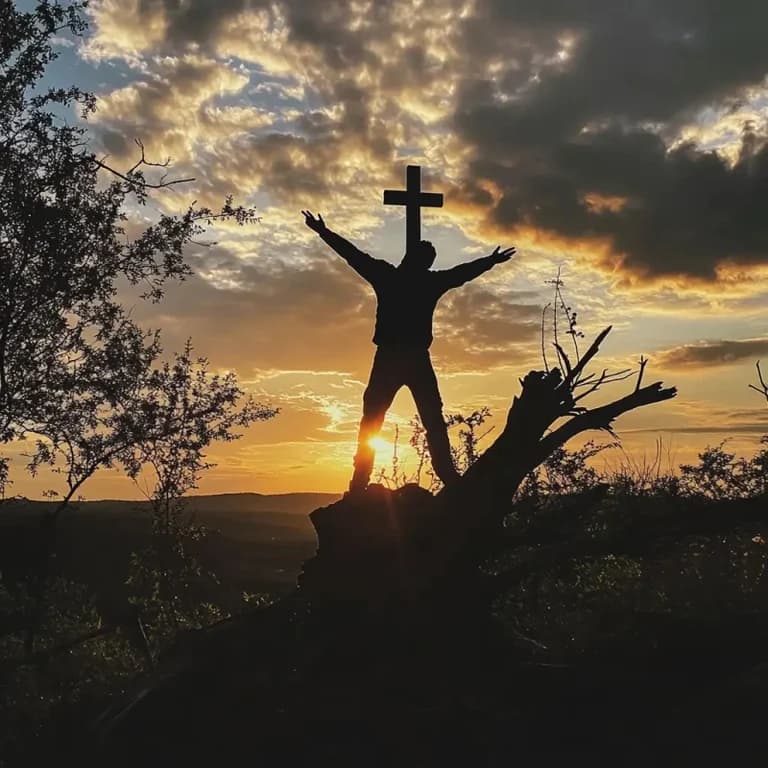
The Temptation to Escape
When life becomes too heavy, we reach for ways to check out. Screens, food, substances, busyness - anything that puts distance between us and what we can't face. This 7-day Bible study on temptation examines the urge to escape, what Scripture says about why we numb, and what real rest in the presence of God actually looks like. The good news is that God is not asking you to white-knuckle your way through difficulty. He is offering something far better than escape - he is offering himself.
The plan is free to read here. In the app it arrives one day at a time, with the full passage and audio.
What the plan covers
- Day 16 min
Running from Ourselves
Passages: Jonah 1:3 · Psalm 55:6-8
Jonah 1:3 says he "went down" - and that word matters. Every step away from God is a step down. He did not just change direction; he booked a ticket, paid the fare, and got on the boat. The escape was intentional, deliberate, and expensive. And it still did not work. The Psalmist in Psalm 55:6-8 gives us the emotional version of the same thing. Oh, that I had the wings of a dove - I would fly away and be at rest. This is not a sinful prayer. It is an honest one. When life becomes too painful, too confronting, or too heavy, the urge to vanish feels completely rational. We do not just want relief from the situation. We want relief from ourselves. But Jonah's story tells us something important: you cannot outrun what lives inside you. The storm followed him. The fish found him. The same grief, the same shame, the same fear - they boarded that ship with him. Distance is not the same as freedom. This is where so many escape strategies fail us. We change the scenery, numb the feeling, or fill the silence - and for a while it works. But the thing we were running from is patient. It waits. And it tends to grow in the dark. God did not abandon Jonah in the water. He sent a fish - which sounds like punishment but was actually a rescue. That is the pattern throughout Scripture: God interrupts the escape not to shame us but to bring us home. The question Jonah had to face was not whether God was angry. It was whether Jonah was willing to stop running long enough to be found. Body Awareness Take a slow breath and notice if there is anywhere in your body that feels tight or braced - as if you are already preparing to leave. Reflection What are you most tempted to run from right now, and what would it mean to stay? Practice Today Identify one thing you have been avoiding - a conversation, a feeling, a decision - and take one small step toward it today rather than away from it. Prayer Lord, I confess that running feels easier than staying. You know what I have been trying to escape and why. Give me the courage to stop moving long enough to be found by you. In Jesus' Name. Amen. - Day 26 min
What We Reach For
Passages: Isaiah 55:2 · Proverbs 20:1
Isaiah 55:2 does not open with a command. It opens with a question: why? Why spend yourself on what does not feed you? God is not lecturing here; he is curious. He is asking us to look honestly at the gap between what we reach for and what we actually need. Every person has something they turn to when the pain gets loud. It might be food or alcohol. It might be scrolling, pornography, overworking, or spending money. Some of these things are socially accepted. Some are hidden in shame. But all of them share the same logic: they offer a quicker, easier version of something we genuinely need. Comfort. Rest. Connection. Relief. Feeling something - or feeling nothing. Proverbs 20:1 is blunt about where that road leads. Wine is a mocker - meaning what promises to help will eventually make fun of you. The thing you thought you controlled will one day control you. That is not a moral judgment; it is an observation about how these patterns work over time. But Isaiah 55:2 does not stop at the question. It pivots to an invitation: listen to me, and eat what is good. God is not telling you to stop wanting. He is telling you that what you want - deep nourishment, genuine rest, real satisfaction - is actually available. You have just been looking for it in places that cannot deliver. The numbing agents in your life are not your enemy. They are symptoms pointing to a real hunger. The question is not just what you are reaching for - it is what you are actually starving for underneath it. Body Awareness Notice what happens in your body when you feel the urge to check your phone, eat, or distract yourself - where does that impulse live? Reflection What is the real hunger underneath the thing you reach for most often? Practice Today The next time you feel the urge to numb or escape today, pause for sixty seconds before acting on it and ask: what do I actually need right now? Prayer Father, you see what I reach for when I am hurting. Help me trace that reaching back to the real hunger beneath it. Feed me with what is good, and make me hungry for you. In Jesus' Name. Amen. - Day 36 min
The Painkiller That Does Not Heal
Passages: John 16:33 · Philippians 4:7
Jesus does not say: in me you will have no trouble. He says: in this world you will have trouble - full stop. That is not pessimism. That is the most honest thing anyone has ever said to us. And it matters because so much of our escape behavior is built on a false promise: that the right substance, the right distraction, the right amount of checking out will finally make the pain stop. It will not. Not permanently. Painkillers manage pain; they do not heal the wound. And if we keep reaching for them, we can find ourselves dependent on something that was only ever meant to be temporary - while the actual wound stays unaddressed underneath. John 16:33 offers something different. Jesus says take heart - I have overcome the world. This is not a promise that things will get easier. It is a promise that the outcome is already settled. The trouble is real, but it does not have the final word. Philippians 4:7 adds something even stranger: a peace that transcends understanding. Paul wrote those words from prison. This peace does not make sense from the outside. It is not the peace of circumstances improving or feelings subsiding. It is a peace that holds you in the middle of the storm - not after it. That is what makes it better than relief. Relief removes you from the difficulty. This peace keeps you present in it, anchored, not alone. God is not offering you a way out. He is offering you a way through - and himself as company for the whole journey. Body Awareness Place your hand on your chest and take one breath. Notice what it feels like to be held right now, even in the middle of what is hard. Reflection What would it mean in your life to be held in the storm rather than removed from it? Practice Today Write down one specific trouble you are carrying right now, and beneath it write: "He has overcome this too." Keep it somewhere visible today. Prayer Jesus, I want the trouble to stop, but I know that is not always what you offer. Give me the peace that does not make sense - the kind that holds me where I am. In Jesus' Name. Amen. - Day 46 min
Elijah Under the Juniper Tree
Passages: 1 Kings 19:4-5 · 1 Kings 19:9
The chapter before 1 Kings 19 is one of the most dramatic scenes in the entire Old Testament. Elijah called down fire from heaven. He defeated 450 prophets of Baal. He prayed and it rained after three years of drought. And then, in the very next scene, he is under a bush asking God to let him die. Burnout does not choose its victims carefully. It does not wait until you have been faithless or idle. It comes for the people who have poured everything out - and then found nothing left. Elijah was not depressed because he had failed. He was depleted because he had given everything. Notice what God did not do. He did not rebuke Elijah. He did not say: get up, you just called down fire, what is wrong with you? He sent an angel who touched him and said: get up and eat. The first response to Elijah's collapse was food and rest. Not a sermon. Not a calling back to duty. Not a lecture about perspective. God asked the question twice: what are you doing here, Elijah? - 1 Kings 19:9 and then again in 1 Kings 19:13. It is not an accusation. It is an invitation to name it. To say out loud what brought you to this cave. God already knew. He wanted Elijah to know too. If you have found yourself wanting to disappear - from your responsibilities, your relationships, or your own life - you are in good company. And the God who met Elijah in the wilderness is not waiting for you to get your energy back before he shows up. Body Awareness Notice if you are tired right now - not just today but underneath, in a deeper way. Just notice it without judgment. Reflection What cave have you retreated to lately, and what question is God gently asking you there? Practice Today Do one genuinely restorative thing today - not productive, not numbing, but actually nourishing: sleep, a walk, a meal eaten slowly, time outside. Prayer Lord, you did not shame Elijah for collapsing, and I trust you will not shame me either. Meet me here in my depletion. Feed me what I need and ask me your gentle question. In Jesus' Name. Amen. - Day 56 min
Come to Me
Passages: Matthew 11:28-29 · Psalm 62:1-2
The invitation in Matthew 11:28-29 is one of the most recognizable in Scripture, and it is easy to read past it. Come to me, all you who are weary and burdened. This is not directed at the spiritually strong. It is not for people who have their lives together. It is specifically addressed to the exhausted, the overloaded, the ones who have been carrying something too heavy for too long. But notice the direction. Come to me - not away from everything. Escape moves away. Rest with Jesus moves toward. There is a fundamental difference in direction between avoidance and the rest that Jesus offers. Avoidance says: I cannot face what is in front of me, so I will put distance between it and me. The rest Jesus describes says: I will face it - but I will not face it alone, and I will not face it carrying the full weight by myself. His yoke means shared labor. He is pulling with you. Psalm 62:1-2 gives us the posture that makes this possible. Truly my soul finds rest in God - not in the absence of trouble, not in the removal of difficulty, but in God himself. He is the rock, the fortress. The resting is active: it is a choice to stop looking for another exit and to settle your full weight on the one thing that will not move. That is the invitation today. Not to have it all resolved. Not to feel better. But to come - to turn toward, not away - and let yourself be held by someone who is, as Jesus said, gentle and humble in heart. Body Awareness Imagine setting down something heavy. Let your shoulders drop and your hands open. Let your body practice what it might feel like to stop carrying it alone. Reflection Is there a difference between how you rest and what Jesus is describing here? What would it look like to actually come to him? Practice Today Spend five minutes in silence today - not listening to anything, not scrolling, not filling the space. Simply be present. If your mind wanders, gently return without judgment. Prayer Jesus, I am weary and I do not always know how to come to you. Today I am turning toward you instead of away. Teach me what rest in you actually feels like. In Jesus' Name. Amen. - Day 66 min
When Checking Out Becomes a Pattern
Passages: Romans 13:13-14 · Ephesians 5:18
There is a moment in every escape pattern when it shifts. What began as occasional relief becomes regular. What was once a choice begins to feel like a need. You are no longer reaching for the thing because you want to - you are reaching for it because the absence of it is now uncomfortable. That shift is subtle, and most people do not notice it until they try to stop. Romans 13:13-14 names the patterns directly - carousing, drunkenness, sensuality - and does not dress them up. But the command is not simply stop. It is put on the Lord Jesus Christ. The image is of clothing yourself in something. You are not just removing one thing; you are replacing it with another. Make no provision for the flesh - meaning do not set yourself up to fail. Do not buy the bottle if you know what happens. Do not open the app at midnight. Structure matters. Ephesians 5:18 makes the contrast explicit: do not be filled with wine - be filled with the Spirit. Both are forms of filling. Both change how you feel and how you act. One delivers and then leaves you more empty than before. The other fills in a way that actually holds. This is not about willpower. Paul is not saying: try harder. He is saying: find a better filling. The escape patterns in your life are not the real problem - they are the symptom of something that is genuinely empty and genuinely in need. The good news is that the Spirit is available. And the Spirit does not leave you with a hangover. Body Awareness Notice if there is a sense of emptiness or restlessness in your body right now - a hunger that is not quite physical. Just name it without judging it. Reflection What has quietly shifted from a choice to a pattern in your life, and what might it be costing you? Practice Today Remove one small provision today - delete an app, pour something out, create one structural barrier between yourself and a pattern you want to change. Prayer Holy Spirit, I do not want to be filled with things that leave me emptier than before. Fill me with yourself today. Where I have made provision for escape, give me the courage to close that door. In Jesus' Name. Amen. - Day 77 min
Full Presence
Passages: Psalm 46:10 · John 15:9-10
Be still - Psalm 46:10 - does not mean become passive. In its original context, it was spoken into the middle of chaos: nations were in uproar, kingdoms were falling, the earth itself was giving way. Be still is not an instruction for comfortable people in quiet rooms. It is a command issued in the middle of collapse. Stillness in that context is an act of radical trust. It means: stop scrambling. Stop reaching for the exits. Stop filling the noise with more noise. Know that I am God - which means: know that you are not. The exhaustion of escape is often the exhaustion of trying to be in control of things we were never meant to manage alone. John 15:9-10 gives us the positive side of what stillness looks like. Remain in my love. This word - remain - appears over and over in John 15. It is not passive. Remaining requires intention. In a world that constantly offers you an exit, choosing to stay is an act of the will. Choosing to be present - to your own life, to your body, to the people in front of you, to God - is harder than it sounds. The whole journey of this study has been about one thing: the difference between escape and rest, between running and remaining. Escape says the present moment is too much to bear. Remaining says: I am held here, so I can stay. You do not have to be somewhere else to be okay. You do not have to feel differently to be loved. You are already in the arms of the one who overcame the world. The invitation is simply to stop running and let yourself know it. Body Awareness Feel the weight of your body where you are sitting or standing right now. Notice that you are here, that you are held, that the ground is under you. Reflection What would your daily life look like if you approached it with full presence rather than the urge to escape? Practice Today Choose one ordinary moment today - a meal, a walk, a conversation - and give it your full attention. No phone, no background noise. Just be there for it completely. Prayer Father, I have spent so much time looking for the exit. Today I want to stay. Hold me in your love and teach me what it means to be fully present - to you, to my life, and to the people you have given me. In Jesus' Name. Amen.