




The Setting and Context
To understand the parable of the prodigal son (Luke 15:11–32), we need to look at its setting. Jesus tells this story in response to the religious leaders who were criticizing him for welcoming sinners and eating with them. This parable, along with the parables of the lost sheep and the lost coin, is Jesus’ answer to that criticism.
All three parables show God's heart for the lost. First, a shepherd leaves 99 sheep to find the one that is missing. Then, a woman searches carefully for a lost coin. Finally, we hear about a father and his lost son. These stories build upon each other, each highlighting something lost, and someone willing to go to great lengths to find it.
The use of a short story with a moral lesson was common in Jesus' teaching. The prodigal son is a perfect example of a parable in the Bible that invites self-reflection and reveals God’s character. Jesus uses 3rd person narration here, allowing listeners to relate to the characters without feeling directly attacked. It’s gentle, but deeply confronting.
Summary of the Prodigal Son Story
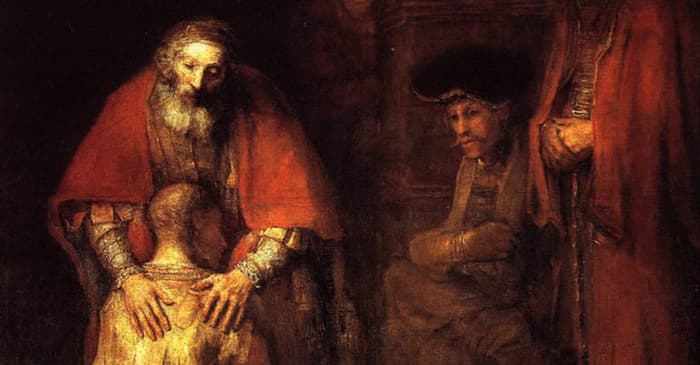
The Return of the Prodigal Son by Rembrandt
The story begins with a younger son asking his father for his share of the inheritance, a shocking request at the time. It was like saying, "I wish you were dead so I could get my money now."
The father agrees and gives the son his portion. The son goes to a distant country and wastes all he has on reckless living. Soon, a famine hits, and he finds himself starving. He takes the lowest job possible, feeding pigs, and even longs to eat their food. That’s when he realizes how far he’s fallen.
He decides to return home, not expecting to be restored as a son, but hoping to become a servant. But before he even reaches the house, his father runs to meet him, embraces him, and throws a feast. The father restores him fully, no questions asked.
The older brother, however, is furious. He refuses to join the celebration, feeling overlooked and resentful. The father gently reminds him that everything he has is already his, but they must rejoice because "this brother of yours was dead and is alive again; he was lost and is found."
This bible story about the prodigal son reveals so much about God’s love and the human condition.
Get Closer to God Today
4.9
Average Rating
|Over 5 Million Downloads
The Meaning of the Parable
This parable is rich with layers. On the surface, it’s about a wayward son returning home. But more deeply, it speaks to God’s nature. The father in the story is a representation of God: a Father who is full of compassion, patience, and love.
The younger son represents those who have walked away, who feel unworthy, and yet long to be accepted. His actions show the characteristics of the prodigal son: impulsive, selfish, but ultimately repentant.
The older brother is just as important. He symbolizes the self-righteous, the ones who stay physically close but emotionally distant. His resentment mirrors the Pharisees’ attitude, and his struggle shows how grace can be hard to accept when we think we’ve earned something.
At its core, the story shows us that God doesn’t give love based on merit. Grace is freely given. This story challenges our ideas of justice and shows us that mercy always wins.
It also touches on the all father meaning, a father who never gives up, never stops waiting, and celebrates the return of his child. This is the gospel in story form: undeserved forgiveness, joyful restoration, and unconditional love.
5 Lessons from the Prodigal Son
What important things can you take away from Luke 15:11-32? These are 5 teachings I think are most worth mentioning:
God's Love Is Unchanging
The father's love remains steady from beginning to end. Even when the younger son leaves, wastes his inheritance, and brings shame to the family, the father’s love doesn’t falter. Instead of rejection, the son is met with compassion, a warm embrace, and a celebration.
This reflects the nature of God's love for us. It isn't based on our performance, perfection, or worthiness. God loves us because it’s who He is: faithful, merciful, and full of grace. As Romans 5:8 reminds us, “God shows his love for us in that while we were still sinners, Christ died for us.”
Repentance Opens the Door
When the younger son realizes how far he’s fallen, he doesn’t just regret his actions, he returns home. This turn is the heart of repentance: not just feeling bad, but changing direction.
Luke 15:18 captures his shift: “I will arise and go to my father.” This is true for all of us. God waits patiently, but the act of coming back, humbling ourselves, confessing, and seeking forgiveness, opens the door to reconciliation and healing. Repentance is not about shame; it’s about renewal.
Self-Righteousness Can Be Just as Dangerous as Rebellion
It’s easy to sympathize with the older brother. He stayed home, obeyed, and worked hard. But when his brother returns and receives a party, bitterness creeps in. The older brother's refusal to join the celebration reveals something important: it’s possible to obey God outwardly while harboring resentment and pride inwardly.
His reaction mirrors that of the Pharisees who couldn’t rejoice over sinners finding grace. This shows us that legalism and pride can separate us from God's heart just as much as open rebellion can.
Grace Is for Everyone
One of the most beautiful truths in this parable is that grace isn’t earned. The younger son had nothing left, no money, no status, no good deeds, but he was still welcomed with open arms.
The father doesn’t scold him or make him grovel. He simply restores him. Likewise, grace is for the broken, the faithful, and even the proud. It’s available whether you’ve spent your life in the pews or on the run. Grace levels the playing field and reminds us that salvation is a gift, not a reward.
Celebration Is God’s Response to Restoration
The father doesn’t just forgive, he throws a party. He doesn’t wait for the community to accept the son back; he leads the way in joyful restoration. This mirrors the tone of heaven. Luke 15:7 says, “There will be more joy in heaven over one sinner who repents than over ninety-nine righteous persons who need no repentance.”
This parable, along with the 1 lost sheep and other bible stories about God's love, emphasizes that God celebrates every return. Restoration isn’t a private affair, it’s an occasion for rejoicing.
Comparing the Father to God
The characteristics of the father of the prodigal son give us a glimpse into God’s heart. He doesn’t demand explanations. He runs to his child. He restores, celebrates, and invites everyone into the joy of reconciliation.
This father doesn’t shame his son or hold a grudge. He gives freely and forgives completely. In doing so, he shows us what the bible verses about a father's love for his family are all about.
He also reaches out to the older son with patience and kindness. No one is left out. Everyone is invited.
Get Closer to God Today
4.9
Average Rating
|Over 5 Million Downloads
Why Jesus Told This Parable
As I mentioned in the context as well, Jesus tells this story to address the religious leaders who were angry that he was spending time with sinners. Through the parable, he shows them that God’s grace is not earned by rule-following. It’s a gift.
The commentary on the prodigal son reveals that Jesus wanted to flip their expectations. The insiders might be missing the point, while the outsiders are the ones finding their way home.
Jesus wants us to see both brothers in ourselves. We all need grace. And we all have the choice to celebrate when someone else finds it.
Modern-Day Applications
The parable of the prodigal son is as relevant today as it was when Jesus first told it. Its themes—failure, forgiveness, jealousy, and grace—are part of the human experience. We’ve all had moments where we’ve drifted, made mistakes, or felt undeserving of love. And we’ve all been in situations where extending grace to someone else wasn’t easy.
This story reminds us that no matter how far we’ve wandered, God is always ready to welcome us back. If you’ve ever asked, are all sins forgiven? or does God forgive sinners?, this parable answers with a clear and compassionate yes. God’s mercy is not reserved for a select few; it’s offered freely to anyone willing to return.
But the story doesn’t stop with personal redemption. It also challenges how we treat others. The older brother’s reaction calls us to examine our own hearts. Do we struggle to forgive when others are shown mercy? Do we believe some people don’t deserve a second chance?
In today’s world, where broken relationships, harsh judgments, and division are common, this message matters. Whether in families, churches, or communities, our response to repentance and reconciliation reveals our understanding of grace. Are we willing to celebrate someone’s return, or are we too focused on what’s fair?
The parable calls us to be like the father: quick to forgive, generous in love, and full of joy when someone comes home. It invites us to let go of bitterness and embrace the beauty of restoration.
Related Parables and Teachings
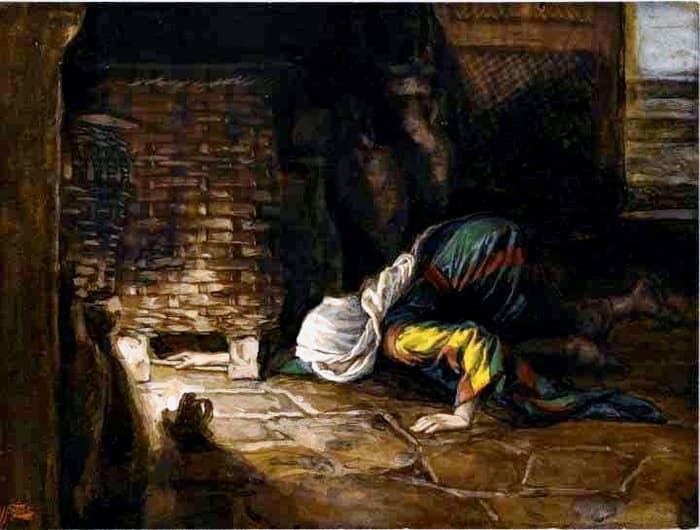
James Tissot (Nantes, France, 1836–1902, Chenecey–Buillon, France). The Lost Drachma (La drachme perdue)
The parable of the prodigal son fits in a trio of stories in Luke 15: the 1 lost sheep, the lost coin, and the lost son. All three highlight God’s heart for restoration.
Together, they show that God searches, rejoices, and welcomes. They tell us that being lost doesn’t mean being forgotten. And that being found is worth celebrating.
These are just some of the parables of Jesus that teach us about grace, mercy, and love.
Get Closer to God Today
4.9
Average Rating
|Over 5 Million Downloads
Discover More Parables with The Bible Chat App
God’s Word is rich with wisdom, comfort, and guidance, but sometimes life makes it hard to stay consistent in reading and reflection. The Bible Chat App is here to help.
With a simple, thoughtful design, this app allows you to read Scripture, reflect on its meaning, and even keep a journal of your spiritual journey. Whether you’re seeking encouragement, exploring a story, or praying through a hard time in your life, the Bible Chat App puts truth and inspiration at your fingertips.
Take your faith with you wherever you go. Download the Bible Chat App today from the App Store or Google Play.
Conclusion
The story of the prodigal son isn’t just about one family’s drama. It’s about all of us. It shows the depth of God’s love, the reach of His mercy, and the joy of coming home.
Whether you're the younger son, the older brother, or somewhere in between, this parable invites you to see yourself in the story, and to know that God's arms are always open.
References
- What is the meaning of the Parable of the Prodigal Son?, https://www.gotquestions.org/parable-prodigal-son.html, accessed on 27.05.2025;
- Commentary on Luke 15:1-3, 11b-32, https://www.workingpreacher.org/commentaries/revised-common-lectionary/fourth-sunday-in-lent-3/commentary-on-luke-151-3-11b-32-5, accessed on 27.05.2025;
- Luke 15 – The Joy of Finding the Lost, https://enduringword.com/bible-commentary/luke-15/, accessed on 27.05.2025.