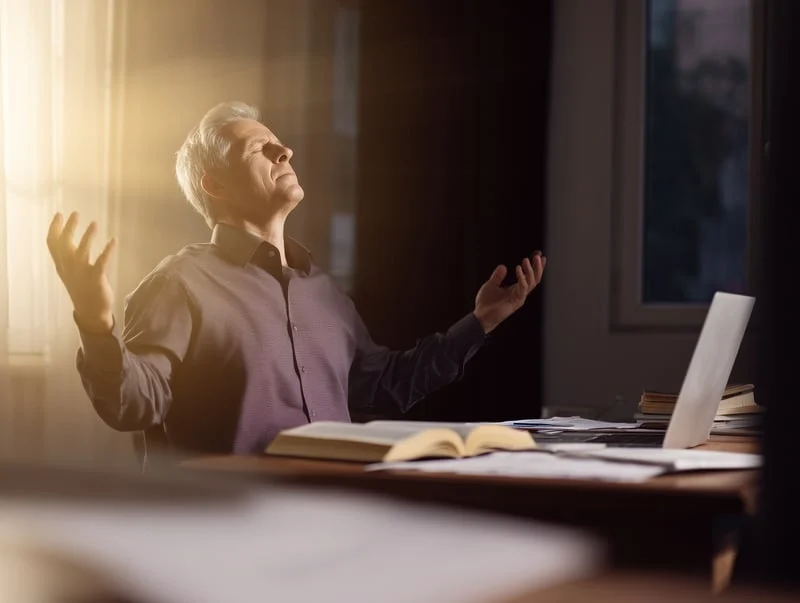
Triumph Over Lies Through Worship
This 7-day study empowers you to overcome the enemy’s deceptions by turning worship into your frontline defense. Each day you’ll replace a common lie with a praise-filled truth, using gratitude practices - thankful journaling, spoken affirmations, and celebration prayers - to rewire your mind and expose the devil’s schemes. As you cultivate a heart of thankfulness, you’ll discover that gratitude not only fends off fear and doubt but also positions you to receive God’s miraculous breakthroughs. Blending biblical teaching with insights from neuroscience and psychology, you’ll learn how everyday worship opens the door for God’s power to transform lies into testimonies of His grace.
The plan is free to read here. In the app it arrives one day at a time, with the full passage and audio.
What the plan covers
- Day 18 min
Renewing the Mind with Praise
Passages: Romans 12:2 · Philippians 4:8
Every day we’re bombarded by messages - news headlines, social media posts, voices from our past - many of which plant seeds of fear, doubt, and discouragement. Without intentional countermeasures, our thought life can drift toward negativity, shaping our emotions and decisions. Paul warns believers not to “conform to this world,” meaning we must resist absorbing its patterns. Instead, he calls us to “be transformed by the renewing of your mind.” Transformation isn’t a one-and-done event but an ongoing process. In Greek, the word for “renewing” (anakainōsis) implies a complete overhaul - like refurbishing an old house until it reflects a new design. Spiritually, that “design” is the mind of Christ. As we align our thoughts with His truth, our lives increasingly mirror His character - marked by love, wisdom, and peace. Praise is more than emotion; it’s action - speaking or singing affirmations of God’s character and works. Neuroscientists have discovered that when we express gratitude or recite positive statements, the brain’s prefrontal cortex lights up, enhancing self-control and emotional regulation. Simultaneously, the limbic system, our emotional center, releases dopamine and endorphins, natural mood lifters. In practical terms, naming blessings out loud rewires neural pathways, making joy and hope the mind’s default patterns rather than fear and anxiety. Philippians 4:8 gives us a checklist for our thoughts: truth, nobility, righteousness, purity, loveliness, excellence, and praiseworthiness. By deliberately meditating on these qualities - through Scripture memory, worship songs, or spoken affirmations - we fill our mental “workspace” with lifegiving content. Psychologists call this selective attention: choosing which inputs to amplify. When lies creep in - “I’m not enough,” “God has forgotten me” - we interrupt them by redirecting focus to truth: “I am fearfully and wonderfully made” (Psalm 139:14), “He who began a good work in me will complete it” (Philippians 1:6). For those who’ve walked with the Lord for decades, memories of God’s faithfulness form a deep well of truth. Recalling how He provided for needs, healed relationships, or brought peace in storms isn’t mere nostalgia - it’s an applied strategy. These testimonies, when spoken in praise, refresh our faith and renew our minds. Younger believers can learn to gather their own “memory bank” of praise‐worthy moments for future renewal. Lift Your Voice. Praise can be as simple as naming three blessings each morning: “Thank You, Lord, for sleep that refreshed me; for food that nourished me; for friends who encouraged me.” Over time, these small acts become spiritual habits. You might also choose a short chorus - “Good, good Father” or “Great is Thy faithfulness” - and sing it slowly, letting each phrase sink in. Reflection: What negative thoughts have gained too much ground in your mind recently? Which truth from Philippians 4:8 can you praise out loud to replace those lies? Practical Steps: Daily Truth Cards: Write two qualities from Philippians 4:8 on index cards. Each morning and evening, read them aloud as declarations of praise. Memory Meditation: Spend five minutes each day recalling a specific moment of God’s faithfulness. Describe it in a journal entry, then thank Him for it in prayer. Prayer: Heavenly Father, I choose to reject worldly patterns and be transformed by Your truth. Renew my mind through worship and gratitude, and help me think with the mind of Christ. In Jesus’ name, amen. - Day 27 min
Gratitude Opens the Door to Miracles
Passages: 1 Thessalonians 5:18 · Mark 11:23
Gratitude transforms our perspective and invites divine action into our circumstances. Paul’s instruction in 1 Thessalonians 5:18 - "In everything give thanks" - is radical: not "for everything" but "in". Even when trials press, a heart of thanksgiving acknowledges God’s sovereignty and goodness. Neuroscientific research shows that practicing gratitude decreases activity in the brain’s default mode network - linked to rumination and self-focus - and increases activity in reward centers, releasing dopamine and serotonin. These chemicals foster well-being, reduce anxiety, and prepare us to perceive God’s miraculous work. Mark 11:23–24 connects believing speech with supernatural results. When gratitude precedes our requests - "Thank You, Lord, for Your faithfulness in my life" - our words align with belief rather than doubt. Psychologists refer to this as self-efficacy: confidence in one’s capacity to affect outcomes. Speaking thanksgiving not only affirms what God has done, but also strengthens our conviction that He will act again. Consider a scientist who tracks gratitude practice: participants who journaled blessings daily reported 25% reduction in stress and 10% increase in reported life satisfaction within two weeks. In spiritual terms, each thankful prayer rewires our minds toward hope and expectancy. The science mirrors Joseph’s experience: sold into slavery and forgotten, he praised God before interpreting dreams and witnessed divine elevation - gratitude opening doors to God’s purposes. For those in later life, decades of reflecting on answered prayers provide a rich tapestry of God’s provision. Recalling specific miracles - healed relationships, financial breakthroughs, personal restoration - serves as evidence that God remains active. These memories, when spoken in praise, become living testimonies that fuel faith in new seasons. A practical way to begin is a daily “Thanksgiving Journal.” Each night, list three blessings from your day - no matter how small - and write a one-sentence prayer of thanks for each. Over time, this builds a gratitude muscle, making your heart more sensitive to God’s movement. Worship blends praise and expectancy. Try beginning your morning prayer with a gratitude declaration before presenting needs: “Thank You, Lord, for being my provider. I ask now for Your help with...” This sequencing prepares your heart to believe and receive, rather than to fear. Reflection: Which situation in your life feels hardest to bless God for right now? How might giving thanks in that area change your outlook and increase your faith? Practical Steps: Nightly Gratitude Journal: Write three specific blessings each evening and thank God explicitly. Belief Declarations: Choose one promise or need, preface it with thanksgiving, and speak it aloud as an affirmation of faith. Prayer: Gracious Father, thank You for Your unending goodness. Cultivate in me a heart of gratitude that opens doors for Your miracles, and increase my faith as I bless You in all circumstances. In Christ’s name, amen. - Day 37 min
Worship as a Weapon Against Lies
Passages: John 8:44 · 2 Corinthians 10:5
Spiritual warfare often begins in our minds, where lies take root like invasive weeds. The devil, called the "father of lies" (John 8:44), seeks to distort our view of God, ourselves, and the world. These deceptions come as subtle whispers - "You are unloved," "God has abandoned you," or "Your past defines you." Left unchecked, they grow into toxic narratives that shape our emotions and actions. Paul gives us a powerful strategy: worship as a weapon. In 2 Corinthians 10:5, he urges us to "bring every thought into captivity to the obedience of Christ." Captivity means intercepting and transforming. Worship - singing truth, speaking praise, declaring gratitude - serves as both shield and sword. Neuroscience reveals that vocalizing words engages multiple brain regions: language centers process the words, auditory areas hear them, and emotional networks assign significance. When the words are truths about God and His love, the impact is amplified. Psychologists call this approach cognitive interruption. Negative thought loops, such as rumination on failure or fear, require a deliberate intervention. Worship interrupts those loops and replaces lies with reality. For example, when insecurity whispers, "You are worthless," worship refocuses: "I praise You, Lord, for making me in Your image and calling me beloved." Over time, repeated worshipful declarations rewire neural pathways, making truth the default response to falsehood. Theological foundation: Worship acknowledges God’s character and sovereignty. Each praise statement declares: "God is greater than this lie." When we confess His attributes - faithfulness, compassion, power - we align our hearts with His eternal perspective, pushing lies back into the shadows. Real-life example: An elderly woman living alone felt besieged by memories of failure and loneliness. Each evening she played a simple hymn - "Great Is Thy Faithfulness" - and sang along. Within weeks, her anxiety lessened. Brain scans of similar participants show that singing worship music reduces cortisol and elevates oxytocin, fostering calm and connection even in solitude. Identify your top three recurring lies. Write each on a separate card. Next to each, write a truth verse - Psalm 139:14 for worth, Lamentations 3:22-23 for God’s faithfulness, etc. When a lie surfaces, grab the corresponding card, read aloud the verse, and follow with praise: "Thank You, Lord, that..." In small gatherings, invite members to share a lie they face and a worship truth that counters it. Sing a simple chorus together, reinforcing unity and collective resistance to deception. Reflection: What lie have you believed most often this week? Which worship truth will you declare next time that lie appears? Practical Steps: Lie & Truth Cards: Create three pairs of cards - lie on one side, truth with a short praise on the back. Daily Worship Pause: Set an alarm three times a day. When it rings, stop and sing or speak a truth verse aloud. Prayer: Heavenly Father, expose every deception in my mind. Empower me to wield worship as a weapon, capturing each thought and aligning it with Your truth. In Jesus’ name, amen. - Day 48 min
Joy in Trials - Miracles in Mind Renewal
Passages: James 1:2 · Nehemiah 8:10
When we face hardship - loss, illness, broken relationships - the natural reaction is discouragement, fear, or despair. Yet James invites us to “count it all joy” in those very trials. This call isn’t to feign happiness but to cultivate deep, God-centered joy that rises above circumstances. Such joy is a spiritual posture: it leans on God’s character and purposes rather than our fleeting feelings. Neuroscience helps us understand why choosing joy matters. Authentic joy triggers the release of endorphins and neuropeptides - natural “feel-good” chemicals that reduce pain perception and increase emotional resilience. These biochemical reactions support the body’s stress response, lowering cortisol levels and enhancing immune function. In practical terms, when we intentionally engage in joy-filled worship during trials, we harness a divine gift that strengthens our minds and bodies. Psychologists researching resilience find that individuals who maintain positive emotions in adversity recover more quickly and demonstrate post-traumatic growth - meaning they emerge stronger and more compassionate. Gratitude journaling, praiseful singing, and recounting past victories over hardship are proven interventions that foster this growth. When we recall and worship over God’s past faithfulness, we prime our brains for hope and endurance. Theologically, joy is rooted in relationship with God. Nehemiah declared the joy of the Lord as strength because joy signifies trust in God’s unchanging nature: He is faithful, omnipotent, and loving. When our hearts affirm these truths through praise, we declare that no trial can rob us of what Christ has secured. Joy becomes an act of spiritual warfare, pushing back the shadows of fear. Consider the story of an elderly believer who lost her spouse and home within months. Grief threatened to overwhelm her, but each morning she chose to sing a favorite hymn of praise before opening her eyes. This simple act - tuning her spirit to worship first - transformed her grief into a testimony of hope. Though sorrow remained, joy emerged as her anchor, empowering her to rebuild and minister to others. When a trial begins, write down five reasons to rejoice: God’s presence, lessons learned, deeper empathy, growing faith, or future restoration. Read the list aloud daily, focusing on one point at a time. Schedule two brief “worship breaks” during your day: sing or speak a short praise chorus (e.g., "Great Is Thy Faithfulness") for three minutes, allowing your mind to shift away from troubles toward God’s greatness. In community, share trial-and-joy stories: how praising God during hardship led to unexpected breakthroughs. These testimonies encourage believers that joy is not denial but a declaration of God’s sovereignty. Reflection: Which trial currently drains your strength and joy? What aspect of God’s character can you praise right now to renew your mind and spirit? Practical Steps: Daily Joy Reminder: Place an index card at your bedside with Nehemiah 8:10. Each morning, read it aloud and pray a one-sentence praise. Joy Journal: At day’s end, record moments when joy surfaced - even briefly - and thank God for those sparks of strength. Prayer: Sovereign Lord, fill me with Your joy in every trial. Teach me to praise You amid hardship, trusting that Your strength is made perfect in my weakness. May my worship open doors for Your miracles and renew my mind day by day. In Jesus’ name, amen. - Day 57 min
A Gratitude Mindset - Entering God’s Presence
Passages: Colossians 3:2 · Psalm 100:4
Our daily focus shapes our reality. When worries about finances, health, or relationships dominate, our vision narrows to earthly survival. Paul urges us to set our minds on heavenly realities - Christ’s victory and presence - because what we dwell on becomes our guiding force. Psalm 100 paints a vivid picture: entering God’s presence begins with thanksgiving at the gate and praise in the courts. This progression from gratitude to heartfelt worship realigns our perspective and readies us for divine encounters. Neuroscientists have discovered that gratitude exercises activate the medial prefrontal cortex, a region involved in planning and emotional regulation, while deactivating circuits linked to anxiety and self-focus. This neural shift creates mental space for creativity, problem-solving, and openness to new insights. When we pause to thank God for His provision, mercy, and promises, we literally rewire our minds to expect His presence and guidance. Psychologists studying gratitude report that habitual thanksgiving correlates with higher levels of happiness, reduced stress, and stronger social bonds. In spiritual contexts, this means that a gratitude mindset not only improves our well-being but cultivates deeper intimacy with God and smoother relationships with others. When we approach daily tasks - breakfast, commuting, meetings - with a heart of thanks, we transform the mundane into holy ground. Nehemiah and the returned exiles demonstrated corporate gratitude before rebuilding Jerusalem’s wall. By worshiping together - reading Scripture, offering thanks, and praising - they renewed collective faith and broke down discouragement. Their united gratitude invited God’s favor and strength to accomplish the impossible. For those with a lifetime of experiences, your personal history of God’s intervention serves as a testimony. Reflecting on times when prayers were answered, doors were opened, or peace prevailed amid chaos fuels present faith. Speaking these stories aloud, whether privately or in community, builds anticipation that God remains active. Practical Steps: Gateway Gratitude: Begin every day with a brief ritual. Upon waking, list three specific things you’re thankful for - rest, relationships, provision - and speak a short prayer of thanks for each. Court of Praise: Choose a verse or worship chorus to sing or recite mid-morning. Let that praise shape your mindset before lunch, breaking any drift into anxiety. Consider carrying a small “gratitude prompt” - a key verse, a picture, or a note - in your pocket or on your phone. When you encounter stress, pause, review the prompt, give thanks for one point it reminds you of, and lift a quick praise. Reflection: Which worries occupy your mind when you first wake? How can you replace those thoughts with thanksgiving to enter God’s presence? Prayer: Heavenly Father, lift my thoughts above earthly concerns and fill me with a heart of gratitude. As I enter Your presence with thanksgiving and praise, open my eyes to Your guidance and miracles. In Jesus’ name, amen. - Day 68 min
Worship - Evidence of the Unseen
Passages: Hebrews 11:1 · Matthew 21:22
Faith can feel elusive, like walking on a foggy path where the destination is hidden. Yet Scripture describes faith not as guesswork, but as substance and evidence. Hebrews 11:1 calls faith the very reality of what we hope for, the proof of things not seen. Worship - expressing praise and gratitude for God’s promises - builds that substance within us, transforming abstract hope into concrete confidence. Neuroscience helps explain why worshipful belief matters. When we speak or sing truth about future promises, our brain’s language centers, auditory processing areas, and emotional networks all engage simultaneously. This multisensory activation creates robust memory traces, making the promise feel tangibly real. Studies show that pairing hopeful affirmations with positive emotional tones enhances neural plasticity, reinforcing new pathways that support optimism and resolve. Psychologists studying goal achievement find that when individuals articulate their aspirations aloud with conviction, they exhibit higher commitment, greater persistence, and increased likelihood of success. In spiritual terms, praising God for unseen outcomes - "Thank You, Lord, for the healing You’ve promised" - prepares our minds to notice and participate in the unfolding miracle. Consider Anna, an elderly teacher whose knee replacement recovery stalled. Instead of yielding to discouragement, she sang daily: "Your promise is my strength, You will restore me." Over weeks, her pain subsided more rapidly than expected, and she walked without pain months before doctors predicted. Her worship created a framework of expectation that shaped her attitude, motivated her rehabilitation, and opened her heart to God’s healing. Matthew 21:22 underscores the power of believing prayer: when our requests spring from faith, they resonate with God’s heart. Worship primes us for such prayers. By beginning with praise - "I praise You for Your omnipotent power and loving care" - we align our spirits with God’s character, then ask from a foundation of trust. Theologically, worship-fueled faith honors God’s sovereignty and invites His presence. Praise acknowledges that He is both willing and able to fulfill His promises. As we focus on His attributes - faithfulness, omnipotence, compassion - our faith becomes anchored in His unchanging nature rather than in shifting circumstances. Choose three promises from Scripture relevant to your current hopes (e.g., provision, healing, guidance). Write each on a card and craft a praise statement for each: "I praise You, Lord, for Your promise to supply all my needs (Philippians 4:19)." Speak each card aloud twice daily, infusing emotion and conviction. After your declarations, write a brief journal entry describing how you already see evidence of God’s promise at work - encouraging words, unexpected provision, inner peace. This practice trains your mind to look for signs of faith fulfilled. When praying for a need, begin with a 30-second worship focus: sing a brief chorus or speak attributes of God linked to your request. Then present your petition, believing that God hears and acts. In group settings, share testimonies of faith strengthened through worship. Hearing others recount answered prayers builds collective faith, showing how worship transcends individual doubt. Reflection: Which promise do you find hardest to believe today, and why? How can worship ignite tangible evidence of that promise in your life? Practical Steps: Daily Declarations: Select a promise and corresponding praise statement. Speak it aloud each morning and evening. Evidence Notebook: Keep a running list of small answered prayers or signs of God’s faithfulness. Review weekly to reinforce faith. Prayer: Lord Jesus, increase my faith as I worship You for Your unseen promises. May my praise become the substance of things hoped for and equip me to receive Your miracles. In Your powerful name, amen. - Day 78 min
Worship - A Lifestyle of Truth and Gratitude
Passages: 1 Thessalonians 5:16 · Romans 12:1
Our seven-day journey culminates in a call to live worship - transforming faith into an ongoing vibration of praise and gratitude. Paul distills the Christian life into three simple commands: rejoice always, pray without ceasing, and give thanks in all circumstances (1 Thessalonians 5:16–18). Far from legalistic demands, these form a triad that knits together joy, communion, and thanksgiving, offering a lifestyle that nourishes the soul and aligns the heart with God. Rejoice Always: Joy is not contingent on circumstances but flows from our relationship with Christ. Neuroscience shows that frequent moments of rejoicing - whether silent gratitude, spoken praise, or joyful song - activate the brain’s reward pathways, releasing dopamine and endorphins that reinforce positive emotion. Over time, joy becomes a baseline, buffering us against life’s uncertainties. Pray Without Ceasing: Perpetual prayer doesn’t mean nonstop words but an ongoing awareness of God’s presence. Studies in psychology demonstrate that mindfulness - sustained attention to a chosen focus - reduces anxiety and enhances well-being. Prayer as mindfulness keeps our minds tethered to God’s reality, not the swirling distractions of chaos. Simple breath prayers - short phrases like "Lord, have mercy" or "Thank You, Jesus" - can be repeated throughout the day, weaving prayer into every moment. Gratitude flips the script on suffering and lack. Even in hardship, thanksgiving trains the brain’s default mode to seek glimpses of God’s faithfulness. Research shows that consistent gratitude practice correlates with better sleep, reduced depression, and stronger relationships. As we give thanks for small mercies - sunlight on a dreary morning, a kind word, a memory of past provision - we cultivate a resilience that anticipates God’s ongoing miracle-working. Present Your Bodies as Living Sacrifices: Romans 12:1 expands worship beyond our words to our very lives. A "living sacrifice" is active, involving every physical, emotional, and mental choice as an offering to God. This holistic view means our work, rest, relationships, and leisure all become sacred acts when done in gratitude and for His glory. Imagine turning your morning routine into a worship ritual: as you shower, thank God for health and renewal; as you dress, pray for humility and purpose; over breakfast, speak a quick supper prayer of thanks for provision. Each mundane act becomes a spiritual rhythm, reinforcing neural pathways of worship and gratitude. When believers adopt living worship, the ripple effect strengthens families and churches. Shared rhythms - like starting meetings with a thanksgiving moment or ending meals with a short worship song - build collective resilience and foster deeper unity. Reflection: Which of the three commands - rejoice always, pray continually, give thanks - challenges you most? How can you integrate simple worship practices into your daily routines to present your life as a living sacrifice? Practical Steps: Rhythms of Worship: Identify three daily anchor points (morning, midday, evening). At each, pause for a one-minute worship practice: praise, breath prayer, or gratitude list. Living Sacrifice Check: At the end of each day, review one specific action you performed as an act of worship (work, rest, conversation). Thank God for the opportunity to serve Him in that moment. Prayer: Merciful Father, teach me to rejoice in You always, to live in constant prayer, and to give thanks in every situation. May my entire life be a living sacrifice, offered in worship and gratitude to You. In Jesus’ name, amen.