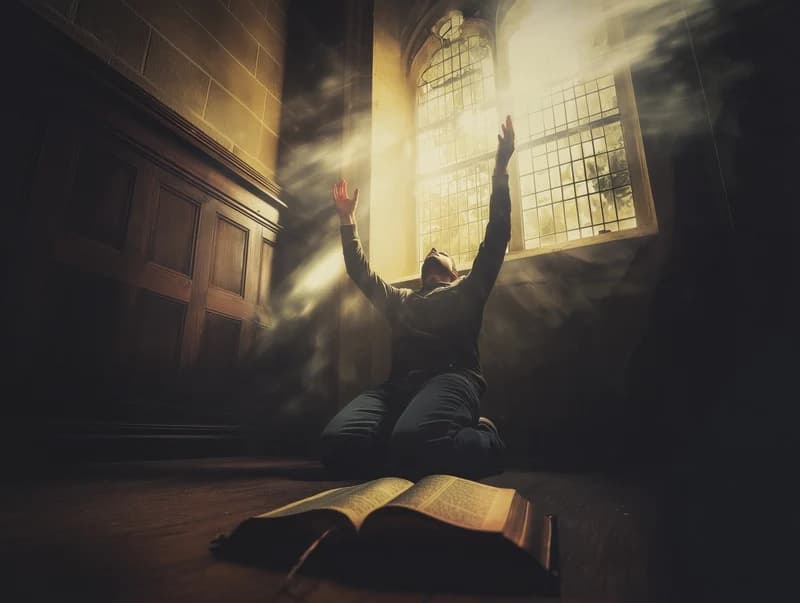
The Power of God's Word in Prayer and Worship

7 days

This 7-day devotional guides you into a richer prayer and worship life anchored in Scripture. You’ll learn to call on God with expectancy, weave His Word into song and prayer, wield Scripture as your spiritual weapon, cultivate unbroken conversation with the Spirit, and hide His truths deep in your heart - equipping you to recognize His voice, experience His power, and live each day under the renewing influence of His promises.

Start this plan in Bible Chat

The plan is free to read here. In the app it arrives one day at a time, with the full passage and audio.

What the plan covers

  1. Day 18 min

    Invited by God’s Own Voice

    Passages: Jeremiah 33:3 · Psalm 119:131

    When we pray, we aren’t whispering into silence but speaking into the loving ears of God, who Himself invites us to call on Him. Jeremiah’s promise rings like an echo of divine grace: call, and He will answer with wonders. It’s as if He leans forward, ready to share secrets of His heart. That invitation awakens our own longing, just as the psalmist “panted” for God’s commands - an image of thirst and anticipation. In prayer, Scripture becomes both the spark and the fuel. When you speak Jeremiah 33:3 aloud - “Call to Me, and I will answer you” - your nervous system notices the invitation. Neurochemistry studies show that positive, hopeful words activate reward centers in the brain, releasing dopamine and reducing stress. In that calm, open state, your mind is better able to hear God’s voice. Likewise, meditating on Psalm 119:131 trains your mind to recognize hunger for truth. The more you dwell on God’s promises, the more your brain rewires itself to expect encounter rather than routine. Psychology confirms that anticipation heightens engagement. If you approach prayer expecting nothing, your mind drifts; but if you approach expecting “great and mighty things,” you listen more carefully for impressions, insights, and fresh ideas. When you pair your requests with Scripture - “Lord, I call to You for help with my fear” - you anchor your hopes in His own words, giving your mind a solid object of faith rather than vague wishfulness. Here’s a simple practice: each morning, read Jeremiah 33:3 slowly and underline “show you great and mighty things.” Then close your eyes and imagine God revealing something new - perhaps an answer to a problem, a fresh perspective, or a surprise of grace. Write down whatever comes to mind, even in one sentence. Later in the day, revisit your note and thank God if you sense any echo of that insight. Even if the fulfillment is small - a kind word from a friend, a sudden solution - it builds trust. At midday, pause to “pant” like the psalmist: read Psalm 119:131 and take three deep breaths, imagining your lungs filling with hunger for God’s Word. Ask, “What commandment do I need today?” Perhaps it’s patience, honesty, or trust. Let that word settle in your heart, then pray for the Holy Spirit to bring it alive in your life. By evening, review your journal: note one moment when you sensed God answering or guiding. Reflect on how calling on Him shaped your day. As you do this daily, your mind and heart grow accustomed to Scripture-powered prayer, training you to recognize God’s voice woven into ordinary moments. Reflection: When you call on God in prayer, what “great and mighty thing” do you most long to see? How did pausing to “pant” for His commands change your awareness of God today? Practical Steps: Each morning, meditate on Jeremiah 33:3 and jot any impressions. At midday, breathe with Psalm 119:131, asking God for one needed command. In the evening, record one way God answered or guided you. Prayer: “Father, thank You for inviting me to call on You and for promising to answer with wonders. Fill me with longing for Your Word and open my eyes to see Your hand today. In Jesus’ name, amen.”
  2. Day 27 min

    Singing Scripture in Worship

    Passages: Psalm 100:4 · Colossians 3:16

    Worship often finds its truest voice in song. When we lift our voices in praise, we’re not simply performing - our minds and bodies engage in a full-spectrum response to God’s Word. Psalm 100 invites us to enter God’s presence with thanksgiving and blessing, setting the stage for joyful noise. Colossians adds that Christ’s words should dwell richly among us, shaping our worship through psalms, hymns, and spiritual songs. Neuroscience tells us that singing activates wide areas of the brain - auditory, motor, and emotional centers - creating a powerful unity of mind and heart. When you sing “Great is Thy faithfulness,” you’re not just recalling lyrics; you’re etching God’s truth into your neural pathways through melody, rhythm, and communal energy. This multisensory experience increases release of endorphins and oxytocin, lowering stress and deepening trust in God’s goodness. Psychology shows that group singing fosters belonging and mutual encouragement. Shared melodies synchronize heart rates among participants, building empathy and unity. In a worship gathering or around a campfire, when you join others in “Bless His name,” your brain literally tunes into theirs, creating a network of shared faith and hope. Try this today: choose a short psalm - perhaps Psalm 100 itself - and turn it into a simple song. Even if you aren’t a singer, humming or speaking it rhythmically embeds the words in your mind. Each time you pass a mirror, pause for a 10-second “psalm chant” - entering your day with thanksgiving “and bless His name.” In small groups or with family, take turns leading a line of worship from Colossians 3:16. One person sings “Let the word of Christ dwell in you richly,” another continues “in all wisdom,” then “teaching and admonishing…,” and so on. Layering perspectives helps everyone grasp the multifaceted richness of God’s Word in worship. By weaving Scripture into song, you train your mind to recall biblical truth when emotions run high - fear, sadness, or joy. Theologically, singing God’s Word is an act of aligning our hearts with His eternal song - joining heaven’s chorus that celebrates His love and power. Reflection: How does singing Scripture change the way you remember and feel God’s promises? When have you felt closest to God through worship songs? Practical Steps: Turn Psalm 100:4 into a simple chant; practice it three times today. In a small group, recite Colossians 3:16 in a round or call-and-response. Notice one emotion that surfaces when you sing Scripture and thank God for it. Prayer: “Lord, thank You for giving us Your Word to sing. May Your truths dwell richly in our hearts as we praise You together. Let our voices join the eternal song of heaven, blessing Your name always. In Jesus’ name, amen.”
  3. Day 39 min

    Praying the Promises

    Passages: John 15:7 · Philippians 4:6

    When we tuck God’s words into our hearts, our prayers spring from His promises instead of empty wishes. Jesus says that as His words “abide” in us - when we meditate on them, memorize them, let them shape our thoughts - our desires align with His heart, and our prayers gain power. Paul adds that we can trade worry for peace by pairing every request with thanksgiving. Begin by choosing one promise from today’s verses. Perhaps John 15:7’s assurance that prayers rooted in Christ’s words will be answered, or Philippians 4:6’s call to bring anxiety to God with a grateful heart. Write it at the top of a fresh page in your “Promise Prayer Journal.” Underneath, list two or three specific needs - school stress, family concerns, an upcoming decision - that you want to entrust to this promise. As you pray today, speak each request directly through the lens of Scripture. For example: “Father, because Your Word says that if Your words abide in me I may ask what I desire and it shall be done, I pray for courage to speak truth in my friendships.” Then immediately follow with thanksgiving: “Thank You, Lord, that You hear me and that Your Word is at work in me.” This pattern - promise, request, praise - acts like a melody your mind quickly learns. Neuroscience reveals that combining verbal repetition, emotional engagement, and heartfelt gratitude lights up learning centers in the brain, making these prayer rhythms stick. Each time you pray this way, you’re rewiring neural circuits toward trust and away from fear. Between prayers, carry your journal entry in your backpack or purse. When anxiety creeps in - a test looms, a conflict flares - pause, pull out your promise, and inhale deeply: think “Be anxious for nothing,” exhale “with thanksgiving.” Let these words flow through your body, lowering stress hormones like cortisol and replacing them with calming neurotransmitters such as serotonin. You’ll find that your heart rate slows and your mind clears. In the afternoon, revisit John 15:7. Read it aloud three times, pausing between each phrase. After the third reading, close your eyes and ask God to deepen His words in you so that your desires naturally reflect His will. Listen quietly for any fresh thoughts or gentle promptings - a subtle shift in perspective, a new prayer point, or an idea for action. Jot these down as “Spirit Whispers.” This practice illustrates how psychology’s “dual processing” - engaging both our conscious reflection and our subconscious listening - cultivates insight. By consciously praying Scripture and then silently waiting for God’s voice, you create space for both your mind and God’s Spirit to speak. Tonight, before sleep, open your Promise Prayer Journal and note any answers or “God-winks” you noticed: a timely verse on the radio, an encouraging friend’s word, or a sudden sense of calm. Recording these builds a “faith file” in your brain, strengthening the reward pathways for trusting God. Over time, you’ll look back and see a tapestry of answered prayers woven through Scripture-based petitions. Reflection: Which of today’s promises most encouraged you, and why? How did offering thanksgiving alongside your requests shift your feelings about your worries? Practical Steps: Start a “Promise Prayer Journal” with John 15:7 or Philippians 4:6 at the top. Write two or three needs under that promise; pray each with Scripture and thanksgiving. Throughout the day, pause when anxious, recite the promise, and note any “Spirit Whispers” or calm moments. Prayer: “Gracious Father, thank You for Your living promises. Help Your words to dwell deeply in me so that my prayers reflect Your will. When anxiety arises, remind me to pray with thanksgiving and to trust You completely. In Jesus’ name, amen.”
  4. Day 48 min

    The Sword in Spiritual Warfare

    Passages: Hebrews 4:12 · Ephesians 6:17

    Life’s battles come in many forms - doubt that whispers you’re worthless, fear that paralyzes, temptation that entices. In every skirmish, God equips us with a divine blade: His living, powerful Word. Hebrews describes Scripture as sharper than any two-edged sword, able to cut through lies and pierce into our deepest thoughts. Ephesians tells us to intentionally “take” this sword of the Spirit. Start by identifying one lie you face most often: “I’m not good enough,” “No one cares,” “I’ll never succeed.” Write it on a scrap of paper. Next, find a Scripture that cuts through that lie - perhaps Hebrews 4:12 itself, or a promise like “I am fearfully and wonderfully made” (Psalm 139:14). Write that truth on the back of your paper. During your day, whenever the lie surfaces - perhaps before a presentation or in a moment of self-doubt - pause and physically flip the paper. Read the truth aloud with conviction: “Scripture says I am fearfully and wonderfully made.” By speaking it and hearing it, you engage auditory, visual, and motor regions in your brain. Neuroscience tells us that such multisensory repetition strengthens neural pathways, making truth the go-to response under pressure. Practically, keep this “sword card” in your pocket or wallet. When temptation calls - maybe to gossip or justify anger - draw the sword and declare God’s Word instead. Notice how your body responds: a shift in posture, a steadier breath, a warming sense of peace. Those physiological changes reflect a drop in stress hormones and the release of calming neurotransmitters. Psychologists compare this to cognitive restructuring: you spot a negative thought, challenge it, and replace it with evidence-based truth. Scripture is our ultimate evidence - God’s own testimony about reality. Each time you wield this sword, you reprogram your mind to resist false narratives and embrace divine reality. At midday, take five minutes to rehearse this practice. Sit quietly, close your eyes, and visualize the lie as a shadow. Then see the sword of God’s Word shining, cutting through the darkness, and watch the shadow vanish. Breathe in the light of truth. This simple visualization, coupled with Scripture recitation, further cements the neural shift. In the evening, journal about one battle you faced and how the sword of Scripture equipped you. Did you catch a lie before it grew? Did declaring truth ward off temptation? Noting these victories trains your mind to expect God’s Word to bring real outcomes, reinforcing faith. Reflection: What is the most common lie you need to confront with God’s Word? How did flipping your “sword card” and speaking truth aloud affect your confidence today? Practical Steps: Create a “sword card” with a personal lie on front and Scripture truth on back. Carry it today; each time the lie arises, flip it and declare the truth aloud. Journal tonight one victorious moment when you used your sword. Prayer: “Mighty God, thank You for giving me Your living Word as my weapon. Teach me to wield it swiftly against every lie and fear. Empower me by Your Spirit to stand firm, knowing Your truth brings victory. In Jesus’ name, amen.”
  5. Day 59 min

    Worship in Word and Song

    Passages: Psalm 119:162 · Matthew 22:37

    When we truly treasure God’s Word, worship becomes more than ritual - it becomes a joyful outpouring of gratitude that engages every part of us. The psalmist describes Scripture as “great treasure,” a discovery that stirs deep joy. Jesus teaches that worship involves our whole being - heart, soul, and mind - inviting us to bring every thought, emotion, and desire into harmonious praise. Begin by choosing a verse that feels like a personal treasure - one that has comforted you or sparked hope. It might be a promise of God’s presence, a declaration of His love, or a call to holiness. Write this “treasure verse” on a card and carry it with you today. Each time you see it, pause and allow a brief smile to rise - letting your heart physically register the joy Scripture brings. That simple response releases endorphins, the brain’s natural “feel-good” chemicals, creating a positive feedback loop that deepens your affection for God’s Word. Next, weave your treasure verse into a melody. You don’t need musical training; even humming or speaking the words rhythmically unlocks the brain’s musical pathways, which are tightly linked to memory and emotion. Neuroscience shows that melody and rhythm engage both hemispheres of the brain, embedding the words more deeply than reading alone. As you sing or hum your verse - perhaps while doing chores, commuting, or walking - notice how it lifts your mood and refocuses your mind on God’s goodness. In a group or family setting, extend this practice into communal worship. Invite each person to share their own treasure verse and briefly explain why it matters to them. Then, use a simple chorus - like “Your Word is life to me, I rejoice in what You say” - to weave everyone’s verses together. When multiple voices join in song, social neuroscience tells us that our mirror neurons synchronize, fostering empathy and unity. You’ll not only carry your own treasure but also share in the joy of others’ discoveries. As you worship in word and song today, pay attention to your body’s responses. Do you feel warmth in your chest, a softening in your posture, or a quickened pulse? These physical signs reflect your heart’s alignment with God’s truth. Psychologists note that such mind-body connections reinforce new emotional habits; over time, worshiping through Scripture and melody will become your automatic response to stress or celebration. Later in the day, create a “worship moment” in an unexpected place. If you’re waiting in line, pull out your card, read your verse aloud, and sing a line of your chorus under your breath. If you’re on a call without video, hum it quietly as you listen. These micro-worship moments keep your heart attuned to God’s presence throughout the rhythms of daily life. In the evening, reflect in your journal: note one instance when your treasure verse or worship chorus brought comfort, courage, or clarity. Perhaps you faced a tense conversation and your verse reminded you of patience; maybe a sudden fear lost its grip as you sang your chorus. Writing down these moments reinforces the neural patterns that link Scripture and worship with peace and empowerment. By the end of today, you’ll see how Scripture-fueled worship engages heart, soul, and mind - transcending mere words to become a holistic encounter with God’s presence. Treasure verses and simple songs will anchor you in joy, equipping you to face tomorrow with a melody on your lips and Scripture in your heart. Reflection: Which treasure verse moved you most deeply today, and how did it shape your worship? How did singing or humming your verse change your experience of daily tasks or challenges? Practical Steps: Select a personal “treasure verse” and write it on a card to carry today. Compose or hum a simple chorus incorporating that verse; practice it in at least three different settings (home, commute, work). Journal one moment when your treasure verse or chorus brought joy, peace, or renewed focus. Prayer: “Joyful Father, thank You that Your Word is a treasure that fills my heart with song. Teach me to worship You with all my heart, soul, and mind - singing Your truths in every moment. May my life be a melody of praise that honors You. In Jesus’ name, amen.”
  6. Day 67 min

    Unceasing Conversation

    Passages: 1 Thessalonians 5:17 · Romans 10:17

    True prayer flows like breath - continuous, rhythmic, natural. Paul’s call to “pray without ceasing” invites us into an ongoing dialogue with God, punctuated by Scripture’s own voice. Romans reminds us that faith grows as we “hear” God’s Word. When we interweave brief prayers with Scripture phrases throughout our day, we cultivate unbroken conversation and steady faith-building. Begin by choosing two short phrases: one on prayer (“pray without ceasing”) and one on faith (“faith comes by hearing”). Write each on a sticky note and place them on your mirror, desk, fridge, and car dashboard. Each time you see one, pause for a single breath, read the phrase aloud, and turn it into a micro-prayer: “Lord, help me keep talking with You now,” or “Thank You that my faith grows as I hear Your Word.” These bite-sized encounters follow the “cue–action–reward” pattern that psychologists say builds lasting habits. The sticky note is the cue, the micro-prayer is the action, and the calm reassurance in your body is the reward. Over hours and days, you train your brain to default to God-centered thoughts and prayers. Between events - walking between classes, waiting for food - whisper one of your phrases and listen for a brief thought or feeling. This “listening prayer” engages your subconscious, letting God’s Word shape your next steps. Neuroscientists note that such intermittent attention training activates the prefrontal cortex, boosting focus and emotional regulation. Tonight, gather your reflections. Notice how many times you paused, what micro-prayers you prayed, and any small sparks of faith or peace you received. Write these in your journal under “Unceasing Conversation.” Celebrate how brief Scriptural prayers kept you connected to God’s presence. By weaving Scripture and prayer into every pause, you create a tapestry of faith that grows stronger and more automatic. Over time, your mind will naturally drift toward God’s Word under stress, and prayer will become as natural as breathing. Reflection: Which micro-prayer phrase most often popped into your mind today? How did those brief Scripture prayers shape your awareness of God’s presence? Practical Steps: Place sticky-note cues of 1 Thessalonians 5:17 and Romans 10:17 in four daily spots. Each time you see one, stop for one breath, pray the micro-prayer, and note any peace or insight. Journal tonight how this unceasing conversation influenced your day. Prayer: “Gracious God, thank You that prayer can be as natural as breathing. Help me to carry Your Word in my heart and to turn every thought into conversation with You. May my faith deepen as I hear and pray Your truth throughout each day. In Jesus’ name, amen.”
  7. Day 77 min

    Remembrance and Renewal

    Passages: Psalm 119:11 · John 14:26

    Worship and prayer find their deepest roots when Scripture is “hidden” in our hearts. The psalmist says that storing God’s Word protects us from sin, guiding our choices even when temptation lurks. Jesus promises that our Helper - the Holy Spirit - will remind us of every teaching, weaving God’s voice into our daily experiences. Begin by recalling one verse from each previous day that spoke most deeply to you. Write these on small slips and place them in a jar labeled “Heart Treasures.” Each morning, draw one and read it aloud, saying, “Spirit, help me remember this truth today.” This ritual uses spaced repetition - key to long-term memory - paired with the practice of inviting the Holy Spirit, making recall both natural and Spirit-led. Throughout the day, when you face a decision or challenge, pause and pray John 14:26: “Holy Spirit, bring to my remembrance the words You have hidden in my heart.” Notice which verse surfaces. Let it guide your next step. Neuroscience tells us that such intentional recall triggers hippocampal activity, strengthening memory and helping apply truth under pressure. Psychology’s “retrieval practice” shows that actively recalling information strengthens retention far more than passive review. By drawing and applying your “Heart Treasures,” you train your mind and spirit to access Scripture automatically in real situations. Tonight, open your journal and list two or three moments when a hidden verse surfaced. Describe how it influenced your choice or comforted your heart. Celebrating these answers builds confidence in God’s promise to teach and remind you. As this week concludes, remember that the journey of prayer and worship through God’s Word is ongoing. Each verse you hide deep, each promise you pray, each song you sing, and each moment you wield the sword combines into a tapestry of faith - one that the Holy Spirit sustains and brings to life in every season. Reflection: Which “Heart Treasure” verse surfaced most today, and how did it guide you? How does knowing the Spirit will remind you of Scripture change your confidence in daily life? Practical Steps: Create a “Heart Treasures” jar with seven verses you’ve learned this week. Each morning, draw one verse and invite the Spirit to remind you of it. Journal any moments when that verse surfaced and impacted your decisions. Prayer: “Holy Spirit, thank You for teaching me and bringing Christ’s words to my remembrance. Hide Your Word in my heart so deeply that it guides me in every moment. Renew my mind and spirit by Your presence, now and always. In Jesus’ name, amen.”