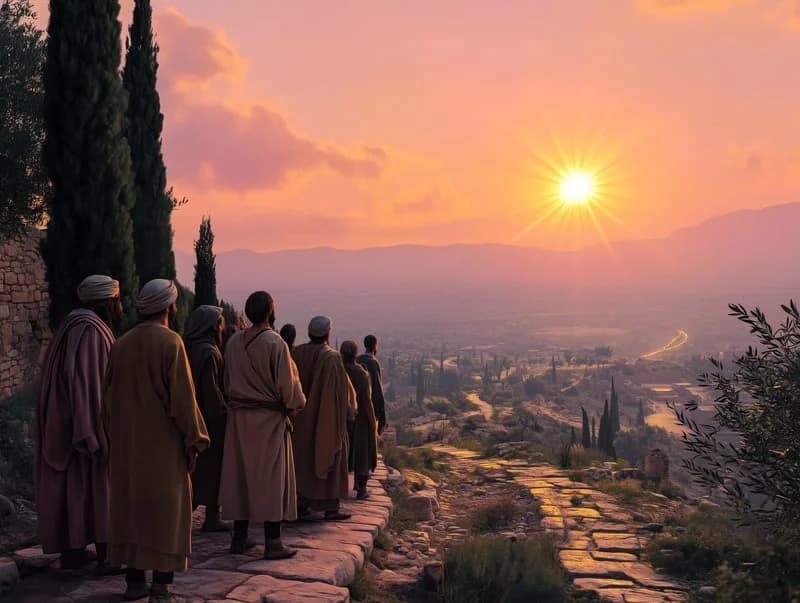
The Long-Awaited Saviour

7 days

This 7-day Bible study invites you to journey through the prophetic promises and glorious fulfillment of the Messiah—Jesus Christ, the Light of the world. From the voices of ancient prophets longing for redemption to the angelic announcements and the humble birth in Bethlehem, you’ll explore how Scripture unveils God’s plan to bring salvation through His Son. Each day highlights the hope that grew in the shadows of waiting and the joy that burst forth when prophecy became reality.

Start this plan in Bible Chat

The plan is free to read here. In the app it arrives one day at a time, with the full passage and audio.

What the plan covers

  1. Day 17 min

    The Coming Messiah – Hope in Darkness

    Passages: Isaiah 9:2 · Isaiah 53:5

    Throughout Israel’s history, there were times when darkness seemed to prevail—times of war, exile, oppression, and suffering. Yet, in the midst of sorrow, God never abandoned His people. The prophets spoke of a coming Messiah, a Savior who would bring light into the darkness and restore what was lost. Isaiah 9:2 proclaims a vision of hope: those living in darkness would one day see a great light. This prophecy pointed ahead to Jesus, the Light of the world, who would break the chains of sin and death. Isaiah 53 paints a vivid picture of the suffering Messiah. Unlike the conquering king many expected, this Savior would be despised and rejected, carrying the weight of human sin upon Himself. His wounds would bring healing; His suffering would bring peace. Though written centuries before Christ, this passage perfectly describes His sacrificial death on the cross. It reveals God’s heart for redemption—His desire not to abandon humanity in its brokenness but to heal and restore through His Son. The longing for a Messiah was not just about political liberation but about spiritual restoration. Sin had fractured the relationship between God and mankind, and no earthly solution could bridge the gap. The law, sacrifices, and prophets pointed toward something greater—a permanent salvation, not through human effort but through divine grace. The Messiah was the answer to humanity’s deepest need. This theme of light breaking into darkness is a central message of the Gospel. Even today, we face personal struggles, moments when hope seems distant, and seasons where God’s presence feels hidden. Yet, the coming of Jesus assures us that darkness does not have the final word. No matter how deep the valley, the light of Christ still shines, bringing forgiveness, renewal, and the promise of eternal life. The same God who foretold the coming of the Savior is the same God who walks with us today, leading us into His glorious light. Reflection In what areas of your life do you need to trust in the hope that Christ brings? How do the prophecies of the Messiah deepen your understanding of God's love and faithfulness? What does it mean to you personally that Jesus willingly suffered for your sins? Practical Steps Read Isaiah 53 carefully and reflect on how Jesus fulfilled this prophecy. Pray for renewed hope in areas where you feel discouraged, trusting that Christ is your light. Share the message of hope with someone struggling in darkness, reminding them of God's love and salvation. Prayer Heavenly Father, thank You for the promise of salvation through Jesus Christ. In moments of darkness, remind me that Your light never fades. Help me to trust in Your faithfulness, knowing that the Messiah has come to bring healing, hope, and redemption. May I walk in the truth of Your promises and reflect Your light to the world. In Jesus’ name, Amen.
  2. Day 28 min

    Return from Exile – God Restores His People

    Passages: Ezra 1:3 · Nehemiah 2:17

    After seventy years of exile in Babylon, God’s promise of restoration began to unfold. Through King Cyrus, a decree was issued allowing the Israelites to return to their homeland and rebuild the temple in Jerusalem (Ezra 1:3). This was a moment of hope, a sign that God had not abandoned His people. Though they had suffered the consequences of their rebellion, He was faithful to His covenant and called them back to Himself. Ezra led the first group of exiles back to Jerusalem to rebuild the temple, the center of worship and identity for God’s people. The process was not easy—there were obstacles, opposition, and discouragement. Yet, the return was a call to renewal, both physically and spiritually. The rebuilding of the temple signified the restoration of communion with God, reminding the Israelites that He was still their God, and they were still His people. Years later, Nehemiah, a servant of the Persian king, heard of Jerusalem’s devastation. The city walls were in ruins, leaving it vulnerable and its people in disgrace. Moved with compassion, he sought the king’s permission to return and rebuild. His words in Nehemiah 2:17 reveal his heart: “Come and let us build the wall of Jerusalem, that we may no longer be a reproach.” The work was not just about bricks and mortar—it was about restoring God’s people to a place of security, dignity, and faith. The return from exile teaches us that God’s redemption is not just about rescuing His people from trouble; it is about rebuilding their lives. The Israelites had to take action—to return, to lay the foundation, to persist through difficulties. In the same way, when God restores us, He invites us to participate in the process. He calls us to rebuild broken areas of our lives, restore our relationship with Him, and walk in obedience to His purposes. This story also foreshadows Jesus, who is the ultimate Restorer. Just as the Israelites returned to rebuild Jerusalem, Christ came to rebuild what sin had destroyed—our relationship with God. Through Him, we are no longer exiled from God’s presence but are invited to live as His redeemed people. No matter how broken our past, He is always faithful to rebuild our future. Reflection Are there areas in your life where you need God’s restoration? How does the story of rebuilding Jerusalem encourage you to trust in God’s faithfulness? What steps can you take to participate in God’s work of renewal in your life? Practical Steps Identify a “broken wall” in your life—an area where you need restoration. Ask God for wisdom and strength to rebuild. Pray for perseverance in the face of opposition, just as Nehemiah did. Encourage someone else who is going through a rebuilding season, reminding them of God’s faithfulness. Prayer Heavenly Father, You are the God who restores. Just as You brought Your people back from exile and helped them rebuild, I ask that You rebuild the broken places in my life. Strengthen my heart to trust You in seasons of renewal. Help me to walk in obedience, knowing that Your plans for me are good. May my life be a testimony of Your faithfulness and restoration. In Jesus’ name, Amen.
  3. Day 38 min

    Waiting for the Redeemer

    Passages: Daniel 2:44 · Daniel 7:13-14

    In the silent centuries leading up to Christ’s birth, humanity existed in a state of deep anticipation. Through tumultuous events and prolonged trials, the promise of a Redeemer remained a beacon of hope. The prophecies recorded in the Book of Daniel vividly encapsulate this divine anticipation, revealing God's overarching plan of salvation with profound clarity and assurance. Daniel 2:44 provides a compelling promise: “And in the days of these kings the God of heaven will set up a kingdom which shall never be destroyed.” Against the backdrop of earthly kingdoms rising and falling, Daniel’s prophecy brings reassurance of God's sovereign power and ultimate authority. This promise sustained generations through times of despair and oppression, offering the faithful a source of strength and unwavering hope. In Daniel 7:13-14, we encounter a vision that beautifully foreshadows Christ’s coming: “One like the Son of Man, coming with the clouds of heaven! He came to the Ancient of Days...Then to Him was given dominion and glory and a kingdom.” This profound vision paints a powerful picture of the awaited Messiah—Jesus Christ—who would bring redemption, restoration, and everlasting peace. The imagery emphasizes Christ's divine identity and mission to save humanity from sin and brokenness. God's intentional design in this prolonged period of waiting reveals His heart for humanity. Far beyond historical or political liberation, God's promise focused on spiritual renewal and redemption. He desired to heal humanity’s deepest wounds—sin, separation, and spiritual emptiness. The eventual incarnation of Christ fulfilled these ancient hopes, demonstrating God's enduring faithfulness and love. Waiting, as seen throughout salvation history, has always been an essential element of spiritual growth. During times of waiting, our faith is tested and refined. God uses these periods to cultivate within us patience, trust, and deeper intimacy with Him. Understanding the significance of waiting can transform seasons of uncertainty into profound opportunities for spiritual maturity and deeper communion with God. As we journey toward Easter, the anticipation experienced by those awaiting the Messiah offers us encouragement. It reminds us that our own waiting is purposeful. God is faithful, His timing perfect, and His promises sure. Let the centuries of anticipation leading up to Christ’s birth inspire your own faith journey, trusting in God's redemptive plan and perfect timing. Reflection How does understanding the anticipation for Christ's coming impact your own seasons of waiting? In what areas of your life do you find it challenging to trust God's timing and promises? What can you learn from the faithful endurance of believers who waited for Christ? Practical Steps Reflect on Daniel 2:44 and Daniel 7:13-14, noting how these verses speak to your current situations of waiting. Spend time journaling about past experiences of God's faithfulness, reinforcing your trust in His timing. Discuss your reflections with someone you trust to gain encouragement and perspective. Prayer Heavenly Father, thank You for Your unwavering faithfulness throughout history and for the gift of Jesus, our Redeemer. Help me embrace seasons of waiting with faith and hope, trusting fully in Your perfect plan. Strengthen my heart and grant me patience as I anticipate Your promises. In Jesus’ name, Amen.
  4. Day 47 min

    Preparing the Way for the Redeemer

    Passages: Isaiah 40:3 · Luke 3:3-4

    In the wilderness along the Jordan River, a lone voice thundered with urgency and clarity: "Prepare the way of the Lord!" John the Baptist, whose ministry bridged the centuries-long silence of prophetic revelation, called people to repentance, urging them to ready their hearts for the coming Redeemer. He stood as the fulfillment of ancient prophecies, a messenger who would precede and proclaim the Messiah's arrival. Isaiah's words, penned centuries before John's birth, echoed profoundly through John's ministry. "Prepare the way of the LORD; make His paths straight" (Luke 3:4). This was more than a call for physical readiness; it was a deep call for inward transformation. John emphasized repentance—a genuine turning from sin toward God. He knew that true preparation involved hearts ready to receive and follow Jesus, not merely outward ritualistic acts. The spiritual wilderness John addressed was not just a physical desert but also a representation of the human heart without God. This wilderness can be filled with confusion, doubt, and resistance to God's voice. John's call to repentance was an invitation to clear away the obstacles of pride, self-sufficiency, and unconfessed sin, making room for the transforming presence of Jesus. In Luke's Gospel, the historical context is meticulously noted—mentioning rulers, leaders, and geographical specifics—to emphasize the reality of the Redeemer stepping into history. It illustrates that God's redemption plan was unfolding in tangible human history, not abstractly distant. Through John, God was actively preparing the hearts of ordinary people—fishermen, tax collectors, soldiers—to encounter their Savior personally and powerfully. The coming of Christ required hearts ready for change. John’s message resonates today as deeply as ever: preparation for Christ involves more than acknowledgment; it requires turning from what separates us from God. Repentance isn't merely feeling regret but is a transformative shift in our desires and priorities. It's aligning ourselves with God’s purposes, embracing humility, and recognizing our profound need for His grace. Reflecting on John’s life invites us to examine our hearts. Are there areas in your life filled with spiritual wilderness—places untouched by God’s grace because you've resisted His call to repentance? Preparation for Christ’s presence in our lives is continual, not just a one-time event. Each day provides an opportunity to clear new paths, making space for Christ to work deeply within us. Reflection Are there areas in your life where you need to make way for Christ? How might God be calling you to "make straight" the paths in your own heart? In what ways does John’s call to repentance challenge your current spiritual practices? Practical Steps Spend intentional time confessing areas of your life that you’ve kept distant from God. Identify one practical step toward repentance and restoration you can take today. Share with a trusted friend how you're preparing your heart to draw closer to Christ this season. Prayer Lord, prepare my heart to receive You fully. Help me recognize and repent of anything that separates me from Your presence. Make straight the paths within my heart, and let Your grace transform me completely. In Jesus' name, Amen.
  5. Day 58 min

    The Redeemer Announced

    Passages: Luke 1:30-32 · Romans 5:17

    When the angel Gabriel visited Mary, the centuries-long silence was shattered by the breathtaking announcement that God's long-awaited plan for redemption was finally unfolding. Gabriel’s message brought news of a divine Redeemer whose birth would forever alter history. For generations, God’s people had clung to ancient prophecies and promises, longing for the day their Savior would come. The annunciation to Mary was the turning point of human history, marking the fulfillment of God's promise through the miraculous birth of Christ. Luke captures the angelic proclamation with awe-inspiring simplicity. Mary, a humble and faithful young woman, found herself at the center of God’s grand redemption plan. Gabriel’s announcement to Mary—humble yet extraordinary—affirmed that this child would inherit the throne of David, establishing an eternal kingdom of grace and peace. The magnitude of this revelation is profound: God chose to enter the world in vulnerability, humility, and love to redeem fallen humanity. Paul, in Romans 5, illuminates the deep theological implications of Christ's incarnation, describing Him as the "second Adam." Where the first Adam's disobedience brought sin, suffering, and death into the world, Jesus, the New Adam, brought grace, forgiveness, and life. Christ's obedience overturned the tragic consequences of Adam's fall, transforming humanity’s destiny from despair to hope. The abundant grace offered through Christ invites each of us into restored relationship and renewed purpose. Understanding Jesus as the second Adam clarifies the magnitude of His coming. Jesus did not merely provide an example to follow; He fundamentally transformed human existence by bridging the separation between God and humanity. Through Christ, we receive an abundance of grace and the gift of righteousness—gifts freely given to restore us fully to God’s original intention. Christ's redemptive work enables us not merely to endure life but to flourish abundantly and reign spiritually through Him. The annunciation thus is not only a historical event but a living message of hope, renewal, and victory. It reminds us that no matter how deep our brokenness or profound our need, God’s grace surpasses it. The angel's announcement to Mary still echoes today, reminding us that God's promises are trustworthy, His grace abundant, and His love unfailing. As you meditate on the Redeemer’s announcement, consider the depth of God’s love displayed through Christ. Allow yourself to embrace the transformative power of His grace. Let this truth encourage your heart and strengthen your faith as you continue to walk in the fullness of life granted through Jesus, the second Adam, our Saviour. Reflection How does the announcement of Christ's coming deepen your understanding of God's plan for humanity? In what ways does recognizing Jesus as the "second Adam" impact your perspective on grace and redemption? How can you practically embrace and extend this grace in your daily interactions? Practical Steps Reflect deeply on the passages from Luke and Romans, journaling about the significance of Christ’s birth and the abundance of grace provided through Him. Identify specific areas of your life where you need God's redemptive grace. Actively share this message of hope and redemption with someone who needs encouragement. Prayer Lord Jesus, thank You for coming into our world to redeem us from sin and death. Help me to fully grasp the abundance of Your grace and righteousness. Teach me to live in gratitude, reflecting Your love and mercy in all I do. In Your precious name, Amen.
  6. Day 68 min

    The Birth of the Redeemer: God Among Us

    Passages: Luke 2:7 · Matthew 2:11

    The night sky over Bethlehem glittered with stars, an ordinary night suddenly pierced by the extraordinary birth of Jesus, the promised Redeemer. In this humble setting, amid simplicity and obscurity, God stepped into humanity as a fragile infant, embodying divine love and humility. The centuries of waiting had finally ended; the divine promise spoken through prophets had come to fulfillment—God was truly among us. For centuries, God's people clung to promises spoken through the prophets, eagerly anticipating the arrival of the Messiah. Their waiting was defined by hope, longing, and sometimes, uncertainty. Yet, when the moment finally arrived, it did not unfold with earthly fanfare or regal grandeur. Instead, Christ entered humbly, a gentle infant born in modest surroundings. This humble birth beautifully illustrates God's approachability and love—His willingness to meet humanity precisely in its most humble state. Luke 2 recounts shepherds receiving news of Jesus’ birth from an angelic host, reflecting the divine message that this Redeemer was accessible to all. Shepherds, ordinary and often overlooked by society, were among the first to witness God's entrance into humanity. This profound inclusion reveals God's heart—that His salvation is freely available, offered without distinction or qualification. Similarly, the Magi from the East journeyed great distances to behold the newborn King, guided by a celestial phenomenon. Their pilgrimage symbolizes humanity's search for meaning, truth, and redemption. When they found Jesus, they responded instinctively: they fell down in worship, offering treasures in humble reverence. Their recognition of Jesus as King underscores the universal significance of His birth, transcending cultural and geographical barriers. The incarnation—God becoming flesh—was more than a historical event; it represented the heart of God's redemptive plan. Through Jesus, God stepped into human history to redeem, restore, and reconcile creation to Himself. The birth of Christ demonstrated that God does not remain distant; instead, He intimately understands our joys, sufferings, and struggles. Emmanuel, meaning "God with us," affirms that God is actively involved in our lives. As you reflect on the story of Christ’s birth, remember that the same God who fulfilled His promise centuries ago is present with you today. Whether your life feels marked by quiet anticipation or overwhelming uncertainty, the message of Bethlehem remains true—God is near, accessible, and deeply committed to your redemption. Allow this season of reflection to strengthen your faith. As you consider Christ’s humble beginnings, be inspired by God's willingness to enter into your reality, bringing hope and salvation. The fulfillment of ancient prophecies through the birth of Jesus assures us that every promise God makes is reliable, even when its fulfillment appears unlikely or delayed. Reflection What does the humble birth of Christ teach you about God's character? How does the accessibility of Christ’s birth affect your understanding of God's heart toward you? Where in your life can you embrace greater humility, mirroring the humility of Jesus' birth? Practical Steps Meditate on Matthew 2:1-12 and Luke 2:1-20, focusing on the humility and inclusivity of Christ’s birth. Share the Christmas story with someone who might feel distant from God, offering encouragement about His accessibility and love. Consider a simple act of service or generosity that reflects the humility Christ modeled at His birth. Prayer Heavenly Father, thank You for sending Your Son into our world, humbly and tenderly. Help me to embrace this truth with fresh gratitude. Guide me to live with humility, reflecting Your heart of grace and inclusivity to those around me. In Jesus’ name, Amen.
  7. Day 78 min

    God With Skin On – Jesus’ ministry

    Passages: John 1:14 · John 17:7-8

    “The Word became flesh and dwelt among us.” With one stunning sentence John proclaims that the Architect of galaxies slipped into our biological limits—eating, sweating, laughing, weeping. Later, on the night before the cross, Jesus prays, “Now they have known that all things which You have given Me are from You.” The disciples finally recognize that every word, sigh, and dusty footprint of Jesus is God’s self-disclosure in human form. Incarnation is not mythology but theology in motion. Philippians 2:6-8 says Christ “made Himself of no reputation… being found in appearance as a man.” The Greek suggests voluntary downward mobility: divinity stooping into diapers, calluses, and crucifixion. Colossians 1:19 adds, “It pleased the Father that in Him all the fullness should dwell.” God did not rent a body; He moved in permanently, intertwining heaven’s essence with human neurons. Why does embodiment matter for self-awareness? Neuroscience tells us that empathy ignites when mirror-neurons fire as we observe another’s actions and emotions. By entering our sensory world, Jesus provides the ultimate mirror—revealing not only what God is like but what humanity was meant to be. Hebrews 4:15 assures us He is a High Priest who “sympathizes with our weaknesses,” a term that literally means “to feel together.” When you watch Jesus touch a leper or welcome a child, your brain receives an embodied picture of divine compassion, rewiring expectations of how God relates to you. Psychology likewise insists that secure attachment grows through attuned presence. Israelites longed for a distant Yahweh; in Christ, that longing is answered by eye contact, shared meals, and wounded hands. John 17 exposes the relational heartbeat of the Trinity—unbroken giving and receiving—now extended to disciples who once jockeyed for position. The gospel thus heals distorted inner scripts: we are no longer abandoned orphans but welcomed participants in God’s family dynamics (Romans 8:15-16). Theologically, incarnation means revelation with shoulders broad enough to carry a cross. Jesus’ deeds translate abstract holiness into concrete stories: water turned to wine illustrates joy; a storm stilled illustrates sovereignty; a woman defended illustrates dignity. These snapshots invite us to observe ourselves through His gaze: beloved, worth rescuing, capable of transformation. Modern therapists call this “corrective emotional experience”; Scripture calls it grace embodied. Finally, Jesus’ earth-time models integrated living. He balances solitude and community, work and rest, lament and celebration—demonstrating holistic humanity. By watching Him, we learn that spiritual maturity is not escape from bodily reality but sanctification of it. Incarnation dignifies the ordinary: breakfast by the sea, conversations at a well, blood and water mingled on Golgotha. If God could inhabit first-century flesh, He can inhabit your nine-to-five, your neural pathways, your story. Reflection When you picture God, do you imagine distance or face-to-face presence? Why? Which scene from Jesus’ life most resonates with your current emotional need? How might recognizing Jesus as embodied God reshape the way you view your own body and daily routines? Practical Steps Gospel Immersion: Read one Gospel narrative aloud, picturing textures, smells, and sounds. Note how your body feels as you “stand” beside Jesus. Embodied Prayer: Take a slow walk, breathing the words “The Word became flesh… dwelt among us.” Let each step affirm that God is present in your physical world. Relational Mirror: Identify one relational pattern (e.g., impatience, self-criticism). Ask, “How does Jesus model a different response?” Practice His approach in your next interaction. Prayer Incarnate Lord, thank You for stepping into dust so I could step into light. Remind me today that every gesture of Jesus is the heartbeat of the Father toward me. Teach my mind, emotions, and body to dwell in Your embodied grace, and make my life a living echo of Your presence. Amen.