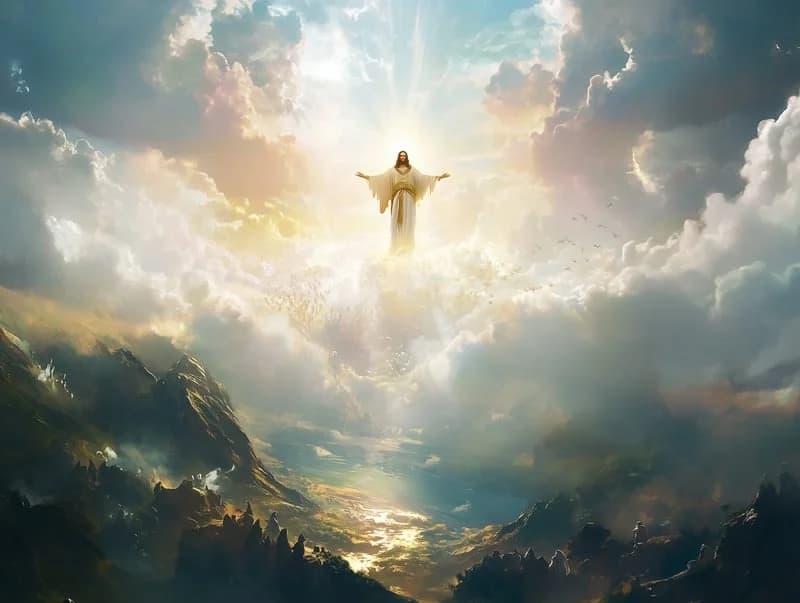
The King Is Coming Again

7 days

This 7-day Bible study leads you through one of the most powerful and hope-filled themes in all of Scripture—the Second Coming of Jesus Christ. More than just a future event, the return of Christ is a promise that fuels our faith, shapes our present lives, and anchors us in eternal hope. Through carefully selected passages from both the Old and New Testaments, this study will help you explore the signs, significance, and spiritual implications of Jesus’ promised return. Each day will focus on a different aspect of this profound truth—unveiling God’s promises, highlighting the urgency of readiness, and stirring within you a deeper sense of awe, longing, and expectation.

Start this plan in Bible Chat

The plan is free to read here. In the app it arrives one day at a time, with the full passage and audio.

What the plan covers

  1. Day 17 min

    The Promise of His Return

    Passages: Revelation 1:7 · 1 Thessalonians 4:16

    The return of Christ stands as the grand hope of Scripture—a day when the King of kings will appear in clouds aglow with glory. John’s vision reminds us that this promise is universal: every eye will see Him, from the throng that celebrated His first advent to those who pierced His side. The shadow of rejection will give way to the radiance of revelation. Psychologically, anticipating a future event of such magnitude shapes our brains toward hope and meaning: studies show that having a transcendent goal reduces anxiety and fosters resilience, activating reward centers that motivate perseverance. Paul adds detail: Christ will descend at a commanding shout, accompanied by the archangel’s voice and the trumpet of God. This isn’t gimmickry but the declaration of final authority. In that moment the body goes from dust to glory as the dead in Christ rise. Neuroscience confirms that moments of collective awe—like communal worship or natural wonders—release endorphins and oxytocin, forging deep communal bonds. The coming Day will be the ultimate awe event, uniting all believers in a shared resurrection and reunion. Theologically, the second coming fulfills covenant promises of restoration (Isaiah 25:8; Daniel 7:13–14). It reverses the curse—death itself is swallowed in victory (1 Corinthians 15:54). Every tear is wiped away, every injustice reconciled. The anticipation of that Day reorients our values today: we invest not in fading treasures but in kingdom work that echoes into eternity. Spiritually, living in light of His return cultivates holy urgency and grounded peace. We prime our hearts for reunion by confessing sin, seeking reconciliation, and practicing daily communion with Him. Even neuroscience speaks to the benefits of ritual—regular rhythms of confession and gratitude keep our emotional centers balanced and our moral circuits strong. As you meditate on these verses, picture the sky split by glory, the resurrection trumpet echoing worldwide, and your loved ones—past and present—rising to meet Him. Let that vision ignite both longing and readiness in your soul. Reflection: How does the certainty of Christ’s return reshape your priorities and daily decisions? In what ways can you live today as one who already walks in the light of the resurrection trumpet? Practical Steps: Begin each morning this week by reading Revelation 1:7 and 1 Thessalonians 4:16 aloud, letting their hope steer your day. Identify one “eternal investment” (serving, generosity, evangelism) and schedule it into your week. Share with a friend or family member the hope of Christ’s return and pray together for readiness. Prayer: King of glory, we await Your appearing with eager hearts. Prepare us by Your Spirit to stand blameless and ready, investing our lives in Your eternal kingdom. May our hope in Your coming fuel our love, our service, and our worship today. Amen.
  2. Day 27 min

    The Great Gathering and Judgment

    Passages: Matthew 24:31 · 2 Corinthians 5:10

    The second coming of Christ will not be a private event but a cosmic gathering. The same trumpet that raises the dead in Christ (1 Thess. 4:16) summons all God’s elect from every corner of creation. Angels fan out across the universe, retrieving every believer, from the saint in a rural village to the martyr in a distant land. This divine roundup underscores that nothing escapes the Father’s care or the Son’s authority. At the same time, Paul reminds us that all must stand before Christ’s judgment seat—not to condemn believers but to assess deeds. Neuroscience shows that anticipation of evaluation sharpens our decision-making circuits, activating prefrontal areas for long-term planning and moral foresight. When we live aware that our actions echo into eternity, we naturally prioritize compassion over convenience, integrity over expedience. Theologically, this judgment affirms God’s perfect justice and grace. Our works cannot earn salvation, but they do reveal the genuineness of our faith (James 2:18). Good deeds—acts of mercy, generosity, and witness—will shine like gold; deeds driven by selfishness or neglect of the needy will fade like wood or straw (1 Cor. 3:12-15). This process refines the church, purging pretenses and exalting Christ’s transformative work in us. Psychologically, knowing there is a future reckoning motivates accountability and growth. Studies on “future self-continuity” show that people who vividly imagine their future selves make healthier choices today. When you picture stepping into Christ’s presence and hearing “Well done,” your brain rewards altruism and perseverance with dopamine surges, reinforcing kingdom-minded habits. Spiritually, this day calls us to “work out our salvation with fear and trembling” (Phil. 2:12), not through anxiety but through awe-inspired obedience. We cultivate daily rhythms—prayer, Scripture reading, acts of service—that shape our character and prepare us for the evaluation of our lives. In community, we encourage one another, reminding fellow believers that eternity will bear witness to every act of love. As you contemplate Christ’s gathering and assessment, picture the trumpet’s echo and the angels’ wings blazing through galaxies. Imagine meeting brothers and sisters you’ve never known in life, all drawn home by His voice. Let this vision stir your heart to faithfulness, knowing every act of kindness and every step of obedience will echo in eternity. Reflection: How does the promise of appearing before Christ’s judgment seat influence your daily choices? In what area might you increase acts of mercy and faithfulness to ensure your life reflects genuine faith? Practical Steps: List three “kingdom actions” (e.g., serving a neighbor, encouraging a friend, sharing your testimony) and commit to one each day this week. Spend five minutes visualizing the trumpet call and gathering, and allow that hope to motivate your priorities. Partner with another believer for mutual accountability in living out genuine faith. Prayer: Sovereign Judge and Redeemer, thank You for summoning us with grace and evaluating our works in righteousness. Empower me by Your Spirit to live each day in obedience, love, and faithfulness, that when Your trumpet sounds, I may stand confidently before You. Amen.
  3. Day 37 min

    The Descent of the New Jerusalem

    Passages: Revelation 21:2 · Isaiah 65:17

    John’s vision of the New Jerusalem descending from heaven evokes a wedding: radiant, prepared, and overflowing with joy. This city is not a human construction but God’s architecture—streets of gold, gates of pearl—where He dwells eternally with His people. Isaiah’s promise of “new heavens and a new earth” rings out: the scars of sin and sorrow will be erased, forgotten as if they never were. This restoration is both cosmic and personal: the battered planet and the bruised heart alike experience divine renewal. From a neuroscientific perspective, glimpsing an overwhelming future good—like flying over a breathtaking vista—elicits awe and reduces stress. Awe activates the parasympathetic system, releasing oxytocin and endorphins, fostering a sense of unity and well-being. Meditating on the coming New Jerusalem can thus have present psychological benefits, calming fears and instilling hope. The city’s features underscore complete restoration: no more death, mourning, crying, or pain (Rev. 21:4). Our bodies, minds, and environment are healed. The river of life flows, and the tree of life yields fruit continually, symbolizing unending spiritual nourishment. Worship fills every street, for God’s presence is the light, dispelling all darkness. Theologically, the descent of the city fulfills God’s intention from Eden onward. Where sin introduced chaos, the New Jerusalem restores order; where separation prevailed, the divine wedding unites Creator and creation. This consummation vindicates the covenant promises and establishes the eternal fellowship for which we yearn. Psychologically, anticipating such consummation shapes our resilience. Studies on “hope therapy” show that envisioning a positive future increases coping capacity in present struggles. When grief or anxiety assails you, recall the vision of streets of gold and the absence of tears; let that hope rewire your emotional responses toward perseverance and gratitude. Spiritually, this vision invites worship and holiness. As a bride prepares for her wedding, we prepare our hearts—purging idols, cultivating love, and practicing hospitality—so that when the city descends, we enter in with joy and awe. Community life finds its preview in our congregational worship: glimpses of eternal liturgy that will never end. Reflection: How does the coming of the New Jerusalem reshape your view of current struggles and sorrows? What spiritual disciplines help you live as a citizen of that city today? Practical Steps: Spend a few minutes daily visualizing the New Jerusalem—its beauty and peace—and let that image reorient your emotions. Write down one “mourning” you need to release into God’s promise of no more tears. Practice an act of beauty or hospitality (fresh flowers, a kind note, an inviting meal) as a foretaste of heavenly fellowship. Prayer: Creator of all, thank You for the promise of the New Jerusalem, where sorrow and sin are no more. Prepare my heart as a bride, that I may enter Your city with joy, reflecting Your beauty and sharing Your peace. Amen.
  4. Day 46 min

    Restoration of All Creation

    Passages: Romans 8:19 · Colossians 1:20

    Paul declares that all creation—groaning under bondage to decay—is longing for the day we, the redeemed sons and daughters, are revealed. The groaning is not mere envy of our salvation but nature’s own anticipation of its liberation. The cross, then, is the pivot not only for humankind’s reconciliation but for cosmic peace. Through Christ’s blood, every element of the universe is set on a trajectory toward restoration: fallen mountains, polluted seas, withered fields, and even the spiritual realms are being renewed. Neuroecology research shows that connection to nature enhances mental health—lowering cortisol, boosting mood, and improving focus. The promise of a renewed creation inspires us to steward the environment responsibly. Caring for “God’s backyard” becomes an act of worship, signaling trust in God’s ultimate redemption of earth. Reconciliation of “all things” reaches beyond ecology to societal structures. Injustices rooted in prejudice, poverty, and violence will be dismantled when Christ reigns. Our small acts—speaking for the voiceless, practicing economic generosity, pursuing justice—anticipate that final peace. As we do so, our brains reinforce prosocial behaviors, building empathy and moral courage. Theologically, Christ’s cosmic reconciliation fulfills the Father’s original intention in Eden: harmony between Creator, humanity, and creation. The curse is reversed; the world is not irreparably broken but undergoing divine refurbishment. Our participation in justice and environmental care is thus part of God’s restorative work, instruments of His grand renewal. Spiritually, this truth grants purpose to our labor and rest. When you plant a tree, recycle, volunteer at a shelter, or teach children to respect nature, you join God’s creative chorus. These acts are foregleams of Eden restored—a kingdom of shalom where humanity and environment flourish together. Reflection: In what ways does creation groan around you—in environmental harm or social brokenness? How might your actions embody God’s restorative work today? Practical Steps: Choose one environmental or social justice issue and take a concrete step (volunteer, reduce waste, advocate). Spend time in nature, thanking God for its beauty and committing to its care. Pray Colossians 1:20 over your community, asking for cosmic reconciliation to begin in everyday life. Prayer: Reconciler of heaven and earth, thank You for redeeming all creation through Christ’s cross. Use me to participate in Your restorative work—in healing the land, serving the oppressed, and living as an agent of Your cosmic peace. Amen.
  5. Day 56 min

    Our Glorified Bodies

    Passages: 1 Corinthians 15:51 · Philippians 3:20

    Paul unveils one of Christianity’s greatest mysteries: the instantaneous transformation of our mortal, decaying bodies into imperishable, glorified ones like Christ’s own resurrected form. In a flash—at the last trumpet—weakness gives way to strength, mortality to immortality, dishonor to splendor. This promised metamorphosis fulfills God’s pledge to dwell among us in full, unmediated presence, never again constrained by dust or decay. On a psychological level, gratitude for our future bodies fosters hope and body acceptance today. Rather than idolizing youth or lamenting aging, we anticipate a perfect state where disability, disease, and death vanish. This perspective reduces body shame and anxiety, contributing to healthier self-image and resilience in the face of physical frailty. Scientifically, anticipation of a transformative event engages the brain’s reward circuitry. Athletes visualize crossing the finish line, improving performance through neural priming. Similarly, meditating on our future glorification primes our minds for perseverance in trials, giving us strength to endure hardships with dignity. Theologically, our glorification completes the doctrine of new creation: not only are our spirits redeemed, and our environment restored, but our very bodies become vessels of eternal life. Jesus’ own resurrection body—recognizable yet transfigured—assures us that continuity with our present selves remains, but infused with glory. No severance of identity, but a perfecting of personhood. Spiritually, this promise draws us into worship and holy living. Knowing our bodies will reflect Christ’s glory inspires us to practice purity, stewardship, and gratitude. As we await transformation, we honor God with our bodies—through healthy living, ethical choices, and honoring God’s temple in ourselves and others. Reflection: How does the promise of a glorified body change your view of physical limitations or aging? What practices help you honor God with the body you have today? Practical Steps: Spend time visualizing your transformed body—healthy, radiant—and let that hope fuel positive health choices. Develop a self-care routine (balanced diet, rest, exercise) as an act of worship, stewarding God’s temple. Write a gratitude list focusing on the capabilities your body provides now, praising God for each. Prayer: Glorious Redeemer, thank You for the promise of transforming our bodies into likeness with Your glorified form. Help me honor You in how I care for my body now and to live in hopeful anticipation of that day. Amen.
  6. Day 66 min

    God’s Unshakable Kingdom

    Passages: Hebrews 12:28 · Psalm 46:10

    In Hebrews, we are reminded that our true citizenship is in a kingdom that no earthquake, war, economic collapse, or cosmic upheaval can shake. This unassailable realm, established by Christ’s triumph, stands in stark contrast to the shifting sands of political or social power. When nations rise and fall, our hope remains anchored in His eternal throne. Psychologically, this eternal perspective diminishes fear of change and loss, reducing anxiety and fostering a stable sense of identity. Psalm 46’s call to “Be still” complements this truth: in moments of chaos—personal or global—we pause and acknowledge God’s sovereignty. Science shows that intentional stillness—through meditation or contemplative prayer—activates the brain’s default mode network, reducing cortisol and enhancing emotional regulation. This stillness is not passivity but a posture of trust that God is at work. Theologically, the unshakable kingdom is the consummation of God’s covenant promises. Angels, elders, and all creation worship around the throne (Rev. 7:9–17), celebrating the King who redeemed them. Our role now is to live under His rule—exercising the values of His realm: justice, mercy, humility, and neighbor-love—so that we embody unshakable reality to a shaken world. Spiritually, this kingdom reality empowers worship and service. With confident reverence, we offer our lives—our talents, time, and treasures—knowing we invest in what endures. When you give generously, advocate for the oppressed, or speak truth in love, you extend the unshakable reign of Christ into temporary structures. Reflection: What areas of your life feel most shaky or uncertain? How can you cultivate stillness and trust in God’s unshakable kingdom this week? Practical Steps: Practice a five-minute “Be still” pause daily: quiet your mind, breathe deeply, and affirm God’s sovereignty. Identify one area of life you fear losing control over; surrender it in prayer and entrust it to His unshakable reign. Engage in an act of kingdom service—volunteering, giving, advocating—demonstrating God’s enduring values. Prayer: King of kings, thank You for Your unshakable kingdom and Your sovereign rule over all. Grant me grace to worship You with reverence and trust, to serve acceptably, and to embody Your enduring reign in a fractured world. Amen.
  7. Day 76 min

    Living in Light of Eternity

    Passages: 2 Peter 3:13 · Revelation 22:12

    Peter exhorts us to live in eager expectation of “new heavens and a new earth where righteousness dwells.” Each sunrise becomes a reminder that the old order—corruption, pain, death—will not have the last word. Revelation’s closing promise amplifies this: Jesus will come again swiftly, bearing rewards tailored to each life’s faithful deeds. This dual anticipation—new creation and personal reward—fuses cosmic and individual hope. From a psychological standpoint, combining collective and personal futures boosts motivation and well-being. Studies in “temporal motivation theory” show that clear, meaningful goals energize present action. When you envision yourself serving Christ in a renewed world and receiving His commendation, your brain’s motivational circuits light up, strengthening perseverance. Theologically, this climax fulfills every storyline of Scripture: Eden’s lost paradise, Abraham’s seed blessing all nations, the prophets’ vision of Jerusalem exalted, the Psalms’ hope for God’s dwelling among people—all converge in the new creation. Christ’s reward reflects both grace and stewardship: not merit-based salvation, but recognition of faithfulness under grace. Spiritually, living in light of eternity recalibrates our values. We invest in things that matter—people’s souls, acts of mercy, the spread of truth—knowing DNA and bank accounts mean little beyond the grave. Our hearts rest in Christ’s promise, freeing us from the tyranny of urgent but fleeting concerns. As you conclude this seven-day journey, let the vision of new heavens and new earth, and the promise of Christ’s reward, shape your path ahead. Let every choice, conversation, and act of service echo into eternity, anchoring you in the hope that will never disappoint. Reflection: How does longing for new creation and personal reward influence your daily priorities? What “eternal investment” will you make today that your future self will celebrate? Practical Steps: Write down one long-term kingdom goal—discipling someone, advocating for justice, starting a ministry—and plan a first step. Memorize 2 Peter 3:13 and Revelation 22:12; recite them when distracted by fleeting worries. Share the vision of new creation and Christ’s coming reward with a friend, encouraging mutual perseverance. Prayer: Everlasting Father, thank You for the promise of new heavens and a new earth where righteousness reigns, and for Your sovereign return with rewards for faithful servants. Empower me by Your Spirit to live each day in light of eternity, investing in what will last forever. Amen.