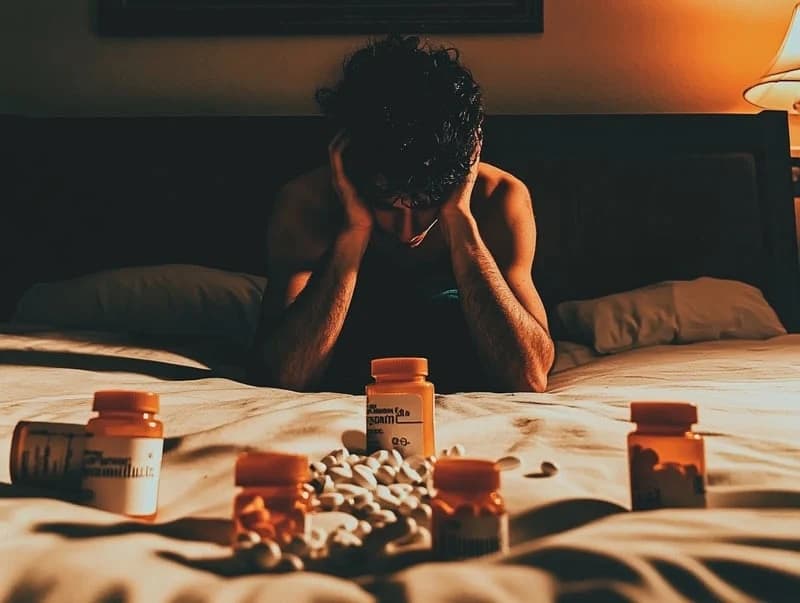
Addiction to prescription drugs

7 days

This 7-day Bible study is designed to provide spiritual guidance and support to people struggling with prescription drugs. By focusing on relevant Bible verses and teachings, we want to help you find strength, hope, and healing through faith.

Start this plan in Bible Chat

The plan is free to read here. In the app it arrives one day at a time, with the full passage and audio.

What the plan covers

  1. Day 18 min

    Recognizing the need for help

    Passages: 1 Corinthians 6:12 · Psalm 139:23

    Prescription drugs can be valuable tools for healing if used properly under medical guidance. However, they can also become a destructive force when abused – leading to dependence, altered brain chemistry, and spiritual separation. The subtle nature of prescription drug abuse often begins innocently: a necessary drug prescribed for a legitimate condition. Over time, however, it can turn into an unrelenting trust that overshadows faith, relationships, and self-control. The Bible speaks profoundly of self-control and our tendency to be controlled by certain behaviors or substances. In 1. In Corinthians 6:12, Paul reminds us that while some things may be permitted, not everything is beneficial. This principle applies directly to the consumption of prescription drugs: even if the drug itself is not "evil," it can still become harmful if it gains dominion over us. From a neuroscience perspective, prescription drug abuse can flood the brain's reward pathways, causing cravings that feel insurmountable. Psychology teaches us that this compulsive behavior often masks deeper emotional or spiritual wounds. Meanwhile, medical professionals stress the importance of using these substances responsibly and strictly adhering to prescribed dosages and schedules. In the context of AA, the first step acknowledges that we are powerless over our addiction and that our lives become uncontrollable when a substance starts to call the shots. Spiritually, it is an act of humility before God when we recognize that we need help. We come before the Lord with the prayer from Psalm 139:23: "Search me, O God, and know my heart..." This is not just an intellectual recognition; it is an invitation to God to reveal areas of brokenness that we may ignore. Often, the pain or anxiety we treat can be linked to unresolved issues such as guilt, shame, or trauma. True recovery begins when we take this open-hearted stance and acknowledge that prescription drug abuse is a sign that we're seeking relief from something deeper. Instead of allowing shame to drive us further into secrecy or isolation, we can lean on God's compassionate heart. Jesus offers us the freedom that no recipe can offer – he meets us in our weaknesses and offers us the grace to transform. Today, as you begin this journey, let these scriptures lead you to a place of sincerity and truth. Realize that while medicines can be part of God's care, they should never become an idol or master. Invite the Holy Spirit to illuminate all the hidden areas of your heart, trusting that true transformation begins with a transparent confession. Reflection What fears or wounds could fuel your addiction to prescription drugs? How can the truth of God's Word help you to see more clearly your need for freedom? Practical steps Write down how you take your prescription medication and note any possible abuse. Reach out to someone you trust—a sponsor, pastor, or counselor—and be honest about your problems. Start keeping a journal daily and ask God to reveal deeper problems in your heart. Prayer Heavenly Father, thank You for Your inexhaustible love. Explore my heart and show me where I've allowed prescription drugs to take control of my life. Give me the courage to face my weaknesses, the wisdom to seek help, and the faith to entrust my healing to you. In the name of Jesus, amen.
  2. Day 27 min

    Transfer of control

    Passages: James 4:7 · Proverbs 3:5

    One challenge with prescription drug addiction is the illusion of control. Since a doctor prescribes these drugs first, it's easy to rationalize that we can take control of our own consumption. However, what starts as self-confidence can quickly turn into denial as addiction grows. We could say to ourselves, "I need this to function" or "I can't do without it" and show that the drug has taken on a central role in our lives. James 4:7 calls us to submit to God and resist the devil. Submission is more than mere compliance; it is a deliberate, daily submission of our will to God's authority. When we hold on to the illusion of control, we often become more vulnerable. The adversary takes advantage of our self-reliance and whispers lies that perpetuate our abuse: "Just one more pill" or "You can't do without it." But by surrendering to God—acknowledging His sovereignty and our needs—we tap into divine power beyond our own effort. From a psychological point of view, relinquishing control is accompanied by the realization that we cannot simply "free" ourselves from addiction. Research shows that addictive behaviors change the chemistry of the brain and make rational decisions more difficult once craving sets in. Medicine recognizes the need for medical support — sometimes through the adjustment of prescriptions or the use of alternative treatments — while counseling emphasizes the need for coping strategies that go beyond the substance itself. The wisdom of AA (Alcoholics Anonymous) points us to a higher power. The first three steps make it particularly clear how important it is to admit powerlessness, to believe in a power greater than ourselves, and to surrender our will to God's care. This reflects the biblical principle of trusting in the Lord rather than relying on our final understanding (Proverbs 3:5). Spiritually, we often struggle with control because we fear the unknown. Drug addiction can be a coping mechanism to manage pain, anxiety, or trauma. Surrender therefore feels risky because it means entrusting our vulnerability to God. But it is precisely this act of trust that opens the door to healing. When we let go, we allow God's grace to fill the space that was once occupied by addictive patterns. As you continue your journey, ask yourself: In what ways have I tried to stay in control of my addiction, only to fall even deeper into bondage? True freedom begins when we bow to the leading of the Holy Spirit. He leads us with love, not with condemnation. Step by step, day by day, you will discover that God is more than capable of dealing with the burdens you carry around with you. Reflection In which areas of life do you struggle the most with giving up control? How might accepting God's sovereignty ease your anxiety or fear? Practical steps List specific moments when you feel the greatest temptation to abuse medication. Pray immediately in these vulnerable times and ask God to help you in your surrender. Consider sharing these struggles with a responsible partner who can pray for you and encourage you. Prayer Lord, I am giving up my desire to control every aspect of my life. I acknowledge my limitations and ask for Your strength to overcome them. Replace my fear with faith and help me to trust in Your infallible wisdom. In the name of Jesus, amen.
  3. Day 37 min

    The Power of the Spirit

    Passages: Romans 12:2 · Philippians 2:5

    Recovery from prescription drugs requires more than physical abstinence. It requires a transformation of our thought patterns, emotional reactions, and spiritual attitudes. Romans 12:2 addresses this directly, urging us not to conform to worldly patterns, but to allow ourselves to be transformed by the renewal of our minds. This renewal process deals with unhealthy coping mechanisms and distorted perspectives that keep us trapped in the cycle of addiction. Neuroscience research shows that addiction rewires neural pathways, creating strong associations between stress or discomfort and the need for a substance to cope. Over time, the brain learns to reflexively seek the drug for relief. This process affects decision-making, emotional regulation, and even personality traits. However, God has designed our brains with remarkable plasticity, which means that it can be retrained and healed through conscious practice, therapy, and spiritual disciplines. Psychologically, cognitive behavioral therapy (CBT) is one of the most effective tools for renewing the mind. CBT promotes the recognition of negative thought patterns and their replacement with healthier, reality-based perspectives. In the Christian context, this is in harmony with the principle of "subjecting every thought to the obedience of Christ" (cf. 2 Cor 10:5). We learn to recognize destructive, addictive thoughts early on and to counter them with biblical truth—by remembering God's grace, purpose, and frugality. Here, too, medicine plays a supporting role. If you work with a doctor, they can adjust prescriptions to minimize dependence or recommend alternative treatments such as non-addictive pain management or holistic strategies. In AA, sponsors often help identify relapsing thought patterns and hold us accountable for developing healthier mental habits. Philippians 2:5 encourages us to adopt Christ's way of thinking. Jesus was an example of humility, obedience, and compassion. This mindset is in stark contrast to the self-centered, impulsive urges that typically accompany addiction. Choosing to walk in Christ's mind means committing ourselves to loving God and neighbor above our desires and putting God's will above our own temporary relief. If you cultivate a renewed mind, you will likely find that healing is not an overnight experience, but a journey marked by gradual, spirit-led progress. Every day is an opportunity to invite God into your thought life—to ask yourself why you might be forced to reach for pills, to evaluate whether you seek comfort, numbness, or escape. Over time, this conscious renewal breaks the grip of addiction and releases you into a deeper intimacy with the Lord. Reflection What recurring thoughts lead you to prescription drug abuse? How can you replace these thoughts with truths that come from Scripture? Practical steps Identify a negative thought pattern today and replace it with a truth based on Scripture. Practice the discipline of reading and meditating on the Bible daily to strengthen godly thought patterns. Consider seeking out a Christian counselor or therapist who is knowledgeable about CBT for professional guidance. Prayer Father, transform my mind to be in line with Your Word. Help me to recognize the lies I believed in and replace them with your truth. I surrender my thoughts and feelings to You and trust that You will lead me into lasting freedom. In the name of Jesus, amen.
  4. Day 48 min

    Establishment of a support system

    Passages: Galatians 6:2 · Ecclesiastes 4:9-10

    An essential part of overcoming prescription drug addiction is realizing that you don't have to walk the path alone. The Bible emphasizes the power of community and mutual support. Galatians 6:2 commands us to bear burdens with one another and points out a collective responsibility for each other's well-being. Ecclesiastes 4:9-10 reminds us that fighting together is easier when we have companions to lift us up. In the field of psychology, social support is an essential factor for successful recovery. Research consistently shows that people who have strong support networks — friends, family, counselors, or support groups — perform better than those who try to fight addiction in isolation. When we are encouraged and held accountable by others, we can drastically reduce recidivism rates. From a medical perspective, transparency with healthcare providers is crucial. Working in isolation can lead to harmful patterns, such as "doctor shopping" for more prescriptions or hiding pill intake. A supportive medical team can offer safe tapering protocols, non-addictive medication alternatives, or referrals to specialized treatment programs. The AA (Alcoholics Anonymous) model emphasizes the power of community: sponsors, group meetings, and step-by-step work. These communities provide a space to witness, build relationships, and learn from the experiences of others. They remind us that our struggles are not unique and that hope is possible. Spiritually, the church is designed to function as the body of Christ—in which each member supports the other in love, prayer, and responsibility. When we isolate ourselves out of shame or fear of judgment, we deprive ourselves of a vital channel of God's grace. Yes, vulnerability can feel risky, especially when it comes to something as personal and stigmatized as prescription drug abuse. However, true Christian fellowship is to be a safe haven for confession, healing, and restoration. Building a support system can involve taking conscious steps outside of your comfort zone. This could mean joining a local Christ-centered recovery group, seeing a Christian counselor, or simply asking a friend to check on you regularly. Scripture teaches us that we are not meant to bear our burdens alone. God often uses other people as His hands and feet, giving us the encouragement and responsibility we need. As you embrace the gift of community, remember that relationships are mutual. While you receive support, you also have the opportunity to encourage others in their struggles. Through common testimony and prayer, you will witness the transforming power of God's Spirit. Reflection What factors prevented you from seeking support? Who in your life could you invite to your recovery journey this week? Practical steps Reach out to at least one person today—a friend, pastor, or sponsor—and be honest about where you stand. Do your research and consider attending a local support group, whether it's AA or a Christian program. Make a list of people who are safe, compassionate, and willing to help you take responsibility. Prayer Father, thank you for placing me in a community of believers. Give me the courage to be honest with others and help me to carry their burdens as they carry mine. May we grow together in Your love and truth. In the name of Jesus, amen.
  5. Day 58 min

    Confronting guilt and shame

    Passages: 1 John 1:9 · Romans 8:1

    Struggling with prescription drug abuse can bring tremendous feelings of guilt and shame. You might be embarrassed that you're letting a "legitimate" drug take over your life. You may be concerned about how friends, family, or other members of the Church perceive you. This cloud of judgment can become crippling, keep you from seeking help, and convince you that recovery is impossible. But Scripture clearly reminds us that true confession leads to forgiveness and freedom. Guilt can draw our attention to misconduct or bad decisions in a healthy sense. However, shame goes deeper and targets our identity rather than our actions. Shame says, "There's something fundamentally wrong with you," while guilt says, "You made a mistake." Jesus came to remove our shame and offer us a new identity: we are beloved children of God who do not define ourselves by our addictions. When we confess our sins, as 1 John 1:9 teaches, we align ourselves with the truth and invite God's grace into our darkest places. The enemy wants us to hide, tormented by the fear of judgment. But once we bring our struggles to light—through prayer, accountability, or support groups—the power of secrecy wanes. From a psychological point of view, shame can trap us in a cycle of negative self-talk. We may believe that we are not worthy of love or that we will never free ourselves. Neuroscience suggests that persistent shame triggers stress responses in the body that can perpetuate addictive behaviors while the brain seeks relief. In the steps of A.A., open confession is a key element for progress; It breaks down isolation and promotes honesty. Medical professionals often encourage an open dialogue about addiction to reduce stigma and improve treatment outcomes. Confiding your whole story to your doctor or therapist can help them create a plan that takes into account both the physical and emotional components of prescription drug abuse. Romans 8:1 assures us that there is no condemnation for those who are in Christ. This is no excuse for continuing in destructive habits; it is an invitation to step out of the darkness and step into God's healing light. As you face guilt and shame, remember that Jesus took your damnation upon Himself on the cross. He knows every detail of your struggle and still hugs you with compassion. Don't let shame dictate your future. Instead, choose to believe in the power of confession and forgiveness. God's mercy can transform your pain into a testimony of His redeeming grace. Reflection How has guilt or shame prevented you from seeking help or confessing your struggle? How does knowing that there is no condemnation in Christ encourage you to keep going? Practical steps Confess your struggle to God in prayer and describe exactly how you abused medication. Consider sharing your confession with a trusted friend, pastor, or support group. Write down Romans 8:1 and keep it in a visible place to remind us of God's grace. Prayer Lord, I confess my abuse of prescription drugs and the shame I have brought upon myself. Thank you for your promise of forgiveness and acceptance. Help me to trust in Your love, to step into the light and to walk free from condemnation. In the name of Jesus, amen.
  6. Day 68 min

    Walking by the Spirit

    Passages: Galatians 5:16 · Romans 8:14

    As you recover from prescription drug abuse, you'll encounter temptations, cravings, and emotional triggers on a daily basis. The biblical call to "walk in the Spirit" provides a powerful framework for lasting freedom. Galatians 5:16 promises that living in the Spirit protects us from satisfying the desires of the flesh—those impulses that lead us astray. From a psychological point of view, consistent healthy routines and mindfulness techniques can strengthen your resilience. This is in line with the Christian practice of spiritual disciplines—prayer, scripture reading, worship—that anchor our hearts in God's truth. Neuroscience shows that persistent positive behaviors reinforce new neural pathways and, over time, make it easier to resist old, destructive habits. In the medical field, ongoing follow-up appointments and open communication with your healthcare providers help prevent relapse. When you participate in a 12-step program, regular meetings, step-by-step work, and communication with a sponsor are essential. All of these elements work together to support you holistically – body, mind, and spirit. Romans 8:14 emphasizes that those who are led by the Spirit of God are His children. This means that you have a divine identity and heritage that replaces any label or stigma associated with addiction. When you understand who you are in Christ, you become less susceptible to the lie that you are hopeless or destined to remain dependent on pills. Instead, you realize that the Holy Spirit—the same power that raised Jesus from the dead—lives in you and enables you to resist temptation and experience authentic transformation. Walking in the Spirit means giving and trusting daily, inviting the Holy Spirit to guide decisions, conversations, and emotional responses. If you feel the urge to abuse medication, stop and pray, "Holy Spirit, guide me. Show me a better way." This brief moment of intercession can interrupt the automatic cycle that feeds the addiction. Over time, the habit of spiritual mindfulness will help you recognize warning signs, gain access to divine power, and experience more peace. In practice, living in the Holy Spirit also means taking care of your physical and mental health. Treat underlying conditions responsibly – if you have chronic pain or anxiety, work closely with medical professionals to treat these conditions. Do not neglect exercise, nutrition and rest, which are fundamental for holistic well-being. If you adopt this Spirit-led lifestyle, it does not mean that you will never have difficulties again. Rather, it means that you have a constant advocate who empowers you to overcome. As you walk in lockstep with the Holy Spirit, you gradually align your entire being with God's intentions, and the grip of prescription drug abuse loosens and is replaced by the life and peace that only Christ can give. Reflection How can you practically invite the Holy Spirit into your daily routines and decision-making? What does it mean to you to be a child of God guided by His Spirit? Practical steps Set aside a certain amount of time each day for prayer and ask the Holy Ghost to guide you. In moments of stress or temptation, practice "sacred pauses" – take a deep breath, pray, and listen. Keep a journal of improvements and setbacks, and note how the Holy Ghost guides you through each step. Prayer Holy Spirit, thank you for living in me and guiding my every step. Enable me to resist the temptations that arise and walk in freedom as a child of God. I rely on your wisdom and strength, now and always. In the name of Jesus, amen.
  7. Day 78 min

    Enter true freedom

    Passages: John 8:36 · Galatians 5:1

    Freedom from dependence on prescription drugs is not just the absence of abuse; it is a life that has been transformed by God's grace. John 8:36 assures us that when Jesus sets us free, we are truly free—no longer prisoners of dependence, shame, or fear. Galatians 5:1 urges us to stand firm in this freedom and resist any temptation to fall back into old patterns. From a psychological and neuroscientific perspective, recovery is no guarantee that you will never experience cravings or temptations again. However, it empowers you to react differently. Over time, the brain's reward systems can be recalibrated, especially if they are driven by consistent healthy habits, accountability, and a robust faith life. Medically, staying in freedom can mean continued outpatient treatment, regular check-ins, or possibly a controlled medication schedule that helps prevent relapse. But none of these strategies stands alone; They work best when combined with a heart that is actively seeking God's wisdom and power. Theologically, a life in freedom recognizes that one's identity is no longer rooted in addiction, but in Christ. You are a new creation (2 Corinthians 5:17), and your lives now testify to God's work of redemption. This perspective changes the way you approach each day. Instead of living in constant fear of relapse, you learn to live from the place of victory that Christ has already won for you. At AA (Alcoholics Anonymous), the ongoing practice of the 12 steps serves as a daily reminder that freedom is maintained through humility, gratitude, service, and constant trust in a higher power—principles that are deeply consistent with the teachings of Scripture. When you complete this 7-day study, you realize that your journey is just beginning. Each day is an opportunity to deepen your walk with Christ, cultivate supportive relationships, and cultivate healthy coping strategies. Celebrate the milestones of progress, no matter how small. Even if you stumble, remember that failure is not final. God's mercy is new every morning (Lamentations 3:23). Walking in true freedom changes your relationships, your perspective on life, and your purpose. You may find that God gives birth to compassion in you for others who are still bound by addiction. Maybe your story inspires them to seek help and experience the same freedom you experienced. Ultimately, Jesus is the one who sustains and completes the good work He has begun in you (Philippians 1:6). Keep your eyes fixed on Him. Let the certainty of His love and power lead you into a future that is not determined by pills and prescriptions, but by hope, purpose, and an ever deeper relationship with the Lord who frees prisoners. Reflection To what extent do you see evidence of new freedom in your life? How can you stay vigilant and proactive to protect your newfound freedom? Practical steps Create a long-term plan for spiritual growth—regular worship services, Bible study, and Christian fellowship. Stay connected with your support system and healthcare providers and celebrate milestones together. You could share your testimony with someone who may need encouragement in their own way. Prayer Jesus, thank you for setting me free. Help me to stand firm in this freedom and never to return to the chains from which you have freed me. Fill my life with hope, meaning, and a desire to serve others who are struggling. In Your mighty Name, Amen.