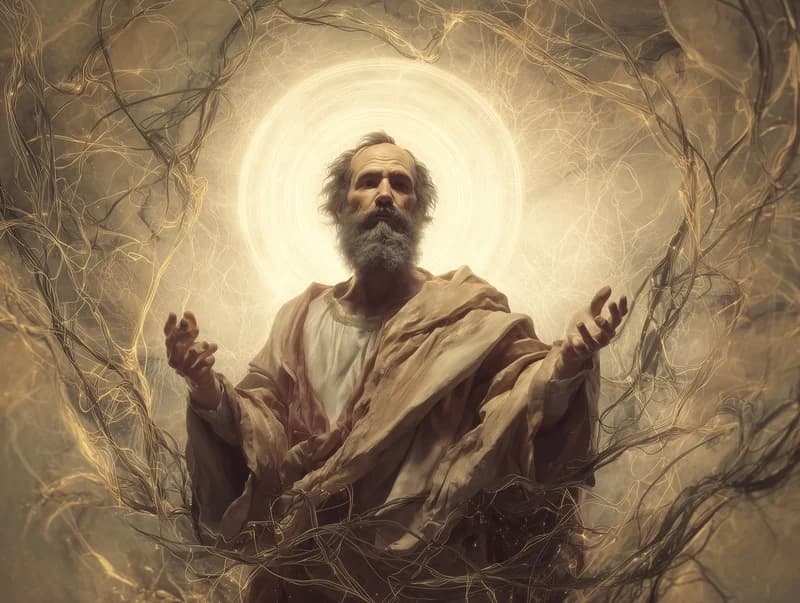
Paul: Faith That Transforms Weakness into Power

7 days

This 7-day journey with the Apostle Paul explores how faith transforms weakness into power. You’ll discover grace that strengthens where you feel fragile, joy that thrives in hardship, and endurance that finishes the race with peace. Blending Scripture with insights from psychology and neuroscience, each day reveals how surrender, resilience, and purpose can rewire both the heart and mind - teaching you to live with unshakable faith and leave a lasting legacy of strength in Christ.

Start this plan in Bible Chat

The plan is free to read here. In the app it arrives one day at a time, with the full passage and audio.

What the plan covers

  1. Day 19 min

    The Power of Grace in Weakness

    Passages: 2 Corinthians 12:9 · Philippians 4:13

    Faith often begins where our strength ends. Paul’s words about weakness and grace are some of the most powerful in all of Scripture because they overturn the way the world measures success. Most people try to hide their weaknesses. We’re taught to appear strong, capable, and confident. But God uses weakness not to shame us, but to shape us. When Paul prayed for his “thorn in the flesh” to be removed, he was desperate for relief. Yet instead of taking away the pain, God gave him something better - grace that transforms weakness into strength. This reveals a core theological truth: God doesn’t always remove our struggles; sometimes He redeems them. The power of faith is not in escaping pain but in finding purpose through it. From a psychological perspective, this passage speaks to emotional resilience. Studies show that when people accept their limitations and stop striving for control, their stress levels decrease, and their mental health improves. Acceptance activates the parasympathetic nervous system, calming the body and mind. The same principle is spiritual: when we surrender to God’s grace instead of fighting our weakness, His peace begins to rule our hearts. Paul discovered that surrender isn’t defeat - it’s the doorway to divine strength. Grace doesn’t just cover our failures; it empowers us to live victoriously through them. Theologically, this is the essence of sanctification: God’s strength working through human frailty to accomplish eternal purposes. When we stop relying on our own abilities and start depending on Christ’s power, we experience transformation from the inside out. Weakness has a way of humbling us. It reminds us that we’re not the source of our own strength. God often allows limitations, challenges, or delays to keep our hearts aligned with His. Just as a muscle grows stronger under pressure, faith grows deeper under dependence. The tension we feel in our weaknesses is the very space where grace expands. Paul didn’t glorify pain for its own sake - he glorified the presence of Christ within it. He learned that grace is not an emergency supply for bad days but the daily oxygen of spiritual life. Every moment of weakness becomes an invitation for God to display His power. From a neuroscientific view, gratitude and trust - key components of faith - activate the brain’s reward and resilience systems. When we thank God even in struggle, our brains release dopamine and serotonin, producing calm and focus. Spiritually, gratitude reframes weakness as opportunity: a place for God to show up. This truth changes how we face hardship. Instead of asking, “Why is this happening to me?” faith asks, “What is God forming in me through this?” The shift from resistance to trust turns pain into purpose. When Paul said, “I can do all things through Christ who strengthens me” (Philippians 4:13), he wasn’t claiming superhuman power. He was declaring supernatural dependence. The phrase “through Christ” means by His strength, not mine. It’s an acknowledgment that even our smallest acts of perseverance are empowered by His Spirit. In a world obsessed with self-sufficiency, Paul’s message sounds upside-down - but that’s the kingdom way. God’s power flows through the cracks in our humanity. Our brokenness becomes the canvas for His beauty. Reflection: What area of your life feels weakest right now? How could God’s strength reveal itself through that weakness if you surrendered it to Him? Practical Steps: Write down one personal weakness and thank God for the grace to grow through it. Each time you feel inadequate today, repeat: “Your grace is sufficient for me.” Take three slow breaths and imagine exhaling worry, inhaling grace. Prayer: Lord, thank You that Your grace is enough. Teach me to see my weaknesses not as barriers but as places where Your strength can shine. Help me rely on Your power, not my performance. I trust that in my weakness, You are strong. Amen.
  2. Day 29 min

    Faith That Perseveres Through Trials

    Passages: 2 Corinthians 4:8 · James 1:2

    Paul’s life was filled with hardships - shipwrecks, imprisonment, beatings, rejection, and loneliness. Yet his faith never collapsed. Instead of allowing trials to destroy him, he let them deepen his dependence on God. His words, “We are hard-pressed, but not crushed,” show that faith doesn’t prevent pressure - it transforms how we handle it. Theologically, this reveals the principle of redemptive suffering. In God’s hands, pain is never wasted. Every trial has a purpose: to shape our hearts into the image of Christ. Perseverance is not about surviving pain - it’s about trusting that God is producing something eternal through it. As Paul wrote, “Our light affliction… is working for us a far more exceeding and eternal weight of glory” (2 Corinthians 4:17). Psychologically, trials challenge the brain’s natural desire for safety and predictability. Stress activates the amygdala, the brain’s fear center, which triggers anxiety and defensiveness. But faith reframes adversity - it tells the brain, “This is not the end; this is growth.” Studies on resilience show that when we interpret pain through a lens of meaning and hope, our minds actually adapt better to pressure. This process builds what psychologists call “stress inoculation” - the ability to stay strong under strain. Spiritually, that’s exactly what Paul experienced. Each trial increased his capacity for faith. Every storm reminded him that strength doesn’t come from control but from connection - to Christ, to His Word, and to His purpose. Paul didn’t see himself as a victim of hardship but as a vessel being refined by it. His secret was perspective: “We do not look at the things which are seen, but at the things which are not seen” (2 Corinthians 4:18). Faith that perseveres isn’t about pretending everything is fine; it’s about believing God is still at work even when everything feels broken. True perseverance doesn’t deny pain - it walks through it with confidence that God will bring redemption. Neuroscience supports this biblical truth. Gratitude, prayer, and hope activate the prefrontal cortex - the part of the brain that governs peace and decision-making - while reducing activity in the fear-based centers. This means that when believers practice faith-based endurance, they are literally rewiring their brains for resilience and peace. Paul’s perseverance was not superhuman - it was supernatural. He endured not by his own willpower but through the grace of God empowering him. He could face the next trial because he had learned that God’s faithfulness was consistent in the last one. Each scar became a testimony of strength through surrender. When we face trials, we can choose to see them either as punishment or preparation. For Paul, every hardship became preparation for greater ministry. His wounds became the language of compassion; his weakness became a bridge to others who suffered. Faith that perseveres is forged in the furnace of adversity. It’s not glamorous - it’s gritty. But those who hold on discover something unshakable: even in the darkest places, God’s light never goes out. Reflection: What trial in your life has tested your faith the most? Looking back, how has God used that season to build perseverance or deepen your dependence on Him? Practical Steps: Write down one challenge you’re facing and next to it, one way God might use it for growth. When you feel overwhelmed, pause and repeat Paul’s words: “Pressed, but not crushed.” End your day by thanking God for one way He’s carried you through past trials. Prayer: Lord, thank You that trials do not define me - Your grace does. Strengthen me to persevere when I feel pressed and tired. Help me see my hardships as opportunities for deeper trust and transformation. In every trial, let Your strength be made perfect in me. Amen.
  3. Day 39 min

    Faith That Redefines Identity

    Passages: 2 Corinthians 5:17 · Galatians 2:20

    Paul’s story is one of the most radical transformations in the Bible. He went from persecuting Christians to becoming one of the greatest apostles of all time. His encounter with Christ on the road to Damascus changed everything - his purpose, his mindset, and even his identity. Theologically, this reveals the power of regeneration - the new birth that happens when we surrender to Jesus. Faith doesn’t just adjust our behavior; it rewires our entire being. Paul didn’t simply “try harder” to be good; he became a new person. His past no longer defined him - grace did. Psychologically, identity is one of the most powerful forces shaping human behavior. We live according to who we believe we are. Neuroscience shows that the brain forms patterns based on self-perception; if we see ourselves as failures, we subconsciously repeat failure. But when faith redefines our identity, it rewires the brain toward growth, peace, and purpose. Believing “I am a new creation” actually reshapes thought patterns and emotional responses. Spiritually, Paul’s identity shifted from self-reliance to Christ-reliance. Before, he found worth in religious status and performance. After meeting Jesus, he realized that identity rooted in anything but grace will always crumble under pressure. He wrote, “It is no longer I who live, but Christ lives in me.” This isn’t about losing individuality - it’s about discovering true identity in divine partnership. God doesn’t erase who we are; He redeems it. Paul’s boldness, intelligence, and zeal were not destroyed - they were redirected. God doesn’t waste our personality; He purifies it for purpose. Faith allows us to be fully ourselves while being fully surrendered. Psychologically, this transformation mirrors the process of cognitive renewal. When Paul wrote, “Be transformed by the renewing of your mind” (Romans 12:2), he described a truth that modern neuroscience confirms: repeated focus on God’s truth reshapes neural pathways. Over time, the brain aligns with spiritual reality - the “old self” truly fades, and a new mindset emerges. Spiritually, this means we stop striving to prove our worth and start living from worth already given. Paul could face imprisonment, rejection, and suffering because his identity wasn’t built on human approval. His confidence came from knowing whose he was, not just who he was. Many people today live trapped in false labels - “not enough,” “broken,” “unworthy.” But faith replaces those lies with truth: “chosen,” “redeemed,” “loved.” The grace that met Paul on the road to Damascus is the same grace that meets us in our weakness. God doesn’t call us by our past - He calls us by our potential in Him. Theologically, this is the beauty of justification and sanctification: we are declared righteous because of Christ, and day by day, His Spirit transforms us into that reality. Faith makes us participants in divine nature, not spectators. When Paul declared, “All things have become new,” he wasn’t speaking figuratively. He was describing a new spiritual operating system. The old patterns of guilt and striving were replaced by peace and purpose. Faith, at its core, is an identity exchange - my weakness for His strength, my past for His promise, my failure for His forgiveness. Reflection: How do you define yourself most often - by your past, your performance, or by who you are in Christ? What would change if you fully lived from your new identity? Practical Steps: Write “I am a new creation” somewhere visible and read it aloud each morning. Identify one negative belief about yourself and replace it with God’s truth (2 Corinthians 5:17). Spend 5 minutes daily thanking God for specific ways He’s transforming you. Prayer: Lord, thank You for making me new in You. Help me live from my true identity, not my past or performance. Let my thoughts align with Your truth, and may my weakness reveal Your strength. Amen.
  4. Day 47 min

    Faith That Finds Purpose in Pain

    Passages: Romans 8:28 · Philippians 1:21

    Paul’s life proves that pain and purpose can coexist. He suffered more than most - beatings, shipwrecks, imprisonment, rejection, and sickness. Yet he never saw his pain as meaningless. Instead, he believed that everything he endured could serve a divine purpose when surrendered to God. Theologically, this reflects the mystery of redemptive suffering. God doesn’t cause all pain, but He can use all pain. Every trial becomes a tool for shaping character, deepening faith, and advancing His kingdom. When Paul wrote “all things work together for good,” he wasn’t speaking from comfort but from chains. His confidence wasn’t in the situation but in the Sovereign who ruled over it. Psychologically, this truth aligns with how meaning transforms suffering. Research shows that when people connect their pain to a purpose - whether personal growth, helping others, or faith - their brains process pain differently. Meaning reduces the emotional distress of suffering by shifting focus from “why me?” to “what now?” Faith activates the prefrontal cortex, calming the fear response, and helping believers find peace even in chaos. Spiritually, Paul found that pain purified his motives. It burned away pride and self-dependence, teaching him that grace was not a theory but a lifeline. Through hardship, Paul discovered a freedom that success could never give - the freedom of full surrender. Pain became the soil where his ministry grew deepest roots. Every prison became a pulpit. Every wound became a window for God’s glory. His letters written in captivity would one day strengthen millions. This shows that what feels like confinement can actually be divine assignment. Faith doesn’t mean pretending pain doesn’t hurt. It means trusting that God’s hand is still holding you through it. Paul didn’t deny his hardships; he reframed them. Theologically, this is the principle of cruciform living - sharing in Christ’s sufferings so that His resurrection power might flow through us. Psychologically, this mindset builds emotional endurance. When we believe pain has purpose, it no longer feels like punishment - it feels like preparation. Gratitude and trust release oxytocin and serotonin, healing the body from the stress of fear. In short, faith is medicine for the soul and even for the mind. Paul could say “to live is Christ and to die is gain” because his faith transcended fear. Whether in life or death, joy or sorrow, he knew that everything was part of a greater story. Pain didn’t define him; purpose did. Reflection: Can you think of a season of pain that later revealed purpose? How might your current challenges be forming something eternal within you? Practical Steps: Write down one painful experience and list at least one lesson or growth that came from it. When suffering, whisper: “This, too, will work for good.” Share your story of endurance to encourage someone else. Prayer: Lord, thank You that no pain is wasted in Your hands. Teach me to trust that You are working purpose in every struggle. Help me to see pain not as an enemy but as a path to deeper faith. Amen.
  5. Day 57 min

    Faith That Chooses Joy

    Passages: Philippians 4:4 · Nehemiah 8:10

    Paul wrote about joy not from comfort but from confinement. He penned “Rejoice in the Lord always” while sitting in a Roman prison, uncertain whether he would live or die. His joy wasn’t based on circumstance - it was rooted in relationship. Theologically, this teaches us that joy is not the absence of trouble but the presence of Christ. Happiness depends on what happens; joy depends on who holds your heart. Paul had learned the secret of inner contentment: “I have learned in whatever state I am, to be content” (Philippians 4:11). Psychologically, joy is a protective force for the mind. Studies show that gratitude and joy activate the brain’s reward system, releasing dopamine and endorphins that reduce anxiety and strengthen immunity. But Paul’s joy went deeper than emotion - it was a spiritual discipline. He chose joy as an act of faith. Faith that chooses joy declares: “God is good even when life is hard.” It’s a defiant hope that refuses to let external pressure dictate internal peace. Paul’s joy came from knowing that God’s grace was enough and that His plan was unstoppable. Spiritually, joy reveals alignment with heaven’s reality. When we rejoice in suffering, we’re not denying the pain - we’re acknowledging that God is greater than it. Joy becomes an act of spiritual warfare, silencing fear and despair. Paul’s repeated call to “rejoice” wasn’t a cliché - it was a command to anchor the soul in Christ. He knew that focusing on God’s faithfulness transforms perspective. Gratitude rewires the brain to notice goodness instead of fear, creating resilience and hope. Theologically, joy is also missional. Paul’s joy attracted others to faith. In prison, guards heard hymns instead of complaints. His praise turned pain into a platform. This shows that joy isn’t private - it’s powerful. Choosing joy doesn’t mean ignoring grief. Even Jesus wept. But joy reminds us that sorrow doesn’t have the final word. When we choose joy, we choose faith over feelings, eternity over emotion. Reflection: What does it mean for you to rejoice “always”? How might joy change your perspective on what you’re facing right now? Practical Steps: Start each day listing three things you’re grateful for. When stress hits, pause and say: “The joy of the Lord is my strength.” End your day by thanking God for one glimpse of His goodness. Prayer: Lord, help me to find joy in You, not in circumstances. When life feels dark, remind me that Your light never fades. Let my joy be a testimony of Your strength in me. Amen.
  6. Day 67 min

    Faith That Finishes the Race

    Passages: 2 Timothy 4:7 · Hebrews 12:1

    At the end of his life, Paul looked back not with regret but with fulfillment. His journey was hard, but his faith endured. He had run his race faithfully, trusting God from start to finish. Theologically, Paul’s life models perseverance unto completion. Faith isn’t just about starting strong - it’s about finishing well. The race of faith requires endurance, focus, and discipline. Just as athletes train their bodies, believers must train their hearts to stay steadfast through trials. Psychologically, endurance comes from purpose and vision. Studies show that when people keep a goal in mind, their brains release motivational chemicals like dopamine that help them persist. Spiritually, the goal of faith is not earthly success but eternal reward - the joy of hearing, “Well done, good and faithful servant.” Paul’s perseverance came from knowing his finish line wasn’t in this life but in eternity. That mindset transformed how he handled hardship. Chains couldn’t stop his mission; pain couldn’t silence his praise. He endured because he saw beyond the temporary. Spiritually, finishing the race means living daily in alignment with God’s call. It’s not about perfection - it’s about progress. Every small act of obedience is a step toward the finish line. Paul’s strength came from grace, not grit. He said, “By the grace of God I am what I am” (1 Corinthians 15:10). Neuroscience supports this spiritual truth. Endurance builds through consistent small habits. When we practice prayer, gratitude, and Scripture meditation, the brain forms stable pathways for peace and discipline. Faith literally strengthens our capacity to persevere. Paul’s life teaches that finishing well means keeping faith even when the crowd disappears. True faith doesn’t need applause; it needs focus. Every believer has a unique race marked out by God. Comparison drains strength; surrender renews it. When Paul crossed his finish line, he didn’t boast about achievements - he celebrated grace. The same grace that saved him sustained him. And that same grace empowers us to finish our own race with joy and faith intact. Reflection: Are you running your race with endurance or exhaustion? What distractions might be slowing your pace, and how can you refocus on God’s purpose? Practical Steps: Write down your “race goal” - what faithfulness looks like for you this season. Commit to one daily practice (prayer, Scripture, worship) to strengthen endurance. Remind yourself daily: “I’m running with grace, not striving for perfection.” Prayer: Lord, give me endurance to finish my race with joy. Keep my eyes on You, not on obstacles. Strengthen me to run faithfully until I see You face to face. Amen.
  7. Day 77 min

    Faith That Leaves a Legacy

    Passages: 1 Corinthians 11:1 · Philippians 4:9

    Paul’s faith didn’t die with him - it multiplied through generations. His letters still shape the Church today because his life wasn’t just about success; it was about surrender. True legacy is not built on what we achieve but on who we help become more like Christ. Theologically, legacy flows from discipleship. Paul poured into others like Timothy, Titus, and countless believers across the early Church. His greatest accomplishment wasn’t his miracles - it was his mentoring. He passed on faith, not fame. Psychologically, legacy satisfies one of humanity’s deepest needs: significance. People long to know their lives matter. Studies show that when we live for something beyond ourselves, our mental well-being increases and anxiety decreases. Purpose gives peace. Spiritually, legacy begins in daily obedience. Paul’s letters, prayers, and sacrifices were small acts of faith that added up to eternal impact. The seeds of faith we plant today may bear fruit long after we’re gone. Paul’s statement, “Imitate me as I imitate Christ,” shows that authentic leadership starts with humility. He didn’t point people to himself but to Jesus reflected through him. His transparency about weakness made his faith relatable. Neuroscience shows that modeling behavior is one of the most powerful forms of influence. The brain learns through imitation - what we see, we repeat. Spiritually, this means that living out faith authentically shapes others more than perfect words ever could. Paul’s legacy reminds us that impact is not measured by titles but by transformation. His letters weren’t written from palaces but from prisons, yet they carried eternal weight. He lived to make Jesus known, and that mission continues through every believer who walks by faith. We all leave a legacy. The question is - what kind? When our faith perseveres through weakness, when we love despite pain, when we forgive and trust again, others see Christ in us. That is the greatest inheritance we can pass on. Reflection: What kind of legacy is your faith building today? How might your words, actions, or endurance inspire someone else to trust God? Practical Steps: Reach out to one person to encourage or mentor in their faith. Write a short “faith letter” to the next generation - what do you want them to remember? Pray daily that your life reflects Christ’s love more than your own strength. Prayer: Lord, let my life be a reflection of Your grace. Teach me to live in a way that inspires others to follow You. May my weakness show Your strength and my story point to Your glory. Amen.