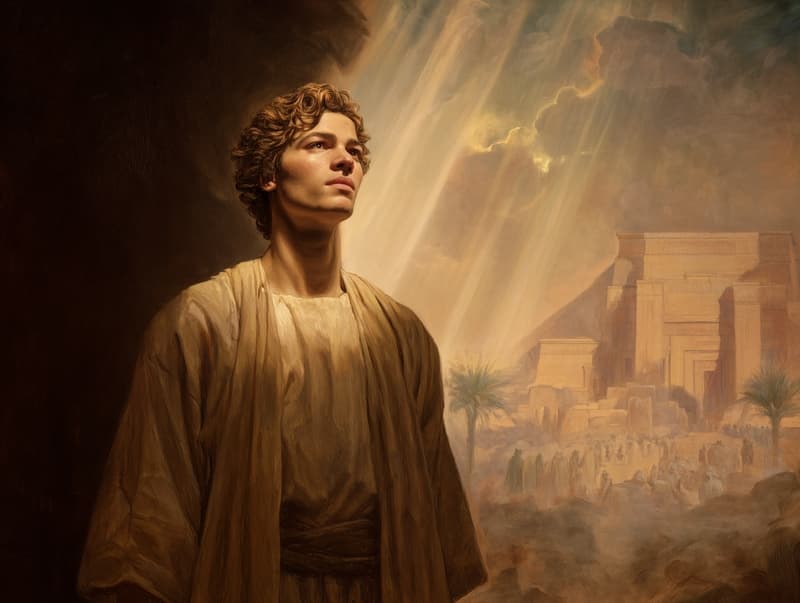
Joseph: From the Pit to the Palace

7 days

This 7-day journey follows Joseph from pit to palace - showing how God’s providence turns betrayal, injustice, and delay into destiny. You’ll learn to keep faith in dark places, serve with integrity, wait without resentment, forgive freely, and steward promotion with humility. Each day blends Scripture with simple neuroscience and psychology to reshape fear and bitterness into resilience, hope, and purpose.

Start this plan in Bible Chat

The plan is free to read here. In the app it arrives one day at a time, with the full passage and audio.

What the plan covers

  1. Day 19 min

    Faith in the Pit

    Passages: Genesis 37:24 · 2 Corinthians 4:8

    Every story of greatness begins with a moment that feels like loss. For Joseph, that moment was the pit. One day he wore a coat of many colors; the next, he found himself stripped of it, betrayed by his own brothers, and thrown into darkness. The pit was cold, silent, and unfair. Yet it was the first step in God’s hidden path toward purpose. What looked like the end was only the beginning of divine promotion. Theologically, Joseph’s pit experience reminds us that God’s plans are not canceled by people’s cruelty. The pit was not proof of God’s absence - it was preparation for His presence in a greater way. God allows moments of isolation not to destroy us but to detach us from false identities. Joseph had to lose the coat given by his father so he could later wear the robe given by Pharaoh. Every season of loss in God’s hands becomes a transformation of purpose. When Joseph looked up from the pit, there was no ladder, no helping hand. It was the perfect place to discover that faith doesn’t depend on visible exits - it depends on invisible hope. In psychology, hope functions as a sustaining force that keeps the mind from collapsing under despair. Studies show that when people believe meaning exists beyond their pain, their brains produce more serotonin and dopamine - the same chemicals that fight depression and build motivation. Faith operates in the same way: it creates meaning where there seems to be none. The pit was not a grave; it was a classroom where Joseph learned that even in silence, God is working. Spiritually, the pit symbolizes the moments when life feels stripped bare - when the dreams God placed inside us seem buried under rejection or betrayal. But it’s in those dark places that character begins to form. Just as seeds must be buried before they grow, faith must be tested before it matures. The soil of pain often hides the roots of greatness. Joseph’s brothers could take his coat, but they couldn’t take his calling. Neuroscience tells us that the human brain is wired for survival but also for connection. Isolation threatens our sense of safety, triggering fear circuits in the amygdala. Yet when faith and prayer are activated, those circuits begin to quiet down, replaced by trust and peace. The presence of God regulates the emotional chaos of isolation. This is why prayer, worship, and reflection are not escape - they’re survival strategies for the soul. When Joseph was alone, unseen, and unheard, God was rewiring him for resilience. Every person who walks with God will face a “pit” season - moments when everything familiar falls apart and only trust remains. But the pit is not punishment; it’s the passageway to purpose. The God who was with Joseph in the pit was also preparing a palace. You may not see the palace yet, but faith sees beyond confinement. What looks like an end to you might be a beginning in God’s plan. Remember this: your circumstances cannot cancel your calling. Betrayal can’t bury destiny. God’s promises don’t expire in the pit - they deepen there. When all you have left is faith, you already have enough, because faith in God turns darkness into development. The pit that broke your pride may be the same pit that builds your strength. Stay faithful in it. The hand of God is writing your story even when the page looks blank. Reflection: What “pit” season have you experienced where God felt silent? How might that place have been preparing you for something greater? Practical Steps: Write down one painful situation from your past and list three ways it may have shaped your strength or character. Each day this week, remind yourself: “My pit is not my end - it’s my preparation.” Prayer: Father, when I feel trapped or forgotten, remind me that You are still at work. Help me trust that every dark place is shaping me for Your purpose. Strengthen my heart to believe that what others meant for harm, You will use for good. Amen.
  2. Day 29 min

    Faith in the Prison

    Passages: Genesis 39:21 · Psalm 17:3

    The pit was painful, but the prison was worse. In the pit, Joseph was trapped by betrayal; in the prison, he was trapped by injustice. He had done nothing wrong, yet he was punished as though he had. The same God who gave him dreams now allowed him to sit in darkness with no explanation. But even there, “the Lord was with Joseph.” Theologically, this moment reveals a deep truth: God’s presence is not proven by comfort but by constancy. When life feels unfair, His faithfulness remains unbroken. The prison became the place where Joseph learned to serve faithfully without recognition. Long before he managed Pharaoh’s house, he managed a prison. God often trains His leaders in obscurity. Promotion in God’s kingdom is not about escaping hardship but staying faithful within it. Psychologically, injustice is one of the hardest wounds to bear. The human brain craves fairness; when something feels unjust, it triggers a stress response, releasing cortisol and adrenaline. If left unchecked, this can lead to anger or despair. But when faith reframes the situation - when the heart says, “God is still with me, even here” - the prefrontal cortex begins to regulate those emotional surges. Trust replaces bitterness. This neurological process mirrors what Scripture calls “renewing of the mind.” Every time Joseph chose trust over resentment, he strengthened his resilience. God didn’t abandon Joseph in that prison; He was shaping him into someone who could carry the weight of leadership. The prison was Joseph’s leadership school. There he learned patience, empathy, and self-control - traits essential for the palace. He served others even when he was the one who needed serving. That kind of faith doesn’t come from comfort; it’s forged in confinement. Spiritually, the prison represents seasons when nothing changes on the outside but everything changes on the inside. Sometimes God closes visible doors to open invisible ones within our character. Joseph couldn’t control his circumstances, but he could control his attitude. He continued to work with integrity, to interpret dreams, and to show kindness even when no one was watching. That quiet faithfulness became the key that eventually unlocked his freedom. In neuroscience, such endurance reflects the brain’s ability to build new patterns through repeated action - this is called neuroplasticity. When we respond to pain with faith and gratitude, new neural pathways of peace and hope form, reducing the influence of fear circuits. Simply put, worship rewires the brain. Joseph didn’t know it, but each day of choosing gratitude over despair was literally renewing his mind and strengthening his spirit. The prison season teaches that faith is not proven by outcomes but by outlook. Anyone can praise God in the palace; mature faith praises Him in the cell. When life feels restricted, remember that God’s favor isn’t limited by location. His presence fills even the smallest spaces. Joseph’s cell became a sanctuary. His chains became the training ground for compassion and wisdom that would later rule a nation. God’s providence means that no prison is wasted. What feels like confinement may be refinement. While Joseph waited for someone to remember him, God was preparing the moment when Pharaoh would need exactly the man who had learned faith in the dark. The God who was silent was never absent. Every delay was divine timing at work. If you are in a “prison” season today - stuck, unseen, or wrongly judged - know this: God’s presence has not left you. He is teaching you to trust His unseen hand. Your faith in the dark is building strength for the light ahead. Reflection: Have you ever felt confined by circumstances beyond your control? How might God be using this season to develop unseen strength in you? Practical Steps: Identify one area where you feel restricted. Each day, thank God for one lesson He might be teaching you there. Replace “Why me?” with “What are You forming in me, Lord?” whenever frustration rises. Prayer: Lord, even in my prison seasons, help me see Your hand at work. Teach me to stay faithful when life feels unfair. Replace my frustration with peace and my despair with purpose. Thank You that no season is wasted when You are with me. Amen.
  3. Day 37 min

    Faith While Serving Others

    Passages: Genesis 39:4 · Colossians 3:23

    Before Joseph ruled a nation, he learned to serve in another man’s house. He prospered in Potiphar’s service because he treated ordinary work as holy. True greatness often begins with faithfulness in small things. God’s providence positioned Joseph in Egypt long before the palace was in view; the lessons of leadership began in someone else’s home. Theologically, this shows that God’s plan uses every setting as preparation. Service is not a detour but the path. When Joseph worked with diligence and integrity, he mirrored the nature of God Himself - faithful, trustworthy, and excellent. Promotion in God’s kingdom is never about status; it is about stewardship. Psychologically, purposeful work gives structure and meaning that protect the mind under pressure. Studies show that when people reframe unwanted tasks as acts of purpose, their brain’s reward centers activate, releasing dopamine and reinforcing motivation. Joseph’s service was more than duty - it was worship. Viewing work as service to God transforms stress into significance. Spiritually, serving in another man’s house required humility. Joseph had once been the favored son, yet now he was a servant. This humility was not humiliation - it was healing. Pride would have shattered him later in power, so God refined him through obedience. Service shapes character because it removes the illusion that success defines worth. Neuroscience explains that repeated humble actions can literally rewire the brain’s response to recognition and criticism. Acts of unseen faithfulness strengthen neural pathways of patience and reduce impulsive reactions. Serving without applause builds emotional regulation, a trait that Joseph would need to rule wisely. When temptation came through Potiphar’s wife, Joseph’s anchored values preserved him. He resisted, not out of fear of consequence, but out of reverence for God: “How then can I do this great wickedness, and sin against God?” (Genesis 39:9). Integrity built in private sustains destiny in public. Faith that endures betrayal and delay learns to bloom in borrowed soil. Even when wrongly accused and imprisoned afterward, Joseph never allowed bitterness to define him. God’s favor remained because Joseph’s faithfulness remained. Every act of service became a seed for future authority. Your current “house” may not be your final destination. Still, how you serve now shapes who you’ll be later. When you work wholeheartedly - even in environments that undervalue you - you invite God’s excellence to dwell there. Faith that serves faithfully becomes faith that reigns righteously. Reflection: Where has God placed you to serve right now? How can you transform ordinary work into worship? Practical Steps: Choose one daily task and consciously dedicate it to God as an act of worship. This week, thank someone you serve under instead of craving recognition yourself. Prayer: Lord, teach me to serve faithfully in every place You assign me. Help me see my work as worship and my diligence as devotion. Shape humility in me until I reflect Your heart in all I do. Amen.
  4. Day 47 min

    Faith Through Temptation and Integrity

    Passages: Genesis 39:9 · James 1:12

    Temptation tests what we truly believe about God and ourselves. Joseph faced powerful temptation in secret. He was far from home, unseen by family, surrounded by opportunity, yet he chose integrity. The same faith that trusted God in the pit now trusted Him in private purity. Theologically, integrity is faith in action. Sin promises quick relief; faith waits for lasting reward. Joseph recognized that sin would separate him from the presence that sustained him. When he fled, he lost his position but kept his purity - and that decision preserved his destiny. Psychologically, resisting temptation strengthens the brain’s self-control networks. Each act of resistance strengthens the prefrontal cortex, improving decision-making and emotional balance. Yielding might bring short pleasure, but it weakens long-term resilience. Joseph’s “no” rewired his mind toward mastery rather than slavery. Spiritually, temptation often comes when success begins. Potiphar had trusted Joseph with everything; comfort can dull vigilance. God allowed this test to prove that Joseph could be trusted with greater authority. Integrity in small matters builds the foundation for influence that lasts. When Joseph fled, leaving his garment behind, he symbolically shed another layer of false identity. The coat of pride had been taken by brothers; the robe of false accusation was now left behind. God was stripping everything external so that Joseph’s identity would be rooted only in divine approval. Neuroscience confirms that moral conviction reduces stress. People who align behavior with conscience experience lower anxiety and stronger well-being. Integrity creates internal harmony - our thoughts, emotions, and actions move in the same direction. Joseph’s peace amid injustice flowed from a conscience kept clean before God. Obedience cost him freedom, but disobedience would have cost him purpose. God’s providence sometimes moves through unfair outcomes, yet none of it is wasted. The prison door that closed because of false accusation would open the door to the palace. Faithful integrity is not outdated holiness; it is spiritual strength. In a world that rewards shortcuts, God still honors those who choose righteousness in secret. Joseph’s story proves that unseen obedience is never unnoticed in heaven. Reflection: What hidden decisions shape your integrity today? How can you honor God when no one else is watching? Practical Steps: Identify one area of compromise and replace it with a small, consistent act of integrity. Each night, ask: “Did my actions today reflect my faith or my fears?” Prayer: Lord, keep my heart pure and my conscience clean. Give me courage to walk away from anything that dishonors You. May my private life be as faithful as my public one. Amen.
  5. Day 56 min

    Faith in Delay

    Passages: Genesis 40:23 · Habakkuk 2:3

    After interpreting the butler’s dream, Joseph must have felt hope rising. Maybe this was finally the door out of prison. But days became weeks, then months, then years - and nothing happened. Forgotten by the very person he helped, Joseph learned the hardest discipline of faith: waiting without resentment. Theologically, delay does not mean denial. God’s timing is precise; He was aligning Pharaoh’s dream with Joseph’s readiness. Had Joseph been released early, he might have returned to obscurity. Divine timing ensures that purpose and opportunity meet perfectly. Psychologically, being forgotten triggers rejection pathways in the brain. Humans are wired for belonging; exclusion activates pain centers similar to physical hurt. Yet hope, gratitude, and trust reframe rejection, soothing emotional pain. When Joseph chose to believe that God still remembered him, he protected his mind from bitterness. Spiritually, waiting seasons are where faith matures from enthusiasm to endurance. Every day in prison taught Joseph to lead himself before leading others - to manage disappointment without losing direction. Waiting trained his emotions to follow truth rather than circumstances. Neuroscience reveals that patience rewires neural pathways of impulse control. Practicing calm expectation lowers stress and strengthens emotional stability. Waiting in faith literally changes how the brain processes delay - it turns frustration into formation. During delay, God works beneath the surface. In the stillness, Joseph’s dream was not dying - it was deepening. God was teaching him empathy for people forgotten by the world, a compassion that would later shape how he led Egypt through famine. The silent years built spiritual muscles unseen by men but recognized by heaven. Delay reveals whether we love God’s promises or simply the speed of their arrival. Faith in delay worships even when nothing seems to move. Joseph’s story teaches that every “not yet” from God hides a “better yes.” Reflection: When have you felt forgotten or overlooked? How can you use waiting as worship instead of worry? Practical Steps: Each morning, thank God for one unseen thing He is likely doing behind the scenes. Replace impatience with praise whenever you feel overlooked. Prayer: Father, help me trust Your timing even when I feel forgotten. Remind me that delay is not denial. Strengthen me to wait with faith and to worship while I wait. Amen.
  6. Day 66 min

    Faith in Forgiveness

    Passages: Genesis 50:20 · Ephesians 4:32

    Years later, the brothers who betrayed Joseph stood before him, powerless and afraid. The dreamer was now governor of Egypt. Revenge could have been easy; forgiveness was harder. Yet Joseph chose mercy, saying, “You meant evil against me, but God meant it for good.” Theologically, forgiveness reflects God’s own heart. Joseph had every right to repay harm with harm, but he saw a higher purpose. Divine providence had used betrayal to position him for blessing. Forgiveness did not erase pain; it redeemed it. Psychologically, holding grudges prolongs stress responses, raising blood pressure and anxiety. Forgiveness, by contrast, lowers cortisol and increases emotional well-being. It doesn’t justify wrong; it releases the victim from bondage to resentment. Joseph’s freedom began long before his brothers bowed - it began the day he decided not to carry bitterness. Spiritually, forgiveness acknowledges that God is the final Judge. Joseph understood that vengeance belongs to the Lord. When we release offenders, we entrust justice to God’s hands and keep our hearts pure for His purpose. Neuroscience confirms that gratitude and compassion stimulate brain regions linked with empathy and peace. Forgiveness literally rewires the brain for joy. Each time Joseph chose mercy, his mind was aligning more closely with the mind of Christ. Forgiveness also guards vision. Bitterness blurs perspective, but mercy restores clarity. Joseph could see the whole story from God’s vantage point: betrayal, slavery, prison, and promotion were threads woven by divine wisdom. When we forgive, we reclaim that same heavenly perspective - seeing life as a tapestry of redemption rather than random pain. Forgiveness is not weakness; it is wisdom. It protects the soul from corrosion. It says, “I will not let what hurt me define me.” When Joseph embraced his brothers, years of grief melted into grace. What once symbolized death now displayed resurrection. Reflection: Who in your life do you need to forgive so you can move forward in peace? What might God be teaching you through that act of mercy? Practical Steps: Write a short forgiveness statement (you need not send it). Pray it aloud before God. Each day, replace resentment with a declaration: “God can turn this for good.” Prayer: Lord, thank You for forgiving me completely. Help me extend that same mercy to others. Heal every wound with Your love and turn my pain into purpose. Amen.
  7. Day 77 min

    Faith Fulfilled

    Passages: Genesis 41:41 · 1 Peter 5:6

    When the call finally came, Joseph’s entire life changed in a single day. In the morning he was a prisoner; by evening he was second-in-command of Egypt. Every hardship had led to this moment. Yet the true victory was not the throne - it was the transformation that happened before it. Theologically, divine promotion follows proven character. Joseph’s elevation wasn’t luck; it was alignment. The same God who gave him the dream had used every trial to shape the wisdom required to sustain it. The palace was never the reward for endurance - it was the assignment for maturity. Psychologically, sudden success can destabilize identity, but Joseph’s humility anchored him. Years of waiting trained his nervous system to handle responsibility without pride. Gratitude regulated what could have become anxiety. The servant heart that cleaned prison cells now managed nations with compassion. Spiritually, the palace represents fulfillment, but also stewardship. God didn’t raise Joseph to enjoy luxury but to preserve life. Faith fulfilled always serves others. The dream given as a teenager was never about personal status - it was about salvation for many. Mature faith understands that blessings are for building others. Neuroscience notes that gratitude and purpose activate long-term well-being far more than external reward. Joseph’s joy came not from wealth but from alignment with calling. When purpose meets preparation, the brain releases lasting satisfaction, rooted in meaning rather than excitement. Joseph’s story ends with reconciliation, restoration, and responsibility. He ruled wisely during famine because he had learned empathy in suffering. Every pit, prison, and delay had built neural and spiritual pathways of resilience. The same endurance that kept him believing in darkness now enabled him to lead in light. Fulfillment is never the end of faith; it is the continuation of trust. The palace did not make Joseph forget God - it made him magnify Him. Faith that endures betrayal, injustice, and delay learns that success without surrender is hollow. When God fulfills His promises in your life, remember Joseph’s example: stay humble, stay thankful, stay servant-hearted. The story’s final message echoes across generations - what others meant for harm, God used for good. The same God who turned pits into platforms and prisons into promotions is still turning pain into purpose today. Reflection: How can you use the blessings God has given you to serve others? In what ways has your waiting prepared you for responsibility? Practical Steps: Write a short list of how your past trials shaped qualities you now use to help others. Dedicate your current success, influence, or resources to God’s service. Prayer: Faithful Father, thank You for turning every trial into training and every delay into destiny. Keep my heart humble in success and steadfast in trust. May my life, like Joseph’s, reveal Your goodness and point others to Your grace. Amen.