He Died, He Lives, He Empowers

7 days

This 7-day Bible study walks you through the most transformative events in human history—Jesus’ sacrificial death, His victorious resurrection, and the powerful outpouring of the Holy Spirit at Pentecost. These are not just historical milestones; they are the very heart of the gospel and the foundation of our faith. Each day, you’ll explore a different moment in this divine story, discovering how each one reveals the depth of God’s love, the victory of Christ, and the empowering presence of the Spirit. As you reflect on the cross, the empty tomb, and the fire of Pentecost, you’ll come to see how these events are not distant or symbolic—they are deeply personal and eternally relevant.

Start this plan in Bible Chat

The plan is free to read here. In the app it arrives one day at a time, with the full passage and audio.

What the plan covers

  1. Day 17 min

    The Path of Perfect Obedience

    Passages: Philippians 2:8 · Isaiah 53:7

    Jesus’ journey to the cross is the supreme example of self-emptying love. Though He shared the Father’s glory from eternity, He willingly laid aside prerogatives of majesty to become fully human. Philippians 2:8 emphasizes that He “humbled Himself” and embraced even death itself—death on a cross—because that was the only way to satisfy divine justice and reconcile us to God. Each step toward Golgotha was an act of deliberate surrender, not helpless drift. Isaiah’s prophecy portrays the Suffering Servant as one who endures injustice in silent submission: “He opened not His mouth.” Psychologists observe that nonreactivity in the face of stress lowers activity in the amygdala (our brain’s alarm center) and engages prefrontal regions responsible for self-control and planning. Jesus modeled perfect emotional regulation: He felt betrayal, pain, and loneliness, yet chose trust over retaliation. This inner discipline birthed resilience and kept His mission clear. Theologically, the cross reveals both God’s holiness and His mercy. Sin’s penalty is death (Rom 6:23), and divine justice cannot be compromised. Yet the Father’s love provided a substitute in His Son. The Lamb’s death meets righteousness and extends mercy in one decisive act. In that moment, cosmic rebellion collided with covenant love, and the chasm between God and humanity was bridged. Neuroscientific research shows that chronic shame and fear elevate cortisol, impairing cognition and health. But Jesus, resting in perfect communion with the Father even on the cross, endured shame without triggering fight-or-flight. He demonstrated a new neuro-theological paradigm: abiding in God’s presence transforms how our bodies process suffering, opening pathways to healing rather than trauma. Spiritually, His obedience invites us into the same posture. When we align our wills with the Father’s—choosing humility over self-importance, trust over anxiety—we begin to rewire our neural circuits toward empathy, patience, and joy. The cross, once a symbol of defeat, becomes the seedbed of spiritual transformation. Picture Jesus’ path: sweat mixed with blood in Gethsemane, the scorn of soldiers, the weight of our sin pinning Him down. Yet He never stepped back. His perfect obedience calls you to follow: to embrace God’s will even when it costs comfort or reputation. In that surrender, you discover true freedom—freedom from fear, freedom to love, freedom to live wholly for the Father’s glory. Reflection: Where are you resisting God’s will out of fear or pride? How might embracing Christ’s model of humble obedience reshape your response to hardship? Practical Steps: Identify one area of control you’re holding tight. Pray Philippians 2:8 over it and choose to release it today. When you feel provoked this week, pause, breathe deeply, and ask God for strength to respond in humility. Journal how trusting God’s plan brings unexpected peace in the midst of trial. Prayer: Heavenly Father, thank You for Your Son’s perfect obedience to the cross. Grant me grace to surrender my will to Yours, trusting Your purposes above my own. Shape my heart to echo Christ’s humility and love. Amen.
  2. Day 26 min

    The Garden of Gethsemane: Jesus' Agony

    Passages: Luke 22:42 · Hebrews 5:7

    In the garden of Gethsemane, the weight of sin and separation bore down on Jesus’ soul. His first prayer—“Take this cup away”—reveals His true humanity and the natural instinct to avoid pain. Yet His ultimate petition—“Not My will, but Yours”—shows perfect surrender. This dual posture of honest anguish and complete trust is the heart of authentic faith. Hebrews 5:7 highlights His “vehement cries and tears.” Neuroscience confirms that emotional expression—tears, vocal lament—activates the limbic system, discharges stress hormones, and prepares the mind for healing. Christ’s tears were not weakness; they were a courageous act of vulnerability, entrusting raw agony to the Father’s care. In His example we learn that naming our pain to God is itself a step toward wholeness. Theologically, Gethsemane reverses Eden’s tragic “no.” Where Adam’s disobedience unleashed death, Jesus’ obedience inaugurated life. The Father’s joy at His Son’s surrender undoes the curse and rekindles fellowship. Christ’s alignment with the Father’s will undoes the alienation of the Fall, restoring our access to divine presence. Psychologically, Jesus models emotional integration: He felt fear intensely, yet did not allow it to dictate His decision. Modern therapy shows that acknowledging and then releasing emotion fosters resilience. His approach teaches us to bring anxiety, grief, and anger to God with transparency, then bow to His leading, trusting His wisdom above our impulses. As you visualize that olive grove, hear Jesus’ heartbeat echoing His prayer. Feel His struggle between self-preservation and sacrificial love. In that tension lies our own journey: to bring unfiltered emotion to God and then choose obedience. Gethsemane becomes our training ground for courageous faith—where tears meet trust, and sorrow gives way to divine strength. Reflection: What burdens or emotions do you hide from God? How can you practice both honest lament and wholehearted surrender in your own “garden” moments? Practical Steps: Spend ten minutes daily this week pouring out your fears to God—cry, pray, then declare Luke 22:42 over your heart. Memorize Luke 22:42 to anchor your will in God’s plans during difficult choices. Share one struggle with a trusted friend and pray together for surrender and peace. Prayer: Father, thank You for the example of Jesus’ honest agony and perfect surrender. Help me bring my deepest fears and tears to You, trusting Your will above all. Grant me the courage to obey even when the cost is high. Amen.
  3. Day 38 min

    “It Is Finished”—The Cross Complete

    Passages: Matthew 27:46 · John 19:30

    As the nails pierce His hands and feet, Jesus utters the haunting words of Psalm 22:1, “My God, My God, why have You forsaken Me?” In that desolate cry, the Son experiences the very separation our sin demanded. The Father’s face turned away, so we would never know that ultimate abandonment. Imagine the depth of alienation: cosmic justice crushing the guiltless Lamb, the sinless One bearing the weight of every transgression ever committed. Immediately afterward, Jesus proclaims, “It is finished!”—Tetelestai in Greek: not “almost done,” but “completely accomplished.” Every sin’s debt paid, every legal requirement satisfied, every promise of redemption kept. The phrase echoes through eternity: the work of salvation is so perfect that no further sacrifice is needed. The cross stands at the intersection of divine justice and boundless mercy. Romans 6:23 teaches that sin’s penalty is death, yet the Father’s love provides a substitute. The Lamb’s willing death satisfies holiness without compromising compassion. The torn temple veil (Matthew 27:51) symbolizes open access: the barrier between God and humanity removed. The new covenant, foretold by Jeremiah (Jer 31:33), is inaugurated—laws inscribed not on tablets, but on hearts. Modern neuroscience reveals that social pain—rejection, shame—activates the same brain regions as physical pain. By bearing abandonment, Jesus enters our deepest traumas. His cry of forsakenness validates every human experience of loneliness and despair. Studies in attachment theory show that knowing someone has endured our pain fosters secure relational bonds. Christ’s solidarity with our suffering then becomes the foundation for healing. When He declares, “It is finished,” our brains receive permission to release chronic fear and guilt, reducing cortisol and allowing prefrontal regions—responsible for hope and planning—to re-engage. The cross transforms suffering into victory. Our own trials can become catalysts for growth when seen through the lens of redemption. Post-traumatic growth research indicates that survivors who integrate their pain into a larger, hopeful story report greater resilience and empathy. The cross invites you to see your wounds not as senseless tragedy but as soil for God’s grace to flourish. When anxiety or shame rise, we can echo Jesus’ declaration, trusting that every broken piece has been woven into His perfect tapestry of redemption. God’s design is for “spirit, soul, and body” to be reconciled. The crucifixion addresses the spirit—restoring relationship with the Father; the mind—liberating from guilt and shame; the body—releasing the stress response and opening pathways for physical health. Salvation is not merely spiritual but integrative, reflecting the Trinity’s work: the Father’s judgment, the Son’s sacrifice, and the Spirit’s renewing power (John 16:7). As you meditate on these verses, visualize the scene: the sky darkened, earth trembling, hearts breaking, and then the triumphant cry. Jesus did not recoil from the cross; He embraced it as the pathway to healing for every soul. Let that truth sink deep—your redemption is finished, your healing is purchased, and your life is now shaped by His victory. Reflection: When have you felt abandoned or overwhelmed by guilt? How does Christ’s cry and declaration reshape your experience of suffering and hope? Practical Steps: Journal a moment of deep shame; pray Matthew 27:46 over it, then declare “It is finished” in faith. Each morning, meditate on “It is finished,” letting it dissolve guilt and fear. Share the cross’s meaning with someone, reinforcing the power of Christ’s completed work in your life. Prayer: Lord Jesus, thank You for bearing abandonment so I might never be separated from You. Your finished work sets me free. Teach me to rest in Your victory and walk in the confidence of Your redemption. Amen.
  4. Day 47 min

    The Power of Resurrection

    Passages: Matthew 28:6 · Romans 6:4

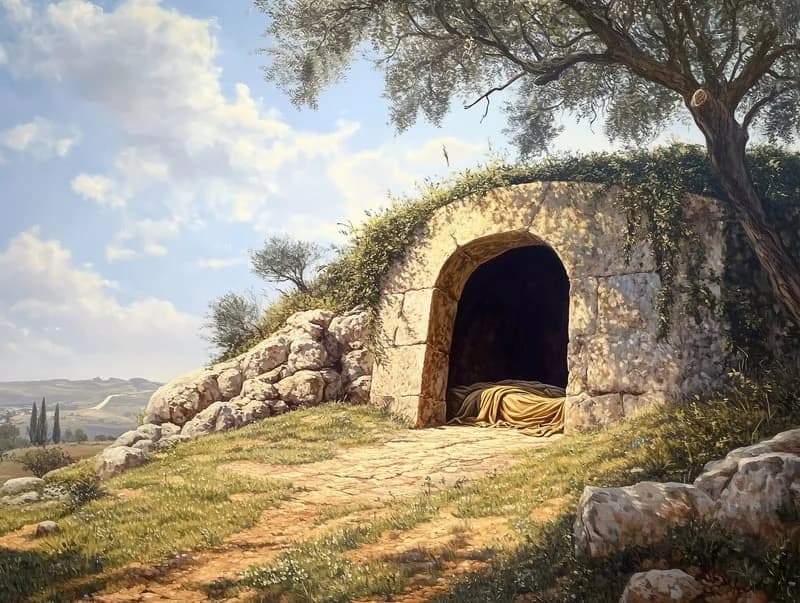
    When Mary Magdalene arrives at the tomb, she finds the stone rolled away and angels proclaiming, “He is not here; for He is risen.” That empty grave changes everything. The Father vindicates the Son’s obedience, demonstrating that death itself is conquered under His sovereign power. Jesus’ resurrection is the living proof that suffering, though real, does not have the final word. The resurrection inaugurates the new creation (2 Corinthians 5:17). Jesus is the “firstfruits” (1 Corinthians 15:20), guaranteeing that believers will share in His victory over death. The Father’s crowning act in history confirms that the cross’s work suffices—death and decay are swallowed by eternal life. This event fulfills prophetic hopes (Isaiah 53:10–12) and anchors our faith in an unshakable reality. Hope is not just an abstract concept but a neurobiological reality. Anticipation of positive outcomes activates reward pathways—dopaminergic circuits—in the brain, elevating mood and resilience. Believing in resurrection power rewires neural networks away from despair. Baptism symbolizes this neuroscientific truth: as we go under water, old patterns of shame and fear die; as we rise, new pathways of hope and purpose ignite. Psychologists studying trauma survivors find that embedding suffering within a redemptive narrative fosters post-traumatic growth: deeper gratitude, stronger relationships, and renewed sense of purpose. The resurrection encourages us to frame our struggles as part of God’s transformative story, turning scars into testimonies of grace. God’s redemptive design touches spirit, mind, and body. Spiritually, we receive eternal life (John 3:16); mentally, our thoughts shift from fear to hope; physically, stress hormones decline as we rest in resurrection power. Daily surrender to the risen Christ—through prayer, Scripture, worship, and obedience—activates this holistic renewal. As you reflect on these verses, picture the empty tomb’s radiant light piercing the darkness. Hear the angels’ proclamation and feel your own heart awaken to possibility. Jesus did not rise merely for theological proof; He rose to empower you in every dimension—to live in freedom, joy, and purpose. Reflection: What areas of your life feel “dead” or stuck in old patterns? How might resurrection power bring newness spiritually, emotionally, and physically? Practical Steps: Identify one habit or relationship needing resurrection; pray daily for Christ’s power to transform it. If not baptized, consider baptism as a public sign of your participation in resurrection life. Each morning, note one new blessing you experience, cultivating a neural pattern of gratitude and hope. Prayer: Risen Lord, thank You for conquering death and giving me new life. Fill me each day with resurrection power, transforming my spirit, mind, and body to reflect Your victory. Amen.
  5. Day 57 min

    Ascension and Heavenly Intercession

    Passages: Acts 1:9 · Romans 8:34

    Forty days after the resurrection, Jesus ascends to the Father’s right hand—a visible affirmation of His victory and authority. As Psalm 110:1 proclaims, the Son sits in sovereign rule, not to rest, but to intercede continually on our behalf. In heaven’s courts, Christ presents His own righteousness, ensuring that the merits of His cross and the power of His resurrection flow into our lives. The ascension bridges heaven and earth. Jesus’ priestly ministry (Hebrews 7:25) is unceasing: He lives forever to make intercession. Our prayers are heard because they join His, offered in the power of His name. The torn temple veil at the cross paved this way—no barrier now separates us from gracious access to God’s throne of mercy. Attachment research shows that knowing a secure figure advocates for us reduces anxiety and fosters emotional stability. Jesus’ ongoing intercession is the ultimate assurance: every fear, every need, every tear is carried to the Father by His loving advocacy. This heavenly support rewires our brains away from fight-or-flight toward resting trust. When we pray, we participate in Christ’s ministry. Our petitions become intertwined with His, empowered by His victory. This truth transforms prayer from duty into dynamic communion. We pray not as striving orphans but as beloved children, backed by the Advocate at God’s right hand. Because Christ reigns and intercedes, we can live as His ambassadors—our spirit aligned with heaven, our mind renewed by truth, and our body energized for mission. The ascension also marks the coming of the Spirit: only after Jesus returned to the Father could the promised Helper be sent (John 16:7). Intercession and indwelling Spirit become twin pillars of our wholeness. Imagine the disciples gazing skyward, hearts bursting with hope. Though Jesus left their sight, His presence filled their souls. Let that same promise fill you: wherever you go, your Savior reigns and prays for you, guiding your steps and cheering your faith. Reflection: How does knowing Jesus intercedes for you change your experience of prayer and security? In what areas do you need to rest in His advocacy rather than striving alone? Practical Steps: Begin each prayer time by thanking Jesus for His heavenly intercession. Memorize Romans 8:34 and speak it aloud when anxiety strikes. Keep a journal of answered prayers, noting how Christ’s advocacy bore fruit. Prayer: Heavenly Advocate, thank You for ascending and interceding for me. Help me rest in Your sustaining presence and bring every need before Your throne with confidence. Amen.
  6. Day 66 min

    Pentecost—Spirit-Filled Empowerment

    Passages: Acts 2:4 · John 16:7

    On the day of Pentecost, the risen-and-ascended Lord poured out the promised Helper—the Holy Spirit—on waiting believers. A rushing wind filled the house, and tongues of fire rested on each head, signifying God’s presence and power. The apostles, once fearful, became bold witnesses, speaking in languages they had not learned and proclaiming Christ to all who would listen. Pentecost fulfills Joel’s prophecy (Joel 2:28): “I will pour out My Spirit on all flesh.” The Father’s redemptive plan expands beyond ethnic Israel to include every nation, tribe, and tongue. The Spirit’s coming inaugurates the Church age: every believer becomes a temple of God (1 Corinthians 6:19), empowered to continue Christ’s ministry on earth. Feeling deeply connected to a transcendent purpose activates reward and social engagement circuits in the brain, lowering anxiety and boosting well-being. As the apostles experienced Spirit-induced boldness, their neural pathways for fear were dampened and those for courage ignited. Modern studies of flow and transcendence show that experiencing divine presence rewires us toward empathy, creativity, and resilience. The Spirit distributes spiritual gifts (1 Corinthians 12) for service—wisdom, healing, prophecy—and cultivates fruit (Galatians 5:22–23) in character—love, joy, peace. This dual work ensures we are made whole: spirit empowered for ministry, soul transformed by virtue, body energized to serve. Living in the Spirit means daily inviting Him in through prayer, Scripture, and worship. Pentecost also models community: believers gathered, prayed, and received together. Our spiritual empowerment flourishes in mutual encouragement and accountability. As you reflect on these verses, envision the fire and wind of that holy day. Feel the Spirit’s presence with you now, equipping you to live boldly, love deeply, and serve sacrificially. Pentecost is not a one-time event but your daily invitation to be filled and overflow with God’s life. Reflection: Where have you experienced—or longed for—the Spirit’s power and presence? How might greater openness to the Spirit transform your daily life and relationships? Practical Steps: Invite the Spirit to fill you each morning: “Come, Holy Spirit, empower me today.” Practice one fruit of the Spirit (e.g., kindness) and ask God to cultivate it in you. Step out in a small act of service—trusting the Spirit’s boldness and gifts to flow through you. Prayer: Spirit of God, thank You for filling me with Your presence and power. I yield to Your leading—renew my mind, strengthen my spirit, and equip my body for Your service. Amen.
  7. Day 76 min

    Seated in Heavenly Places—Our Ultimate Wholeness

    Passages: Ephesians 2:4 · Hebrews 13:20

    Ephesians 2 paints the climax of redemption: through Christ’s obedience, death, resurrection, ascension, and Spirit-outpouring, we are seated with Him in heavenly realms. This is not merely future hope but present identity—our true self is rooted in Christ’s victory, not in our failures. Seated in “heavenly places” signifies fellowship with the Father and authority over spiritual forces (Ephesians 1:20–23). We share Christ’s reign, invited to exercise kingdom values—love, justice, mercy—on earth as they are in heaven. A secure, unchanging self-concept fostered by unconditional love produces neural coherence—balanced brainwave patterns that correlate with reduced anxiety and improved well-being. Knowing our identity in Christ rewires our default from striving to resting, from fear to faith. Hebrews 13:20–21 assures us that God equips us in every good thing to do His will, working in us what pleases Him. Sanctification is a dynamic partnership: we pursue holiness, and He empowers our efforts. Psychological studies on “self-efficacy with support” show that belief in our capacity to act—backed by a reliable support system—yields greater motivation and success. The Father’s plan integrates spirit, mind, and body. Our spirit is alive with Christ; our mind is being renewed by truth; our body is the temple of the Spirit—empowered for good works. Seated with Christ, we rest in His provision and authority, then rise each day to live out our calling. As you reflect on these seven movements—obedience, Gethsemane, cross, resurrection, ascension, Pentecost, and seating—see how they build upon each other, revealing the fullness of Messiah’s work. The Father’s love, displayed in the Son and applied by the Spirit, transforms every facet of your being, inviting you into complete wholeness. Reflection: How does knowing you are seated with Christ reshape your daily outlook and identity? In what areas do you need to trust God’s equipping rather than your own strength? Practical Steps: Memorize Ephesians 2:6 and meditate on it when insecurity arises. Pray Hebrews 13:20–21 over your daily tasks, inviting God’s equipping. Journal evidences of God working in you—attitude changes, fresh insights—and thank Him for ongoing transformation. Prayer: Father of peace, thank You for seating me with Christ and equipping me by Your Spirit. Work in me what pleases You, that my life may reflect Your wholeness and bring glory to Your name. Amen.