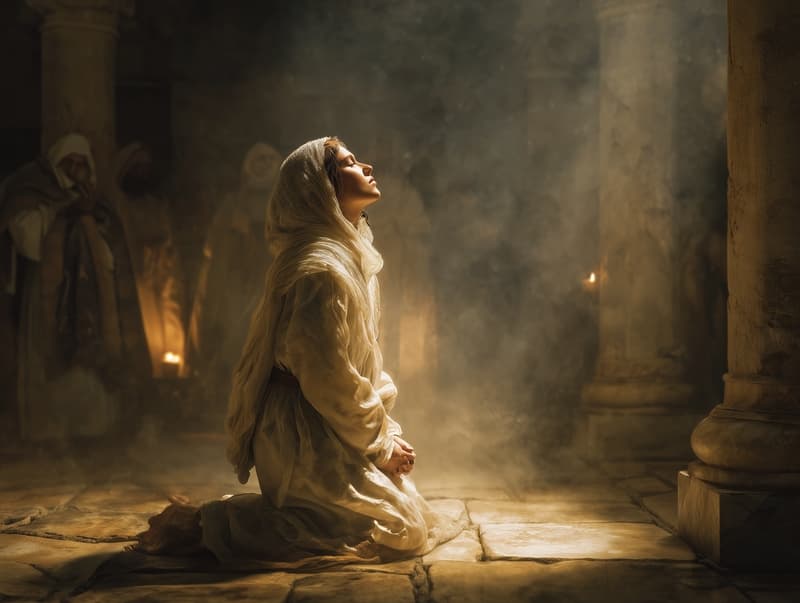
Hannah: Faith That Births Miracles
This 7-day journey traces Hannah’s faith from tears to testimony - praying through pain, waiting without giving up, and surrendering desire to God’s purpose. Each day shows how persistent prayer reshapes the heart and mind, turning anguish into peace, promise into worship, and blessing into legacy - so you keep your vows, honor God in fulfillment, and inspire the next generation to believe.
The plan is free to read here. In the app it arrives one day at a time, with the full passage and audio.
What the plan covers
- Day 19 min
Faith That Prays Through Pain
Passages: 1 Samuel 1:10 · Psalm 34:18
Hannah’s story begins in pain, not peace. Year after year, she longed for a child but remained barren. To make things harder, she faced constant provocation from her rival. Her heart was weary, her spirit crushed - but instead of running from God, she ran to Him. In the temple, Hannah poured out her soul in prayer, weeping not out of defeat but out of faith that still believed God could hear and answer. Theologically, this is where real faith begins - not in comfort, but in surrender. God often allows delays not to punish us but to deepen us. Hannah’s barrenness was not rejection; it was preparation. God was forming something within her before He formed something through her. Sometimes unanswered prayers aren’t signs of God’s absence - they’re invitations into deeper intimacy with Him. Hannah didn’t pray a quick, shallow prayer. The Bible says she “wept in anguish.” This was prayer that engaged every part of her being - heart, mind, and body. Her lips moved, but her voice was silent. It was raw, honest, and deeply personal. True prayer doesn’t always need words; sometimes it’s tears that speak faith louder than speech. Psychologically, expressing emotion through prayer is one of the healthiest things a person can do. Modern neuroscience shows that when we release emotions through honest communication - especially through prayer or journaling - the brain’s limbic system (where we process pain) begins to calm. This lowers cortisol, the stress hormone, and activates the prefrontal cortex, which helps us think clearly and regain peace. In other words, Hannah’s prayer didn’t just change her situation - it changed her nervous system. She left the temple lighter because she transferred her burden from her body to God’s hands. Spiritually, this is what prayer does. It’s not just asking God to move externally - it’s allowing Him to move internally. When Hannah poured out her soul, she made room for God’s peace to fill the emptiness. The Bible says that after praying, “her face was no longer sad” (1 Samuel 1:18). Her circumstances hadn’t changed yet, but her heart had. Prayer didn’t just produce a miracle in her womb - it produced transformation in her soul. Theologically, Hannah teaches us that faith isn’t the absence of pain - it’s the refusal to let pain silence prayer. She didn’t let bitterness turn her away from God; she brought her bitterness to God. That’s the difference between despair and faith. Despair gives up, but faith wrestles in prayer until peace is born. In the mystery of God’s timing, Hannah’s waiting became sacred. Her pain turned into purpose the moment she surrendered it. She didn’t just ask for a child - she vowed to dedicate that child back to God. That’s what faith does: it turns personal desire into divine partnership. God heard Hannah’s prayer because her heart aligned with His purpose. What she longed for was not just for herself - it would one day bless a nation through the prophet Samuel. Sometimes God delays a blessing until our motives mature to match His mission. Faith that prays through pain becomes faith that births miracles. When you take your anguish to God and leave it there, you make space for His presence to do what your strength never could. Reflection: What pain have you been holding silently that God is inviting you to pour out before Him? How can you turn your desire into an act of surrender? Practical Steps: Take 10 minutes today to pray honestly - no filters, no formality. Tell God exactly how you feel. Write down one area of longing and add: “Lord, I surrender this desire to You.” Prayer: Lord, thank You for hearing the prayers I can’t even speak aloud. Help me to bring You my pain, not hide it. Teach me to trust You in the waiting and to believe that You can turn my tears into testimony. Amen. - Day 28 min
Faith That Waits Without Giving Up
Passages: 1 Samuel 1:7 · 2 Corinthians 5:7
Year after year, Hannah went to the temple. Year after year, she left still barren. Yet she kept returning. Her persistence wasn’t stubborn pride - it was sacred faith. She believed that delay didn’t mean denial. Faith that waits well is rare because waiting is uncomfortable. Our brains are wired for quick results. When we don’t see change, the mind’s stress response activates, releasing cortisol and adrenaline. Waiting feels unsafe. That’s why impatience and anxiety often accompany unanswered prayers. But neuroscience shows that consistent, faith-based routines - like prayer, worship, and reflection - help regulate those stress responses. Each time Hannah returned to the temple, she wasn’t just practicing religion; she was retraining her nervous system to rest in God’s timing instead of reacting to her pain. Theologically, Hannah’s repeated journey demonstrates covenant love. She didn’t serve God because He gave her what she wanted; she sought Him because He alone was worthy. Faith matures when we learn to love God for who He is, not just what He gives. Every year of delay deepened her dependence. What felt like waiting to her was working to God - He was shaping her desire to align with His divine purpose. Waiting with faith transforms us. It teaches humility, patience, and emotional endurance. Psychologists note that delayed gratification builds character and emotional intelligence. Spiritually, the same is true: patience refines the heart to handle blessing without arrogance. Hannah’s character was being formed for the miracle she would one day carry. The world tells us that progress is proven by visible results. God tells us that progress begins in unseen places. Every prayer whispered, every tear shed, every journey made back to the temple was a seed planted in faith. God counts the laps around the walls of our Jericho even when we see nothing falling. Waiting well doesn’t mean pretending it’s easy - it means choosing trust over despair. Hannah’s yearly return shows how faith anchors the soul when emotions waver. “For we walk by faith, not by sight.” Faith sees beyond the silence and remembers the character of God. Spiritually, the discipline of returning to God - again and again - is a declaration of loyalty. When we show up in prayer during delay, heaven takes notice. Persistence in prayer isn’t about changing God’s mind - it’s about changing ours until we reflect His heart. Eventually, Hannah’s waiting became worship. When she finally prayed her most powerful prayer, it came from a place of surrender, not striving. Her years of waiting had purified her desire. What she longed for now carried eternal purpose. If you’re waiting, remember: God is not withholding to hurt you; He’s preparing you to handle the blessing without losing your heart. The womb of waiting often births the greatest miracles. Reflection: What does your “year after year” look like - an unanswered prayer, a delay, a dream on hold? How is God shaping your character while you wait? Practical Steps: Create a “faith timeline” - list moments when you waited and later saw God’s hand at work. Each day this week, thank God not just for what’s coming, but for what He’s forming in you during the wait. Prayer: Lord, help me to wait with faith, not frustration. Strengthen my heart to trust that Your timing is always perfect. Teach me to see waiting as worship and preparation for Your greater purpose. Amen. - Day 37 min
Faith That Surrenders Desire
Passages: 1 Samuel 1:11 · Psalm 37:4
At some point, Hannah’s prayer shifted from “give me” to “use me.” In her desperation, she discovered surrender. She vowed that if God blessed her with a son, she would dedicate him entirely to the Lord. That moment changed everything. Her longing was no longer about her identity - it was about God’s glory. Theologically, this is the turning point between personal desire and divine purpose. God often waits to release certain blessings until our hearts can handle them selflessly. Surrender doesn’t mean giving up - it means giving over. Hannah’s vow wasn’t a bargain; it was a declaration of trust. She believed that God’s plans were bigger than her pain. Psychologically, surrender creates emotional relief. When we stop trying to control outcomes, the body relaxes. The parasympathetic nervous system (the “rest and restore” system) activates, lowering anxiety and restoring peace. In prayer, surrender literally calms the mind and body because we move from striving to resting. That’s why Hannah left the temple with her face no longer sad - peace replaced pressure. Spiritually, God honors surrendered hearts. When our desires align with His purposes, the flow of grace increases. Hannah’s vow unlocked her miracle because she invited God to own the outcome. True faith doesn’t cling; it releases. The thing we surrender in trust often returns multiplied in blessing. Surrender also purifies motives. At first, Hannah wanted a child to remove her shame; later, she wanted a child to serve God’s kingdom. God often refines our prayers until they echo His heart. Surrender transforms “I want” into “Thy will be done.” This shift is also supported by neuroscience. When people practice gratitude and surrender, brain scans show increased activity in regions associated with joy and spiritual connection. Hannah’s renewed mindset - trusting, peaceful, purpose-driven - prepared her emotionally and spiritually to receive the miracle. The beauty of surrender is that it turns prayer into partnership. God doesn’t just grant requests - He invites us to participate in His plan. Hannah’s surrendered faith produced Samuel, a prophet who would anoint kings and change history. When you surrender your desire, you’re not losing it - you’re positioning it for God’s transformation. Sometimes He returns it exactly as you asked; other times, He reshapes it into something infinitely greater. Reflection: What desire do you need to surrender today - not out of despair, but in trust? How might God want to use your longing for His greater purpose? Practical Steps: Write your deepest desire on paper. Beneath it, write: “Lord, I give this to You. Use it for Your glory.” Read Psalm 37:4 every morning this week and let it guide your prayers toward delight, not demand. Prayer: Lord, I surrender my desires to You. Shape them to match Your will. Teach me to trust Your purpose more than my plan. Use my waiting and my longing for something eternal. Amen. - Day 48 min
Faith That Perseveres in Prayer
Passages: 1 Samuel 1:17 · Luke 18:1
Prayer is the bridge between hope and breakthrough. Hannah’s story reminds us that real faith doesn’t pray once and quit - it perseveres. Year after year, she prayed, cried, and returned. Nothing about her situation seemed to change, yet her prayers grew deeper. That persistence opened the door for a divine encounter. Theologically, perseverance in prayer is not about convincing God - it’s about aligning with Him. God could have answered Hannah’s prayer the first year, but He used time to strengthen her spirit. Faith becomes mature when it learns to stand steady through silence. Jesus said we “ought always to pray and not lose heart,” because delay tests the heart’s endurance. Psychologically, consistent prayer rewires the brain for hope. When we repeat an act of faith - like praying daily - it creates new neural pathways that link expectation with peace. The amygdala, our fear center, begins to quiet, and the prefrontal cortex strengthens our ability to focus on hope. This is why faithful prayer actually reduces anxiety and depression - it builds resilience. Hannah’s repeated prayer literally shaped her mind for faith instead of fear. When Eli misunderstood her, accusing her of being drunk, Hannah didn’t get defensive. Her gentle, humble response - “I am a woman of sorrowful spirit... I have poured out my soul before the Lord” - revealed spiritual maturity. True faith doesn’t get offended when misunderstood; it keeps the focus on God. Her perseverance attracted heaven’s attention, and Eli finally declared a blessing: “Go in peace, and the God of Israel grant your petition.” Spiritually, prayer that perseveres becomes peace-filled prayer. It may start in anguish, but it ends in assurance. Notice how Hannah’s heart changed: after receiving Eli’s words, she ate and was no longer sad. Her faith had shifted from asking to trusting. Persevering prayer does something profound - it transfers burden to God. Psychologists call this emotional release through trust. When we express our needs to a higher power, the brain interprets it as shared responsibility, reducing perceived stress. God designed prayer to be healing on every level - spirit, soul, and body. Theologically, the persistence of prayer also reveals the faithfulness of God’s character. He invites continual conversation not because He forgets, but because intimacy is built through repetition. Every prayer is another moment of partnership with Him. Hannah teaches us that even when answers tarry, prayer is never wasted. Every tear waters the soil of faith. Every word whispered strengthens spiritual roots. And one day, when God’s timing meets your perseverance, the answer comes suddenly - but it will have been forming quietly all along. Faith that perseveres in prayer transforms waiting from torture into worship. Reflection: What area of your life have you grown weary of praying over? How can you reframe persistence as participation in God’s process rather than endless delay? Practical Steps: Set a “prayer rhythm” this week - choose a fixed time daily to bring the same request before God. End each prayer with “Thank You, Lord, that You are working even when I don’t see it.” Prayer: Lord, help me to pray with persistence and patience. When answers seem far, remind me that You are near. Strengthen my faith to trust Your process, knowing that every prayer moves heaven even when I can’t yet see it. Amen. - Day 57 min
Faith That Receives the Promise
Passages: 1 Samuel 1:20 · Luke 1:37
God’s promises don’t expire; they unfold. Hannah’s years of prayer ended not in despair but in divine fulfillment. The Bible says, “In the process of time, Hannah conceived.” The phrase “process of time” is key - it reminds us that miracles are often the result of long obedience in the same direction. Theologically, this moment is the harvest of faithfulness. God answered at the right time, not the easy time. Had Hannah received Samuel earlier, she might not have vowed to dedicate him. God’s timing ensured that both her heart and her promise aligned with His purpose. When we pray for miracles, God first prepares us to steward them. Psychologically, receiving after a long wait brings both joy and vulnerability. When long-held desires are fulfilled, the brain releases dopamine - a surge of happiness. But it also needs grounding. Gratitude is the key to sustaining peace in blessing. Without gratitude, the mind shifts from dependence to entitlement. Hannah avoided that trap by giving all glory back to God, naming her son Samuel - “heard by God.” Her blessing became a testimony. Spiritually, this reveals that faith’s goal is not to get what we want, but to glorify the One who gives it. Hannah’s story is not just about receiving a child - it’s about revealing a faithful God. Her answered prayer became a sign that God listens to those who persevere. Neuroscience teaches that gratitude strengthens neural networks linked to contentment and long-term joy. When Hannah thanked God, she wasn’t just expressing emotion; she was reinforcing peace in her mind and stability in her spirit. Thanksgiving renews both the brain and the heart. Faith that receives well also remains humble. Hannah didn’t boast; she worshiped. The Bible says later she brought sacrifices to the temple to honor God’s faithfulness. True faith never forgets the Source of the miracle. If you’re still waiting, take courage - “the process of time” is still in progress. God’s delays are not God’s denials. When the appointed time comes, what once seemed impossible will feel inevitable because His fingerprints will be on every detail. When Hannah held Samuel, she wasn’t just holding a child - she was holding a promise fulfilled through years of tears, surrender, and prayer. Faith that endures always gives birth to joy. Reflection: What “process of time” are you walking through right now? How can gratitude and worship prepare you to receive God’s promise with peace? Practical Steps: Write three things you’ve seen God do in your life that once felt impossible. Begin thanking God daily for His timing, not just His blessings. Prayer: Lord, thank You for every promise that has come to pass and for those still on the way. Help me to stay grateful, humble, and ready to give You glory when the answer arrives. Amen. - Day 67 min
Faith That Keeps Its Vow
Passages: 1 Samuel 1:24 · Ecclesiastes 5:5
It’s one thing to make a promise in pain; it’s another to keep it in joy. When Hannah’s long-awaited son was born, she faced a defining test: would she honor her vow to dedicate him fully to God? She did. After weaning Samuel, she brought him to the temple and left him there to serve the Lord. Theologically, this moment reveals mature faith - obedience after fulfillment. Many people seek God fervently in need but forget Him in abundance. Hannah didn’t let blessing replace devotion. She remembered the promise she made in her tears and kept it with integrity. Psychologically, keeping a vow builds inner peace and confidence. When actions match values, the brain releases serotonin - a neurotransmitter that stabilizes emotions. Integrity literally brings mental stability. Conversely, breaking commitments creates internal conflict, draining peace. Hannah’s obedience produced not only spiritual fruit but psychological health. Spiritually, her obedience also secured generational blessing. Samuel would grow to become one of Israel’s greatest prophets, a man who anointed kings and heard God’s voice clearly. One woman’s kept promise changed history. Faithfulness always multiplies. Hannah didn’t cling to her blessing; she released it back to God. True worship is not just singing or praying - it’s trusting God with what we love most. The act of surrender keeps the heart from idolizing the gift. When we give back what God has given us, we demonstrate that He is still our greatest treasure. Neuroscience supports the power of such trust. Acts of generosity - whether giving time, resources, or love - activate the brain’s reward system, releasing dopamine and oxytocin. These chemicals increase joy and strengthen relationships. Giving doesn’t deplete us; it restores us. Hannah’s offering didn’t leave her empty - it positioned her for overflow. Theologically, Hannah’s obedience became a model of worship. Her story shows that fulfilled promises are not meant to end the story but to start new ones. God blessed her later with more children (1 Samuel 2:21), proving that nothing given to God is ever lost. Faith that keeps its vow is the kind that heaven trusts with more. God honors those who steward blessings with open hands. Reflection: What blessings has God entrusted to you that He may be asking you to dedicate back to Him? How can you honor your commitments to God today? Practical Steps: Write down one promise or goal you’ve made to God - commit to fulfilling it this week. Do one act of generosity as an expression of gratitude and trust. Prayer: Lord, help me to keep my promises with integrity and joy. Let me hold Your blessings with open hands and give them back in worship. Thank You that what I offer to You is never lost but multiplied for Your glory. Amen. - Day 78 min
Faith That Inspires Generations
Passages: 1 Samuel 2:26 · Psalm 145:4
Hannah’s faith didn’t end with her own answered prayer - it became the seed for generations. Samuel, the miracle she birthed through prayer, grew up in God’s presence and became a prophet who shaped a nation. Her story shows that one person’s faith can echo through eternity. Theologically, this demonstrates that God’s blessings are never meant to stop with us. Hannah’s obedience produced fruit that would outlast her lifetime. Her faith formed the foundation for Samuel’s ministry, which prepared the way for David - and ultimately for the lineage of Christ. Faith that births miracles often births movements. Psychologically, modeling faith impacts future generations more than instruction alone. Children learn through mirror neurons - the brain cells that copy what they observe. When they see genuine faith lived out, it shapes their emotional and spiritual wiring. Hannah didn’t just pray for Samuel; she showed him what prayer looked like. Her legacy became his lifestyle. Spiritually, her influence teaches that the atmosphere of faith is transferable. When we pray faithfully, worship sincerely, and live with gratitude, we cultivate an environment where others encounter God naturally. Neuroscience reinforces this truth: consistent exposure to peace, prayer, and gratitude strengthens the same neural pathways in those who witness it. That means your faith - expressed daily through actions and attitudes - can literally shape someone else’s brain toward hope and resilience. Hannah’s song of praise in 1 Samuel 2 reveals her heart. She rejoiced not just in her personal blessing but in God’s greatness. Her joy became public testimony. When she declared, “My heart rejoices in the Lord,” she was teaching all of Israel how to worship after waiting. Her faith also broke patterns of despair. Barrenness had once been a mark of shame; through Hannah, it became a story of purpose. God used what once hurt her most to help others believe that nothing is impossible with Him. Today, Hannah’s story still inspires because it’s about transformation. Her life teaches that persistent prayer, surrendered desires, and faithful obedience don’t just bring personal miracles - they shape spiritual legacies. The prayers you pray today may build faith in people you’ll never meet. Faith that inspires generations is steady, surrendered, and contagious. It lives beyond applause and recognition. It teaches others how to hope when hope feels gone. When Hannah handed Samuel over to the Lord, she didn’t lose a child; she gained a generation of influence. Every time he heard God’s voice, her faith was echoing. Let your faith be the same - one that not only receives but releases, not only believes but builds. God still uses the prayers of ordinary people to produce extraordinary legacies. Reflection: What kind of spiritual legacy do you want to leave? How can your daily choices of faith influence those who watch your life? Practical Steps: Share your faith story with a younger person or family member this week. Begin a “legacy journal” to record prayers, testimonies, and lessons for future generations. Prayer: Lord, thank You for turning Hannah’s story into a legacy of faith. Help me live in a way that inspires others to trust You. Let my prayers, obedience, and love echo through generations. May my life point others to You. Amen.