First, Give Them God

7 daysgodly parentingraising children for God's glorybiblical fatherhood and motherhood

Every parent carries the quiet fear of getting it wrong. This 7-day study invites you to lay that fear down and pick up something better - a clear, biblical vision for raising children not for the world's approval, but for God's glory. From the dinner table to the bedside, from seasons of closeness to seasons of distance, you will be equipped and encouraged to make God's Word the foundation your children stand on long after they have left your home.

Start this plan in Bible Chat

The plan is free to read here. In the app it arrives one day at a time, with the full passage and audio.

What the plan covers

  1. Day 17 min

    You Are a Steward, Not an Owner

    Passages: Psalm 127:3 · Deuteronomy 6:6-7

    The moment you held your child for the first time, something shifted. A love you had never felt before arrived - fierce, tender, almost overwhelming. That love is real. But today we begin with a truth that will reframe your entire parenting journey: your children are not yours. They belong to God. Psalm 127:3 calls children a heritage from the Lord. The word heritage describes something entrusted to your care, not something you own. God has placed these specific souls in your hands for a season, with a purpose that stretches far beyond your family's happiness or comfort. You are a steward of what belongs to Him. Deuteronomy 6:6-7 shows what this stewardship looks like in everyday life. Before you pour God's Word into your children, it must first be living in your own heart: these words shall be in your heart. Parenting from God's truth does not begin with your children - it begins with you. When Scripture is alive in you, it flows naturally into your home through your words at the dinner table, your reactions under pressure, and your prayers before sleep. The beautiful thing about being a steward rather than an owner is the freedom it brings. You are not responsible for controlling outcomes. You are responsible for faithfulness. God does not ask you to produce perfect children. He asks you to plant His Word in their hearts with love and consistency. The harvest belongs to Him. You are not doing this alone. The God who made your child is working alongside you every single day. Body Awareness Take a slow breath and notice the weight of your hands resting in your lap. These are the hands that hold your children. Sit with that for a moment - you are trusted, and you are not alone. Reflection How does seeing yourself as a steward rather than an owner change the pressure you feel as a parent today? Practice Today Tonight at bedtime, place your hand gently on your child's head - or speak their name aloud if they are grown - and whisper: You belong to God, and He loves you more than I ever could. Prayer Lord, thank You for the gift of this child. Forgive me for the moments I have tried to control what only You can shape. Teach me to hold them with open hands, trusting that You love them even more than I do. Amen.

  2. Day 27 min

    The Table Is a Classroom

    Passages: Deuteronomy 6:7 · Proverbs 22:6

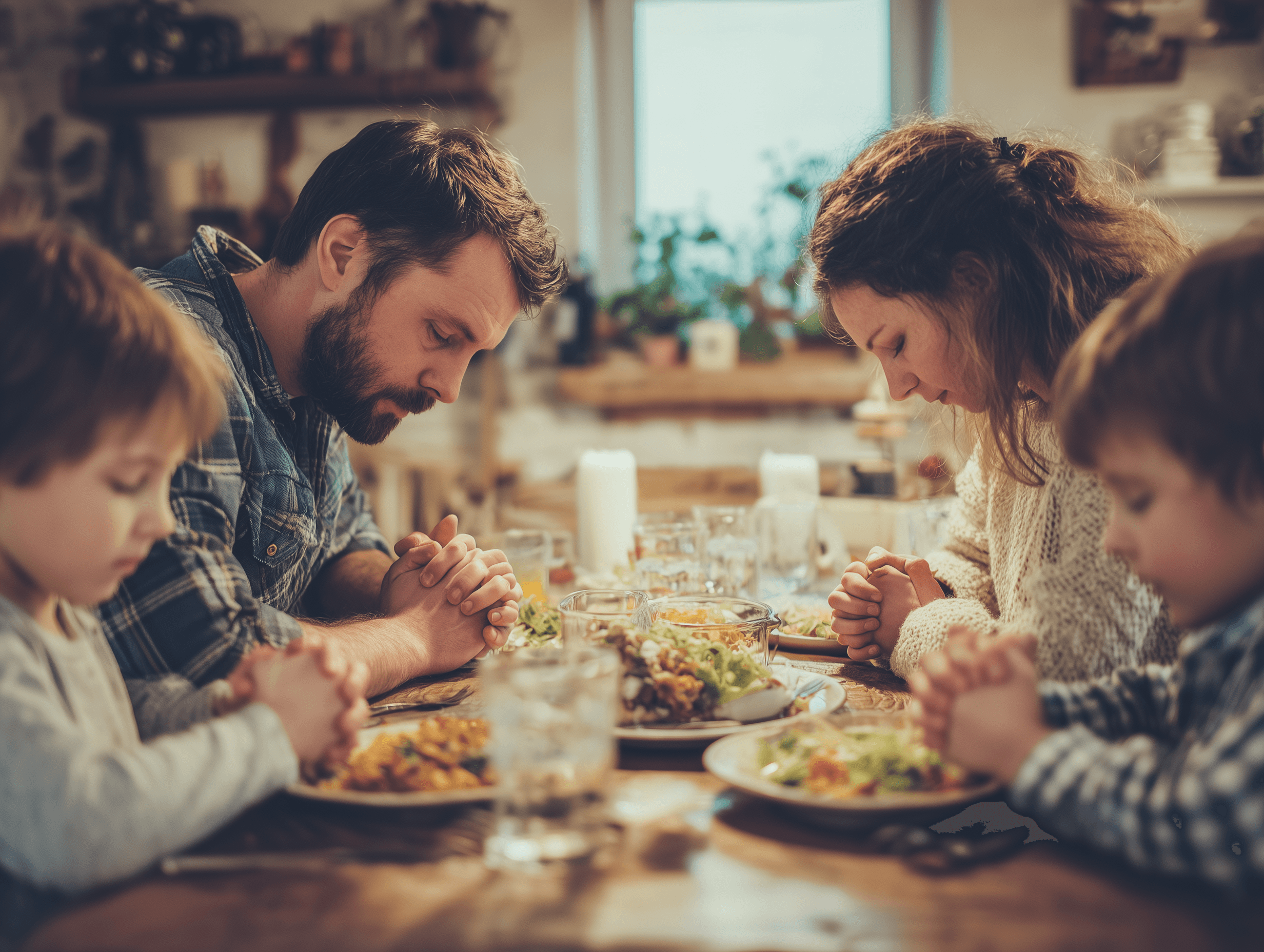
    God never intended spiritual formation to be confined to Sunday mornings or a 15-minute devotional. Deuteronomy 6:7 gives us a picture of faith that breathes through the entire day: when you sit in your house, when you walk by the way, when you lie down, and when you rise. This covers breakfast. Car rides. Homework time. Bedtime. Every ordinary moment becomes a potential space for God's Word to land. The Hebrew behind teach them diligently carries the image of sharpening - like a blade being honed. It speaks of patient, repeated, intentional instruction. Not lectures. Not long sermons. Small, consistent moments that accumulate over time into a deeply formed faith. Proverbs 22:6 adds weight to this: train up a child in the way he should go, and when he is old he will not depart from it. The word train here was originally used for the process of preparing a young horse for its work - gentle, consistent guidance that shapes habits over years, not days. This is a long game. A marathon, not a sprint. What does this look like practically? It might be reading one verse together at dinner and asking what it means. It might be noticing a bird outside and saying: God made that. It might be, when your child is afraid, whispering a psalm over them instead of just turning on the light. These are not grand gestures. They are faithful ones. The table is a classroom. The car is a classroom. Every room in your home can become a place where your children encounter the living God - not through performance, but through the natural overflow of a parent who loves Him. Body Awareness Before your next meal, pause for three seconds with your hands resting on the table. Notice the warmth beneath your palms and the rhythm of your breath. Let this simple moment remind you that the ordinary is where God shows up most. Reflection Which part of your daily routine could most naturally become a space for sharing God's Word with your children? Practice Today At dinner tonight, share one thing God has taught you this week - even if it feels small. Invite your children to share something too. Keep it simple and unhurried, and let the conversation go where it goes. Prayer Father, open my eyes to the sacred moments hidden in the ordinary. Help me to stop waiting for the perfect time and start trusting that You meet us right here, at this table, in this day. Make my home a place where faith breathes. Amen.
  3. Day 36 min

    They Are Watching You

    Passages: 1 Corinthians 11:1 · Deuteronomy 4:9

    Before your children listen to what you say about God, they watch how you live with Him. This is both the most challenging and most powerful truth about parenting. Your daily walk with Christ - how you respond to frustration, how you treat your spouse, how you handle disappointment, how you speak about others - is the primary curriculum your children are absorbing. Paul writes in 1 Corinthians 11:1: be imitators of me, as I am of Christ. He was not being arrogant. He was acknowledging something real: people learn by watching. Before your children can imitate Christ, they will imitate you. Your life is their first picture of what following Jesus looks like up close. Deuteronomy 4:9 makes the stakes clear: keep your soul diligently, and make these things known to your children and your children's children. The faithfulness of the next generation is tied to the personal vitality of this one. This does not mean you must be perfect. Your children do not need a parent who has it all together. They need a parent who is genuinely pursuing God - who says I was wrong, I am sorry and means it, who opens the Bible not out of duty but hunger, who prays like they actually believe Someone is listening. When they see you fail and return to God, they learn more about grace than any lesson could teach. Your authentic faith - honest and real - is the most powerful thing you will ever pass on to them. Body Awareness Sit quietly for a moment and notice your posture. Are your shoulders tight? Is your jaw clenched? Take one slow breath and release. How we carry ourselves in the home speaks before we ever open our mouths. Reflection What would your children say about your faith based on what they observe in an average week at home? Practice Today Do one visible thing today that shows your children you are still learning from God. Read your Bible where they can see you, or tell them one specific thing you are praying about and why it matters to you. Prayer God, let my life be a true reflection of Yours - not a performance, but the real thing. Where I have given my children a distorted picture of You, bring healing. Help me to walk with You in a way that makes them want to follow. Amen.
  4. Day 47 min

    Love First, Correct Second

    Passages: Ephesians 6:4 · Hebrews 12:6

    Every parent reaches the moment when a child does something that tests every nerve. Discipline is unavoidable - and it is good. But how we correct our children matters as much as the fact that we correct them. Ephesians 6:4 draws a sharp line: do not provoke your children to anger, but bring them up in the discipline and instruction of the Lord. The word provoke here refers to a pattern - of harshness, inconsistency, impossible standards, or correction driven by embarrassment rather than love. These patterns do not shape children toward righteousness. They produce either resentment or performance, neither of which is the goal. Hebrews 12:6 gives us the deeper foundation: the Lord disciplines the one He loves. Discipline rooted in love looks and feels different from discipline rooted in frustration. Love-shaped correction takes time to explain the why. It addresses the heart, not just the behavior. It brings comfort after the hard moment rather than leaving the child alone in shame. This does not mean consequences are soft. It means they are purposeful. The goal is not compliance - it is character. Not silence, but transformation. A child who is corrected in love learns that they are worth fighting for. A child corrected in anger often learns only fear. Before you correct your child today, ask one honest question: am I doing this for them, or for me? You do not have to be perfect at this. God is patient with us as we learn to be patient with them - and that itself is a kind of grace. Body Awareness The next time you feel the urge to raise your voice, notice the tension rising in your chest first. Take one breath before you respond. That single pause can shift everything that follows. Reflection Is your correction of your children more shaped by love or by frustration? What would need to change for discipline in your home to feel more like the way God disciplines you? Practice Today After the next time you need to correct your child today, spend 60 seconds reconnecting with them - a hug, a calm conversation, or simply sitting close. Let love have the last word every time. Prayer Father, You have been so patient with me. Give me that same patience with my children. Help me to correct them the way You correct me - firmly, lovingly, and never without hope for who they are becoming. Amen.
  5. Day 57 min

    Build Stones They Can Point To

    Passages: Joshua 4:6-7 · Psalm 78:4

    After God parted the Jordan River, He gave a surprising instruction: pick up twelve stones from the riverbed and stack them as a memorial. Not for God - He does not need reminders. For the children who would come later and ask, what are these stones for? The answer would be: this is where God showed up. God has always known that children need tangible markers of His faithfulness. They need stories they can carry. They need to grow up in a home where answered prayers are named, where God's goodness is spoken aloud, and where the family's history with Him is treated as something sacred. Psalm 78:4 puts it plainly: we will not hide them from their children, but tell to the coming generation the glorious deeds of the Lord. This is a declaration against spiritual silence - against assuming your children will absorb faith by accident. The telling is your responsibility. Your family has its own stones - moments when God came through, when a prayer was answered, when something that seemed impossible was resolved. These are not small stories. They are the raw material of your children's faith. Start collecting them. A journal on the shelf. A jar filled with folded notes. A wall where you write dates and what God did. These become the stones your children will one day point to and say: this is where our family met God. You do not need a dramatic testimony. You need an honest one. Body Awareness Put both feet flat on the floor and feel the ground beneath you. Let it remind you of something solid - God has been faithful before, and the ground of His goodness still holds you today. Reflection What are two or three moments of God's faithfulness in your family's story that your children already know about? Are there stones you have not yet told them about? Practice Today Share one specific story of God's faithfulness from your own life with your child today. Name the situation, the prayer, and what God did. Keep it simple and let them hear it in your own words. Prayer Lord, may our home be full of Your stories. Remind me to speak of Your goodness out loud - not just in my heart, but in front of the children who need to hear it. Let them grow up knowing that You are real and that You show up. Amen.
  6. Day 67 min

    On Your Knees for Them

    Passages: 1 Samuel 1:27 · Colossians 4:2

    Hannah's prayer in 1 Samuel is one of the most intimate portraits of parenting in all of Scripture. Before Samuel was born, she prayed for him. When he arrived, she recognized he was not hers to keep. For this child I prayed, she says - and in those five words is a model for every parent who has ever felt the weight of raising a child in a world that pulls hard against God. Prayer is not a last resort for parents. It is the first resort. Before strategy, before conversation, before correction - prayer. Because what we cannot change in our children, God can. What we cannot protect them from, He sees. What we cannot give them, He holds in His hands. Colossians 4:2 calls us to continue steadfastly in prayer. The word steadfastly implies consistency - not occasional panic prayers when things go wrong, but a steady, faithful conversation with God about the children in your care. Praying for their hearts before you address their behavior. Praying for their future before it arrives. Praying specifically, by name, over each child's particular struggles and gifts. Something shifts in a parent who prays regularly for their children. The frustration softens. The perspective widens. You begin to see them not just as your responsibility but as God's beloved. And you begin to intercede for them the way God intercedes for you - with patience, with faith, and with a love that does not give up. Some of the most important parenting you will ever do happens when your children are asleep and you are on your knees. Body Awareness Place your hands open in your lap, palms facing up. Notice how that posture feels different from hands clenched or folded tight. Open hands receive. Let your body practice what prayer asks of your heart. Reflection How regular and specific is your prayer life for your children? What would it look like to pray for their hearts before you address their behavior this week? Practice Today Write each of your children's names on a separate piece of paper. Under each name, write one specific thing you are asking God to do in their life right now. Place it somewhere you will see it each morning this week and pray it aloud. Prayer Father, I bring my children to You - not because I have run out of options, but because You love them more than I do. Hear my prayers for them. Work in their hearts in ways I cannot. I trust them into Your hands. Amen.
  7. Day 77 min

    Trust the Gardener

    Passages: Isaiah 55:11 · Galatians 6:9

    There will be seasons in parenting when you cannot see the fruit. When you have prayed, taught, modeled, corrected with love, and told your children the stories of God's faithfulness - and still something feels stuck. Still a child pulls away. Still the ground looks dry. This is the hardest part. And it is where Isaiah 55:11 becomes an anchor: my word shall not return to me empty, but it shall accomplish what I purpose. Every verse you have read aloud, every prayer whispered over a sleeping child, every moment you have pointed them toward God - none of it is wasted. God's Word does not return empty. But it works on God's timeline, not ours. Galatians 6:9 speaks directly to tired parents: let us not grow weary of doing good, for in due season we will reap, if we do not give up. The phrase due season is not vague comfort. It is a promise with a specific shape - the harvest comes, but it comes at the appointed time. Some children embrace faith early. Others take decades. Neither timeline is a verdict on your faithfulness. Your job is to plant and water. God's job is to give the growth. Trust the Gardener. He knows your child's name, their resistance, their fears, and their future. He is working in ways you cannot see. Do not lose heart. The seeds are not lost - they are in the ground, and the ground belongs to Him. Body Awareness Take three slow breaths and notice any heaviness in your chest or shoulders. Let each exhale be a small act of release - of outcomes you cannot control, of fears you have been carrying longer than you should. You were not made to hold all of this alone. Reflection Where are you most tempted to lose heart in your parenting right now? What would it look like to trust God's timeline rather than demanding your own? Practice Today Write this sentence somewhere you will see it every day this week: I plant. God grows. Let it remind you that faithful parenting is enough - and that the harvest is in better hands than yours. Prayer Lord, I have done what I can see to do. Now I trust You with what I cannot see. Thank You that Your Word is working even when I cannot feel it. Give me the patience to keep going, and the faith to believe that the harvest is coming. Amen.