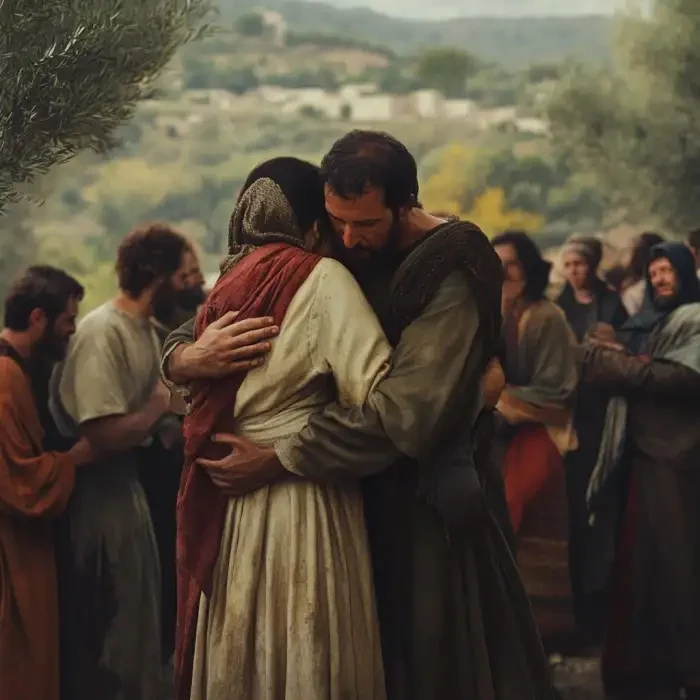
Principles of a Loving Marriage
7 daysvaluesrelationshipssalvationhealing
This 7-day Bible study focuses on building a strong foundation for marriage, healing past wounds, embracing love and sacrifice, managing conflicts with love, practicing forgiveness, and applying biblical principles to your relationship. Each day includes key verses and reflections to help you grow closer as a couple.
Start this plan in Bible Chat
The plan is free to read here. In the app it arrives one day at a time, with the full passage and audio.
What the plan covers
- Day 16 min
Laying a Strong Foundation
Passages: Genesis 2:24 · Ephesians 5:25-28
Marriage is one of the most profound relationships that God has designed. In Genesis 2:24, we see the foundation of this sacred union: 'Therefore a man shall leave his father and mother and be joined to his wife, and they shall become one flesh.' This verse emphasizes the uniqueness and intimacy of the marital relationship. It is a call to prioritize your spouse above all other relationships, creating a new, united entity in marriage. In Ephesians 5:25-28, the Apostle Paul elaborates on the depth of love and commitment required in marriage. 'Husbands, love your wives, just as Christ also loved the church and gave Himself for her.' This is a high calling, reflecting the sacrificial love that Jesus has for His church. Paul encourages husbands to love their wives with the same selflessness, willing to lay down their lives and desires for the well-being of their spouse. This sacrificial love sanctifies and purifies the relationship, mirroring the sanctification that Christ provides for the church. The passage continues, 'So husbands ought to love their own wives as their own bodies; he who loves his wife loves himself.' This indicates that in a marriage, the well-being of one partner is directly linked to the well-being of the other. When you love and care for your spouse, you are also nurturing and strengthening yourself. This mutual care and respect form the bedrock of a strong marriage. Reflection: As you embark on this journey to build a strong foundation for your marriage, take a moment to reflect on how you can prioritize your spouse in your daily life. Consider how you can demonstrate sacrificial love, putting their needs and well-being above your own. Discuss with your spouse ways in which you can both commit to nurturing and strengthening your bond. Remember, a strong foundation in marriage is built on mutual love, respect, and a shared commitment to follow the example of Christ's love for the church. - Day 25 min

Healing Past Wounds
Passages: Isaiah 61:1 · Psalm 147:3
In every marriage, there are moments when past wounds and hurts can affect the present relationship. Acknowledging these past hurts is the first step towards healing and building a stronger marriage. Isaiah 61:1 reminds us of the healing power of God. The Spirit of the Lord is upon us, anointing us to bring good news, heal the brokenhearted, and proclaim liberty. This verse is a powerful reminder that healing is not just a possibility but a promise from God. The journey of healing often starts with honesty and openness. Psalm 147:3 beautifully states, 'He heals the brokenhearted and binds up their wounds.' This verse assures us that God is intimately involved in the process of our healing. He sees our pain and is committed to binding up our wounds. As a couple, it is essential to create a safe space where both partners can express their hurts and work together towards healing. Discussing past wounds can be challenging, but it is a crucial step in moving forward. Pray together, asking God to heal your broken hearts and give you the strength to support each other. Remember, healing is a journey that requires patience, love, and understanding. By leaning on God's promises and supporting one another, you can overcome past hurts and build a stronger, more resilient marriage. Reflection: Take some time today to reflect on any past wounds that may be affecting your marriage. Share your feelings with your spouse and listen to their perspective. Pray together, asking God to heal your hearts and give you the strength to move forward. Remember, healing is a journey that requires patience and love. Trust in God's promise to heal the brokenhearted and bind up your wounds, and support each other through this process. - Day 36 min
Love and Sacrifice
Passages: John 15:12-13 · 1 Corinthians 13:4-7
In John 15:12-13, Jesus commands us to love one another as He has loved us. This kind of love is not a mere feeling but a commitment to put the well-being of others above our own. The ultimate example of this love is Jesus Himself, who laid down His life for us. In a marriage, this translates into a willingness to sacrifice for your spouse, putting their needs and desires before your own. It means being patient, kind, and forgiving, even when it's difficult. 1 Corinthians 13:4-7 provides a beautiful description of what love looks like in action. Love is patient and kind; it does not envy or boast. It is not proud, rude, or self-seeking. These verses remind us that love is more than just words or feelings; it is demonstrated through our actions. In marriage, this means being patient with each other's faults, showing kindness even when you don't feel like it, and avoiding behaviors that hurt your spouse. Our culture often portrays love as a feeling that comes and goes, but the Bible teaches us that true love is steadfast and enduring. It bears all things, believes all things, hopes all things, and endures all things. This kind of love requires a daily commitment to choose your spouse over your own selfish desires. It means believing the best about them, hoping for the best in them, and enduring through the difficult times. Reflection: Reflect on how you can demonstrate this kind of love in your marriage. Are there areas where you need to be more patient or kind? Are there behaviors you need to change to avoid hurting your spouse? Commit to loving each other selflessly and sacrificially, following Christ's example. Take time to pray together, asking God to help you grow in love and to show you practical ways to put these principles into action each day. - Day 45 min
Managing Conflict with Love
Passages: Ephesians 4:2-3 · Proverbs 15:1
Conflict is an inevitable part of any relationship, including marriage. How we handle disagreements will determine the strength and unity of our bond. Ephesians 4:2-3 encourages us to approach each other with humility, gentleness, and patience. These qualities are essential for maintaining peace and unity in your marriage. When you are humble, you put your spouse’s needs and feelings above your own, allowing you to listen and understand their perspective better. Proverbs 15:1 reminds us of the power of our words. A gentle and calm response can defuse tension and prevent anger from escalating. On the other hand, harsh words can ignite a conflict and cause deeper wounds. When disagreements arise, take a moment to breathe and choose your words carefully. Speak with kindness and love, even when you feel hurt or frustrated. Managing conflict with love also requires a commitment to bearing with one another in love. This means being patient and enduring through difficult times. It’s easy to get caught up in the heat of the moment and say things we don’t mean. But as followers of Christ, we are called to rise above and respond with grace. Remember, your marriage is a reflection of God’s love, and how you handle conflicts can either honor or dishonor that love. Reflection: Consider how you currently handle conflicts in your marriage. Are there areas where you can improve in humility, gentleness, and patience? Discuss with your spouse ways you can both commit to speaking softly and choosing words that build each other up rather than tear down. Pray together for God’s guidance and strength to manage conflicts with love, and ask for His peace to reign in your hearts and home. - Day 56 min
Practicing Forgiveness
Passages: Colossians 3:13 · Matthew 6:14-15
Forgiveness is a cornerstone of a healthy and loving marriage. In Colossians 3:13, Paul reminds us to bear with one another and forgive as Christ forgave us. This is not a suggestion but a mandate. Forgiveness is crucial because it reflects the grace and mercy that God extends to us. When we forgive our spouse, we are not only mending the relationship but also aligning our actions with God's will. In Matthew 6:14-15, Jesus emphasizes the reciprocal nature of forgiveness. If we forgive others, our heavenly Father will forgive us. This principle is vital in a marriage where imperfections and misunderstandings are inevitable. Holding grudges or harboring resentment can create a rift that grows over time, weakening the bond between partners. By choosing to forgive, we keep the relationship strong and vibrant. Forgiveness does not mean forgetting or condoning hurtful behavior. It means releasing the burden of anger and bitterness and allowing healing to take place. It is an act of love and humility. When you forgive your spouse, you acknowledge their humanity and the grace God has shown you. This mutual understanding can lead to greater emotional intimacy and trust. To practice forgiveness in your marriage, start by communicating openly about your feelings. Express how certain actions or words have affected you, but do so with a spirit of reconciliation, not accusation. Pray together, asking God to soften your hearts and guide you toward genuine forgiveness. Remember, forgiveness is a process that might take time, and it is okay to seek God's help continually. Reflection: Consider the areas in your marriage where forgiveness is needed. Are there past hurts that you or your spouse are holding onto? Take a moment to pray, asking God for the strength to forgive and the wisdom to seek reconciliation. Reflect on how forgiveness can bring healing and strengthen your relationship, making it a true reflection of God's grace and love. - Day 65 min
Applying the Bible in Daily Life
Passages: James 1:22 · Psalm 119:105
Today’s focus is on applying the Bible actively in our daily married life. James 1:22 reminds us not to be mere listeners of the Word but to act on it. It's easy to listen to sermons or read the Bible without letting it transform our daily actions. In marriage, this means allowing biblical principles to guide our decisions, interactions, and responses to each other. Psalm 119:105 beautifully illustrates the guidance that God’s Word provides: "Your word is a lamp to my feet and a light to my path." Just as a lamp illuminates our way in the darkness, the Bible illuminates our path in life, including our marriage. Reading and meditating on Scripture together can help you both align your lives with God’s will and strengthen your bond. To incorporate biblical principles into your marriage, start by setting aside a regular time for joint Bible study. This can be a few minutes each morning or evening, where you read a passage together and discuss its relevance to your lives. Pray together, asking the Holy Spirit to reveal how you can apply the teachings in your relationship. Another practical step is to memorize key verses that speak to the challenges or goals in your marriage. For example, verses about love, patience, and forgiveness can serve as reminders during difficult times. Reciting these verses can reinforce your commitment to live according to God’s Word. Reflection: Consider how you can be "doers of the word" in your marriage. Are there specific areas where you need more guidance or improvement? Discuss with your spouse how you can support each other in applying biblical teachings daily. Let God’s Word be the lamp that guides your journey together, illuminating every step with His wisdom and love. - Day 75 min
Reflecting Jesus' Sacrificial Love
Passages: Philippians 2:3-4 · 1 John 3:16-18
Today, we are called to reflect deeply on the sacrificial love that Jesus demonstrated and how it can be a powerful model for our marriages. In Philippians 2:3-4, we are urged to act with humility, putting aside selfish ambitions and placing the interests of others before our own. This passage challenges us to adopt a mindset of selflessness and humility, which is essential in a loving and enduring marriage. When we look at 1 John 3:16-18, we see the ultimate act of love—Jesus laying down His life for us. This profound sacrifice is not just an example to admire from a distance but a call to action in our own lives. As married couples, we are encouraged to lay down our lives for each other, meaning we put our spouse's needs and well-being above our own. This is not always easy, but it is a true reflection of Christ-like love. The verses in 1 John also remind us that love is not just about words or feelings but about actions. It is easy to say we love someone, but true love is demonstrated through our deeds. In marriage, this means consistently showing love through acts of service, kindness, patience, and support. It means being there for your spouse in times of need and ensuring that your actions align with your words. Reflection: As you go through your day, consider how you can embody Jesus' sacrificial love in your marriage. Are there areas where you can be more selfless and put your spouse's needs ahead of your own? Reflect on how you can serve your spouse in practical ways that demonstrate your love. Remember, true love is shown through actions—small and big. Commit to loving your spouse not just in words but in deeds, following the example of Jesus' profound love for us.