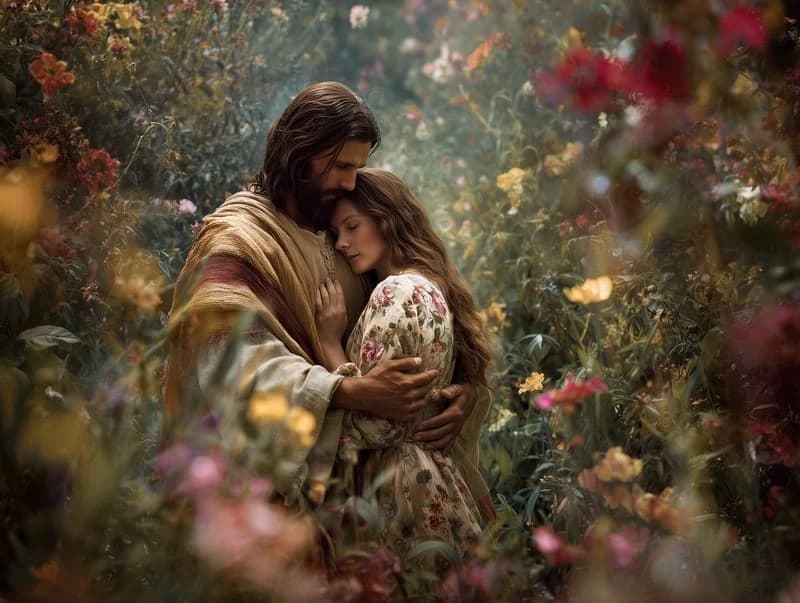
Beauty of Being Chosen

7 days

This 7-day Bible study invites you to discover your true identity through the eyes of Christ, as revealed in Song of Songs 1:8-17. Through the tender dialogue between the Groom and the Bride, we are reminded that we are not only seen - but deeply known, pursued, and chosen. As we explore the beauty of being loved unconditionally, we learn to root our worth not in performance or appearance, but in God’s unwavering delight in us. This study will help you embrace your identity in Christ and respond to His love with confidence, devotion, and rest.

Start this plan in Bible Chat

The plan is free to read here. In the app it arrives one day at a time, with the full passage and audio.

What the plan covers

  1. Day 17 min

    You Are Not Forgotten: God Sees You

    Passages: Songs 1:8 · Isaiah 49:15

    From the very beginning of Song of Songs 1:8, the Groom reassures the Bride with a gentle but firm affirmation: “O fairest among women.” In the face of her insecurity and confusion about where she belongs, He does not correct her with shame or dismiss her question. Instead, He offers both a path and a promise - He sees her. This verse mirrors the heart of God for His people throughout Scripture. He is a God who sees the lost, the uncertain, the overlooked-and calls them beautiful. Just as Isaiah records God’s pledge never to forget His people, this verse reinforces that our identity begins not in our self-perception but in His faithful remembrance of us. Theologically, this moment highlights the covenant nature of God's love. His view of us is rooted not in our past or present feelings, but in His eternal character. When Christ calls the Church “His Bride,” it is a declaration of beauty and belonging, not based on merit but on divine love. From a psychological standpoint, the need to be seen is one of the most fundamental human desires. Being overlooked, ignored, or forgotten-especially by those we care about - can leave deep emotional wounds. Yet neuroscience shows that being truly seen and heard by a safe and loving presence regulates the nervous system and nurtures emotional well-being. In Song of Songs 1:8, the Groom doesn’t just acknowledge the Bride-He gives her direction: follow the path already laid. This affirms that our identity is not something we must create alone. There is wisdom in community, healing in spiritual tradition, and safety in walking where others have gone before us. God’s call is both deeply personal and rooted in relationship. He sees you. He speaks directly to you. And He invites you to journey forward not in fear or isolation, but in the assurance that you are beautiful, loved, and never forgotten. Reflection Where in your life have you felt overlooked or unseen? How might God be speaking to you through this verse today? Practical Steps Take five minutes today to sit in silence and imagine God saying to you, “You are the fairest.” Write down areas of insecurity or rejection you’ve carried. Share this verse with someone who may also feel unseen. Prayer Father, thank You that You never forget me. Speak truth over the places where I feel lost or insecure. Help me walk forward in the identity You’ve given me - as someone seen, loved, and led by You. Amen.
  2. Day 27 min

    A Crown of Beauty

    Passages: Songs 1:9 · Isaiah 62:3

    In Song of Songs 1:9, the Groom compares the Bride to a filly - an elegant, powerful young horse among Pharaoh’s chariots. To the modern ear, this may sound unusual, but in ancient poetic language, it was a rich image of beauty, strength, and honor. Pharaoh’s horses were the finest, prized for their nobility. To be likened to one was not to be objectified but exalted. This is the language of honor and intentional admiration. In Isaiah 62:3, we hear God say something similar to His people: “You shall be a crown of glory... a royal diadem.” This is how the Lord sees His beloved. Not as a servant in the background, but as a treasure displayed in His hand. Theologically, this reveals the transformative love of God. He doesn’t just rescue us - He crowns us. He redefines our status and clothes us with honor. This is part of what it means to have identity in Christ: to be seen not by what we’ve done but by what He’s done for us. From a psychological perspective, identity formation is deeply tied to how we are mirrored by others. If you were raised hearing negative, shaming messages, they may still echo in your self-perception. But here is where God's voice interrupts: “You are My beloved. You are royalty in My eyes.” Neuroscience tells us that identity can be reshaped when new, affirming truths are repeatedly experienced and internalized. That’s why Scripture meditation is so powerful. When we hear and rehearse how God sees us, our brains begin to form new patterns-and our hearts begin to believe them. You may not feel strong, regal, or worthy today. But God isn’t speaking to how you feel - He’s speaking to who you truly are in Him. The voice of the Groom calls you beloved, beautiful, and worthy of admiration. Let that truth root itself deeper than the lies. Reflection What words have shaped your sense of worth-both positive and negative? What might it look like to replace them with God’s truth? Practical Steps Read Isaiah 62:3 aloud and imagine God placing a crown on your head. Write down three affirmations from today’s Scriptures and repeat them throughout your day. Reflect on times you’ve doubted your value and invite God into those memories. Prayer Father, thank You for seeing me as a crown of glory in Your hand. Heal the places where I’ve believed I’m worthless or invisible. Let Your truth reshape how I see myself. Amen.
  3. Day 36 min

    You Are Adorned with Grace

    Passages: Songs 1:10 · Psalm 90:17

    The Groom’s description of the Bride is not only poetic-it is personal. He notices the smallest details: her cheeks, her neck, the adornments she wears. His words reflect admiration, care, and intentionality. This is not about vanity - it’s about value. The Bride is not invisible to Him. She is radiant. In Psalm 90:17, the prayer is for the beauty of the Lord to rest on us-not a surface-level beauty, but the kind that establishes our purpose and presence in the world. God’s grace beautifies us. When He looks at His children, He doesn’t see failure - He sees favor. His love adorns us with dignity. Theologically, this speaks to imputed righteousness. We are clothed not in our own merit, but in the glory of Christ. The Bride, like the Church, is adorned by grace - not to impress, but to express God’s delight. His love clothes us with holiness and calls out our inherent worth. Psychologically, many people internalize feelings of shame about their appearance or presence-especially when they have felt neglected or criticized. But when we experience being seen with love and spoken over with kindness, something shifts. Self-image becomes rooted not in societal standards, but in divine affirmation. Neuroscience supports this reality: words of affirmation can rewire neural pathways. When loving, truthful statements are consistently spoken and received, they form new emotional anchors. God’s Word does exactly that-it rebuilds what the world has torn down. Today, let these words be your mirror. You are adorned-not for display or comparison-but because the One who made you delights in you. His grace is your beauty, and your life reflects His glory. Reflection What voices or experiences have shaped how you see yourself physically or emotionally? How does God's description challenge or comfort those beliefs? Practical Steps Look in the mirror today and declare Psalm 90:17 over yourself. Write down one negative belief about your appearance or value and replace it with God’s truth. Reflect on one way God has “adorned” your life with grace. Prayer Lord, help me see myself the way You see me-adorned with grace, crowned with beauty, and radiant in Your love. Let Your words redefine my reflection and establish the work of my hands. Amen.
  4. Day 46 min

    You Are Valued and Remembered

    Passages: Songs 1:11 · Luke 12:6

    In Song of Songs 1:11, the Groom doesn’t just compliment the Bride-He promises to adorn her further. “We will make you ornaments of gold with studs of silver.” This imagery speaks of intentional care, attention, and deep value. Gold and silver were symbols of beauty and worth. The Groom is not finished with her - He is investing in her radiance. Spiritually, this represents God’s ongoing work in us. He doesn't just see our value-He enhances it. He continues to shape, polish, and glorify us as vessels of His love. In Luke 12:6, Jesus assures us that if sparrows are not forgotten by God, how much more does He remember us? We are not just noticed - we are pursued with honor. Theologically, this speaks to sanctification-the process by which God continues to adorn us with His Spirit, truth, and glory. We are not passive objects of beauty - we are loved participants in a divine relationship where our identity is always growing deeper in Him. Psychologically, being told we have value - especially when it is reinforced consistently - affects our brain and our heart. Neglect and rejection teach us to see ourselves as replaceable. But repeated affirmation and investment speak to the soul: “You matter. You’re not forgotten.” Neuroscience shows that memories of emotional significance, especially involving being chosen or cherished, form lasting neural imprints. When someone tells us we’re valuable and then proves it through action, it becomes part of how we see ourselves. God doesn’t just say you’re valuable - He treats you that way. You are remembered. You are not forgotten. And God is still crafting beauty in you-something golden, something eternal. Reflection Do you believe God is still working beauty into your life? Where might He be polishing something hidden or forgotten? Practical Steps Write down one way God has shown you care in the last week. Reflect on an area of your life where you struggle to feel valuable-invite God to speak to it. Create a simple reminder (a bracelet, a note, a photo) that reflects your worth in God’s eyes. Prayer Lord, thank You that I am not forgotten. You are still shaping beauty in my life. Help me trust Your process and remember that I am a living reflection of Your love and purpose. Amen.
  5. Day 56 min

    A Safe Place to Rest

    Passages: Songs 1:12 · Matthew 11:28

    The imagery shifts in Song of Songs 1:12 to a table-a place of fellowship, nourishment, and intimacy. The Bride speaks of her fragrance rising while the King sits at His table. This is a moment of stillness and sacred presence. Her fragrance isn’t forced-it simply flows in the presence of the King. Spiritually, this portrays what happens when we are at rest with Christ. Our identity is not something we must strive to prove. In His presence, who we truly are begins to emerge-naturally, beautifully, like the fragrance of spikenard. Theologically, the table symbolizes communion, not just physically but relationally. Jesus invites the weary to sit with Him, to lay down burdens, and to receive restoration. It is not in our effort, but in our nearness to Him, that our true beauty and calling are revealed. Psychologically, rest is essential for the integration of identity. When we live in constant performance mode, our sense of self fractures. True rest-emotional and spiritual-allows us to remember who we are. When we stop striving, we often rediscover our value. Neuroscience confirms that deep rest and relational safety activate the parasympathetic nervous system, calming the body and promoting healing. In safe, loving environments, our brains actually become more creative, more receptive, and more resilient. Jesus offers this environment in Himself. You don’t have to push, prove, or pretend in the presence of the King. Your fragrance-the essence of who you are-will rise simply because you are near Him. Rest reveals your identity more than performance ever could. Reflection Do you believe you’re allowed to rest? What fears or expectations keep you from sitting at the table with Jesus? Practical Steps Set a timer and sit in silent prayer for 10 minutes-just being with Jesus. Journal what “fragrance” you hope your life gives off in His presence. Let go of one expectation or task that is rooted in striving, not calling. Prayer Jesus, thank You for inviting me to Your table. Teach me to rest, to stop striving, and to simply be with You. Let my life reflect the fragrance of Your presence. Amen.
  6. Day 66 min

    Secure in His Gaze

    Passages: Songs 1:13 · Psalm 16:8

    This verse is deeply intimate. The Bride speaks of the Groom as a bundle of myrrh resting close to her heart, all night. Myrrh, used for healing and anointing, speaks of both sacrifice and sweetness. This is not fleeting affection - it is sustained presence. Spiritually, the imagery of constant nearness portrays what it means to abide in Christ. His presence is not reserved for moments of worship - it is the atmosphere of our hearts. The night seasons of life - the unknowns, the waiting, the weariness-are transformed when we hold close the One who is our healer and peace. Theologically, this verse reflects union with Christ. We are not only forgiven - we are indwelt. Christ lives in us. He lies near, not as a distant deity, but as the Beloved who remains. Psalm 16:8 echoes this confidence - because He is near, we are unshaken. Psychologically, sustained closeness is the foundation of secure attachment. When we experience consistent love, our fears subside, and our identity stabilizes. We are no longer defined by abandonment or uncertainty, but by communion. Neuroscience shows that when a person feels emotionally and physically safe, the brain can fully enter rest and repair. The idea of myrrh resting on the chest corresponds with where our parasympathetic nervous system activates calming responses. In essence, love literally calms the body and restores the mind. When you hold Christ close - when He is not an idea but a reality - you begin to walk through life differently. His gaze, His presence, His nearness define your days and nights. You are not forgotten in the dark. You are cherished and kept. Reflection What areas of your life need the calming, healing nearness of Jesus right now? Are you allowing Him to rest close, even in the night? Practical Steps At bedtime, place your hand on your heart and thank Jesus for His nearness. Memorize Psalm 16:8 and pray it when you feel unsettled. Light a candle or use a soothing scent (like frankincense or lavender) during prayer to symbolize Christ’s healing nearness. Prayer Jesus, let me hold You close through every night and shadow. Calm my anxious heart. Be the myrrh that rests over every fear, every longing. Thank You for staying near. Amen.
  7. Day 76 min

    Fully Known, Deeply Loved

    Passages: Songs 1:15 · 1 Corinthians 13:12

    The Groom’s words to the Bride are tender and insistent-“Behold, you are fair.” Twice He repeats it, driving home the truth: You are beautiful. You are seen. You are loved. His eyes are not distracted. He notices her eyes - “dove’s eyes” - symbolic of purity, devotion, and peace. The focus is not on flaw but on love. Spiritually, this verse echoes how Christ sees His Church. He looks at us not with judgment, but with adoration. He calls us beautiful even before we feel worthy. This is the heart of grace: to be seen in our imperfection and still declared lovely. Theologically, Song of Songs 1:15 and 1 Corinthians 13:12 speak to a deeper longing - to be fully known and fully loved. The apostle Paul reminds us that now, in part, we see dimly, but one day, we will see clearly. That longing begins to be fulfilled in Christ, even now. Jesus knows every layer of us, and He loves us all the same. Psychologically, being truly known is a core human need. When we are only known on the surface, it can feel lonely. But when someone sees our deepest self and still embraces us, it changes everything. That’s what Christ offers. Neuroscience backs this truth: emotional intimacy and secure connection create the strongest neural bonds. When someone truly sees us and affirms us, it grounds our identity. With Christ, we are not performing - we are already accepted. This final day of the study is a call to stop hiding. To believe that being seen by Jesus is safe. That His gaze is full of kindness, not condemnation. And that in His eyes, you are already more than enough. Reflection What does it feel like to imagine Jesus looking at you with love? What part of your heart is still afraid to be fully known? Practical Steps Sit in silence and visualize Jesus saying, “Behold, you are fair.” Write a letter to God, expressing your desire to be known and loved. Read 1 Corinthians 13 and highlight every description of love that you long to receive. Prayer Jesus, thank You for seeing me-fully and still calling me lovely. Help me live unveiled before You, trusting Your love and resting in Your grace. I am Yours, and I am enough in You. Amen.